
AC Maintenance in Minnesota
Homes in Minnesota run cooling for fewer months of the year than in 34 of the other 49 states.
Tell us about the job
Takes about a minute. No obligation.
- 79°Fsummer afternoon high where people live
- 2 monthsof cooling, July through August
- 15.45¢ per kWhwhat homes paid for power in 2024 (kWh means kilowatt hours, the unit on an electric bill)
- 3,941hail events from 2015 to 2024
Minnesota doesn't ask much of an air conditioner two months of real work, July and August
- Southern counties need about 25% more cooling than northern ones
- Summer afternoons average 79°F where people live
- Cooling runs July through August
- 3,941 hail events from 2015 to 2024
- 4,385 damaging wind events from 2015 to 2024
- 13% of homes lost power a day or more in 2024


An older house doesn't mean a harder-working system
Most houses in Minnesota are single-family, and half were built in 1979 or earlier. An AC system doesn't care how old the house around it is, but an older house is more likely to be running a system nobody's tracked the age of. If yours came with the house, a once-a-year check is how you find out it's still sound rather than finding out the hard way once the heat sets in. Nothing about the housing stock here calls for more than that one visit before the season starts.

Warm air moving across the evaporator coil leaves moisture behind, and that moisture needs somewhere to go. The condensate drain line carries it outside, and it clogs with algae over time if nobody looks at it. A clogged line backs water up into the pan underneath, and from there it finds its way into the ceiling or the closet floor below. If you've seen a damp spot near the indoor unit, or the system shuts itself off for no clear reason, that drain line is worth checking before the next hot stretch.
The refrigerant charge in your system is set at the factory and it shouldn't need topping off. If it's low, that means there's a leak somewhere in the coil or the line set, and running the system low on charge makes the compressor work harder than it should. Weak airflow from the vents, ice forming on the copper line outside, or the unit running long stretches without cooling the house down are all signs worth a look. A slow leak only gets worse left alone, and the compressor is the part doing the extra work while it goes unnoticed.
June, before the two months that matter
July is when this system goes from idle to working every day, so June is the month to have it looked at. August is still full summer here, and the check needs to happen before that first hot week, not during it. Two months is the whole season this part of the country asks for. There isn't a shoulder period where the system eases into the work, it starts in July and that's it.
2 months of cooling, July through August
9 months of heat, September through May
Two months a year isn't the same two months everywhere, and it isn't the same load everywhere either. Homes in the southern counties need about 25% more cooling over a year than homes up north, so a system in the south earns its keep more than one in the north does.
Redwood County sees the hottest summer afternoons in the state, averaging 81°F through June, July and August. Cook County sees the mildest, at 72°F. A system running in Redwood County is working through warmer air all season than one in Cook County, and that's worth knowing before the check, not after.
Hennepin County runs the AC about three months a year, the longest stretch anywhere in the state. St. Louis County runs it for close to none. If your address falls in or near Hennepin County, get the check done before summer starts. Up around St. Louis County, there's less urgency, and less wear to look for.
Minnesota as a whole asks less of an air conditioner than most of the country does. The AC runs fewer months here than in 34 of the other 49 states, and summer afternoons stay cooler than in 40 of them. That doesn't erase the gap between the southern and northern counties, it just means even the hardest-working parts of the state aren't extreme by national standards.
Hail is a separate question from heat, and Minnesota sees more of it than most places, more than 39 of the other 47 states across the counties where people live. An outdoor unit that's taken a hailstorm is worth a look at the fins and the cabinet, regardless of which part of the state it's in.
What does an AC in Minnesota face?
How hot do summer afternoons get?
79°Faverage afternoon high where people live
Alaska66°F
Arizona101°F
How many months does the cooling run?
2 monthsof cooling a year
Alaska0 months
Hawaii12 months
What does electricity cost?
15.45¢per kWh, what homes paid in 2024
North Dakota11.51¢
Hawaii42.86¢
How often do storms hit?
216severe weather events per county from 2015 to 2024
Alaska5
Wyoming1,057
How many homes lost power for a day or more?
13%of homes in 2024
Arizona7%
Maine54%
What you can check yourself
Between visits, the filter is the one thing worth your attention. A dirty filter chokes airflow across the evaporator coil, and the system starts working harder to move the same amount of air through the house. Left too long, that coil can ice over, and the unit ends up running without actually cooling anything. Check it by holding it up to a light. If light doesn't pass through easily, swap it. Keep the area around the outdoor unit clear too. Grass clippings, leaves and mulch piled against the cabinet block the airflow it needs to shed heat, and that makes the compressor work harder than it should. A few feet of open space on all sides is enough. Beyond that, leave it alone. There's nothing else back there worth opening up or adjusting yourself.
What skipping it does over time
Skip maintenance long enough and the first thing to go is efficiency, before anything actually breaks. Dust builds up on the evaporator coil and the outdoor condenser coil, and that layer works like a blanket, keeping the coil from moving heat the way it should. The system has to run longer to reach the same temperature, and parts that were only built to cycle on and off now run closer to constant. The capacitor and the contactor take that extra load, and they're the parts most likely to fail first on a system that's gone seasons without a look. A fan motor working against dirty coils also runs hotter than it should, and heat is what shortens the life of a motor. None of this happens overnight. It shows up first as weaker cooling and longer run times, then later as the breakdown that gets called in on the hottest day of the year, which is always the worst time for a compressor to give out.
What actually gets checked
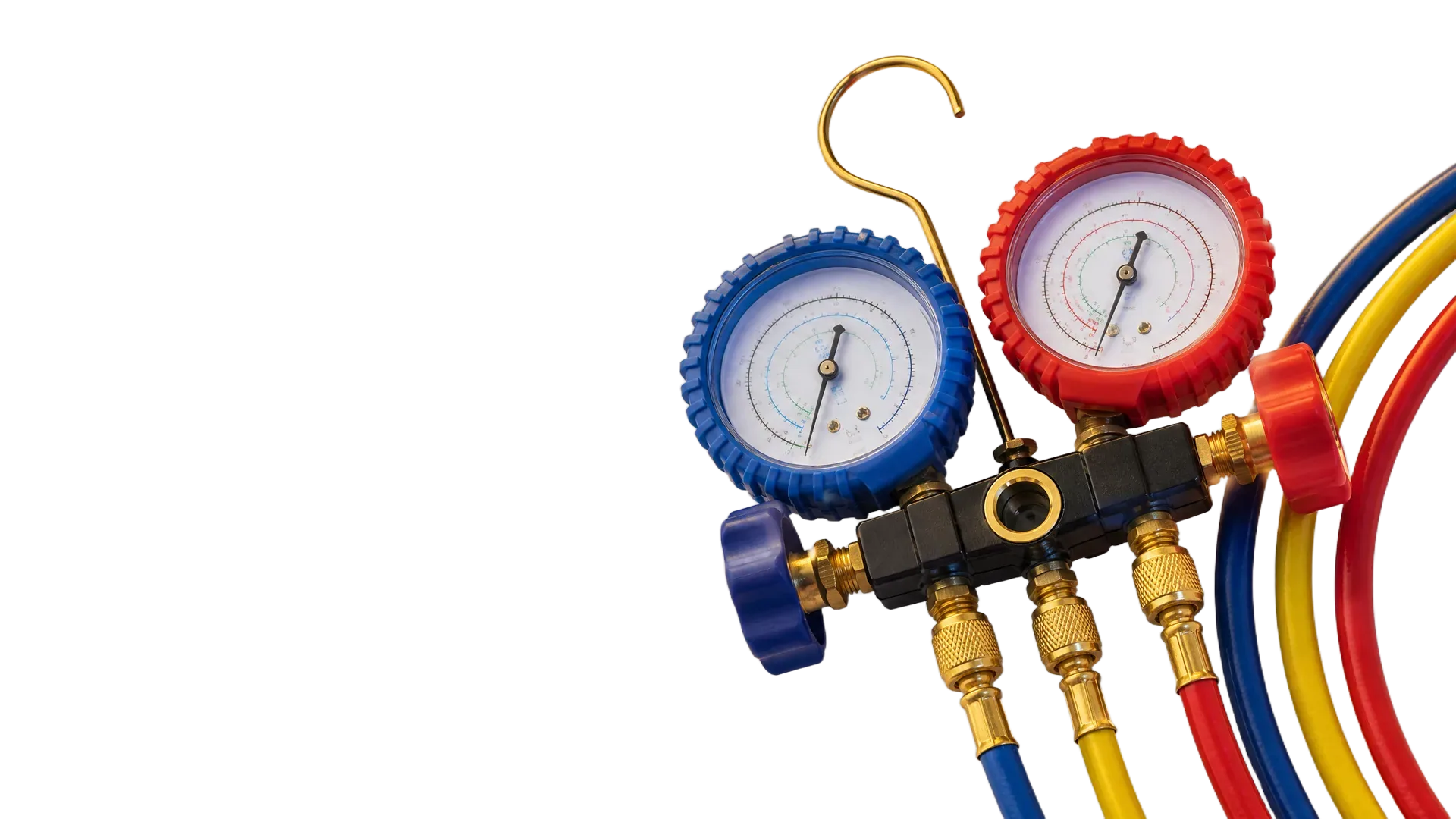
A tune-up starts outside, at the condenser coil. Dirt and pollen settle into the fins and block airflow, so the coil gets washed clean and any bent fins get straightened. The capacitor gets tested under load, not just looked at. It can read fine sitting still and still fail the moment the compressor asks something of it. The contactor gets checked too. Those contacts pit and burn with age, and a burnt contactor is a common reason a unit won't start at all. Refrigerant charge gets checked against what the system is rated to carry, and the tech reads both the pressure and the temperature of the line, since pressure alone can be misleading. Inside, the evaporator coil gets inspected for dirt, and the drain line gets checked to make sure it runs clear. The blower wheel gets looked at too. A wheel caked with dust moves noticeably less air even running at full speed. At the end the system runs through a full cooling cycle rather than just a start and stop, so anything that only shows up once the system is up to temperature gets caught before it turns into a service call.
Light duty still wears parts, and July and August are when it shows.
Tell us about the job
Takes about a minute. No obligation.
Fill out the form and a licensed contractor in Minnesota will reach out to schedule the tune-up.