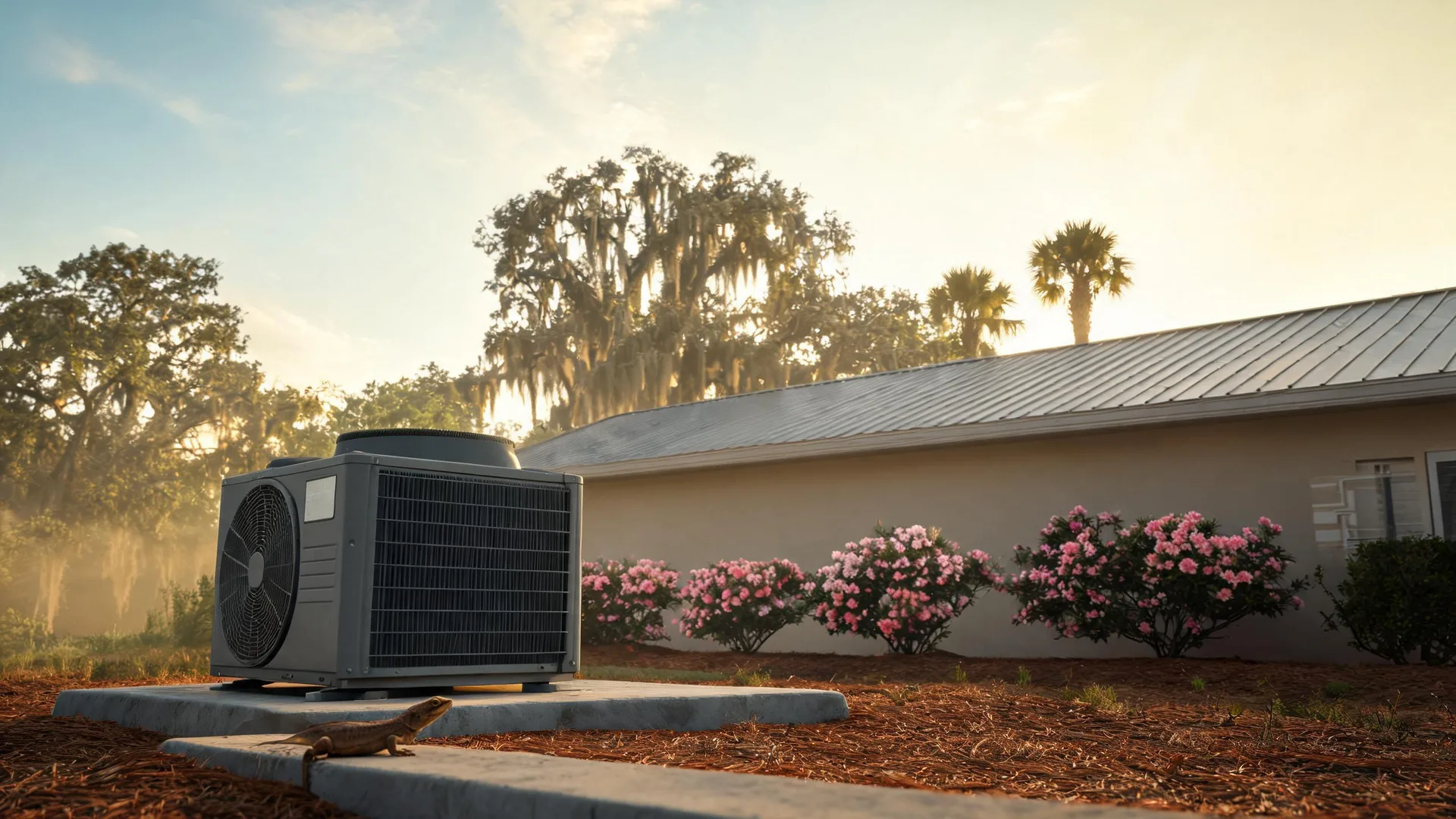
An outdoor air conditioning condenser unit installed beside the exterior wall of a blue vinyl-sided house at sunset.

AC Maintenance in North Mankato, MN

Tell us about the job

Takes about a minute. No obligation.

Tune-up, service, or cleaningCentral ACNicollet County, MN
Step 1 of 2

What ZIP code is the job in?

Half the homes here were built in 1979 or later

Nicollet County's housing is split right down the middle, half built in 1979 or earlier and half after. If your house falls on the newer side, your air conditioner is likely a newer unit too, not something patched together over decades.


A younger system still rewards upkeep

A unit that hasn't logged years of strain responds well to a yearly check. Catching a weak part now, while the system is still in good working order, keeps it running that way instead of letting small wear turn into a bigger repair.

3 months
June through August, your air conditioner is on duty
80°F
the average summer afternoon it cools against
17 hail events
in ten years, and hail bends the fins on outdoor coils
23 wind events
in ten years, and wind drives debris into outdoor units
Isometric line illustration of a cutaway single-story house showing interior rooms, ceiling ductwork and an air handler, connected to an outdoor condenser unit on a pad beside the building.
Your air conditioner works hardest from June through August.

NOAA nClimDiv, 1991–2020 normals

A dirty filter is the one thing that strains the whole system from a single cause.

Check it once a month and swap it when the light won't pass through, no tools and no appointment needed.

Three months of real heat, that's what this system has to handle here

Cooling runs June through August
Summer afternoons average 80°F
17 hail events from 2015 to 2024
June is when it starts workingCooling runs June through August here, so May is the month to get it checked.

A technician checking the system looks at things you'd never spot from the thermostat. The refrigerant charge is one. Too little and the coil starts icing over, even though the air coming out still feels cool for a while. The capacitor is another. It can be weeks from failing and still start the compressor every time you ask it to, giving no warning until the day it doesn't. A tech reads it with a meter, not a guess. Contacts inside the contactor pit and burn with every cycle, which adds resistance you can't see but the compressor feels. And the condenser coil outside collects grass clippings and cottonwood fluff down in the fins where a hose rinse won't reach, so the system works harder to shed heat without ever showing you why.

A yearly check before summer asks anything of it

Three months of summer is still three months the compressor has to earn its keep. A yearly check before that starts means a weak capacitor or a coil losing charge gets caught while it's a small fix, not a breakdown in July. Have it looked at before June asks anything of it.

Find a contractor
A gray cylindrical air conditioning condenser unit mounted on a concrete pad next to a light-colored vinyl-sided house exterior.

A newer system still needs its yearly look

A system installed within the last decade or two still has a full working life ahead of it. The yearly check is what keeps it getting there. A tech can catch a contactor starting to pit or a capacitor starting to weaken while the fix is still small, instead of finding out on a hot day when the compressor won't start at all. For a newer unit, that one visit a year is what keeps it a newer unit for longer.

A thorough check means hands on the unit

A real tune-up has the panel off. The tech checks refrigerant pressure with gauges, tests the capacitor's output with a meter, and looks at the contactor contacts for pitting. The condenser coil gets washed from the inside out, not just hosed off on the outside where it looks clean already. Electrical connections get tightened, since a loose one builds heat and wears the wire. Each of these is a separate check, and skipping one means whatever it would have caught goes unnoticed until it fails.

A quick one just looks and listens

A rushed visit checks that the unit turns on, that air comes out cold, and maybe swaps the filter. Nothing gets measured. A capacitor can test weak on a meter while still starting the compressor every time, so watching it run tells you nothing about how close it is to quitting. The same goes for a coil that's dirty between the fins. It still blows cool air while working harder than it should. Without the gauges and the meter, a tune-up is really just a glance.

An outdoor air conditioning condenser unit positioned on a concrete pad next to a blue-sided house, surrounded by green shrubs and flowering hydrangeas at sunset.

Book your AC tune-up in May, before homes here start needing cooling in June.

  1. Jan
  2. Feb
  3. Mar
  4. Apr
  5. May
  6. Jun
  7. Jul
  8. Aug
  9. Sep
  10. Oct
  11. Nov
  12. Dec

A tune-up checks the refrigerant charge, cleans the coils, tests the capacitor and tightens the electrical connections.

A tune-up also means checking how the system moves air, not just how it makes cold air. The blower wheel can cake up with dust over time, and a caked wheel pushes less air without changing how it sounds. That lowers airflow across the evaporator coil, which can let the coil frost up even when the refrigerant charge is fine. A tech checks the temperature split between the air going in and the air coming out, since that number says more about how the system is actually performing than how cold the air feels at the vent. The drain line gets checked too. Algae and dust build up inside it, and a blocked drain backs water up into the pan or the house before anyone notices a problem with cooling at all.