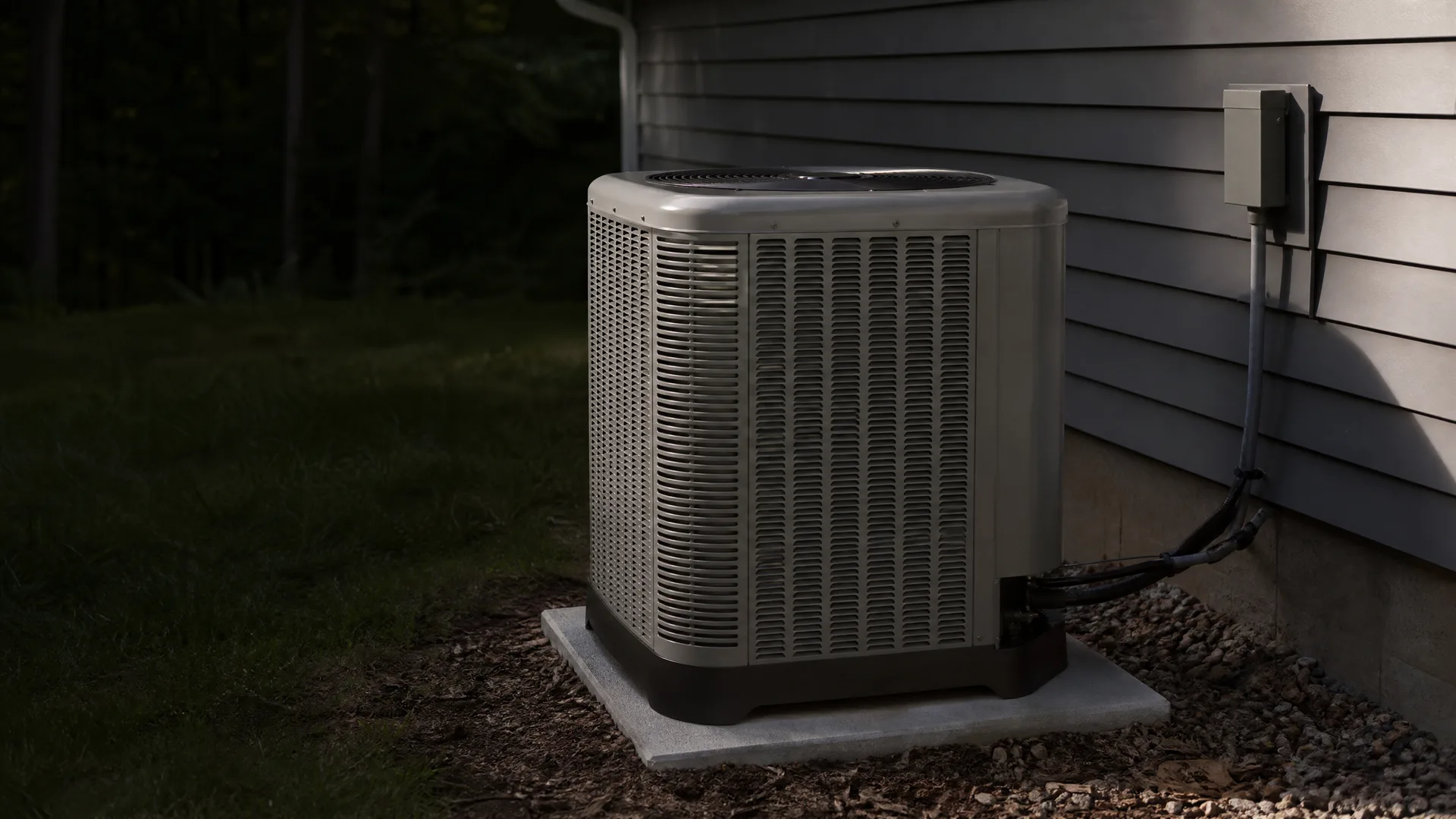
An outdoor air conditioning condenser unit on a concrete pad beside a house with horizontal siding, with an electrical disconnect box on the wall and shrubs to the right in low evening light.

Get the right pro for your air conditioner

AC tune-up before summer in Minneapolis, MN

You want your AC checked out before the heat hits, not after it quits on a 90 degree day. A tune-up covers the refrigerant charge, the coils, the electrical connections, things that cause breakdowns in July if they're off in May. Answer a few questions here and a contractor who covers Hennepin County will reach out to get it scheduled.

Request a pro

A spring tune-up means getting a technician to check your air conditioner before you actually need it, so if something is wrong, you find out in May instead of during a 90 degree stretch in July. The unit has sat outside all winter through snow and freezing temperatures, and the refrigerant charge, the electrical connections and the coils can all shift or corrode in that time without you knowing. A system that's low on refrigerant or has a weak connection will still run when you first turn it on. It just won't cool well, and it will work harder doing it, which is what drives up the power bill here more than almost anything else. The problem usually shows up as a breakdown once the real heat sets in and the system is running for hours at a stretch. Catching it in spring, before Minneapolis summer starts asking anything of the system, means a repair instead of a day without cooling.

An outdoor air conditioning condenser unit on a concrete pad beside a house with white horizontal lap siding, with an electrical disconnect box and insulated refrigerant line on the wall and a shrub over mulch to the right.

Serviced before the season starts

This is what a condenser looks like when it's been checked over: clean lines, solid connections at the disconnect box, nothing straining. It runs steady through the first hot week instead of being asked to prove itself.


An outdoor air conditioner condenser unit on a concrete pad beside a house with light horizontal lap siding, with an electrical disconnect box and conduit on the wall behind it.

Left to run on its own

This unit has sat through a few winters without anyone looking at it. Weathering like this on the cabinet often means the same neglect inside it, at the coil and the electrical connections, where you can't see it until it quits.

What does a technician actually do during an AC tune-up?

You've seen "AC tune-up" on every page you clicked today and none of them said what it actually means. Before you book anything, you want to know what a technician spends that time doing, not just that it's good for your unit. If it's just a quick look and a sticker on the side of the condenser, that's worth knowing too.

A tune-up is a checklist, not a glance

A technician checks the refrigerant charge against what the unit calls for, since too little or too much makes the compressor work harder than it should. They clean the condenser coil outside, which collects a winter's worth of grass clippings, cottonwood seed and dust that blocks airflow. They check the capacitor and contactor, the electrical parts that get the compressor and fan running, since a weak capacitor is one of the more common reasons an AC won't start on the first hot day. They check the evaporator coil inside, the blower, and the condensate drain so it isn't clogged. They test the thermostat calls for cool air and confirm the system responds. Each of these is a point of failure in July if it's missed in May.

An outdoor air conditioner condenser unit on a concrete pad beside a house wall, with a gray electrical disconnect box and conduit above it and grass in the foreground.

What sits outside all winter

The condenser sits outside through a Minnesota winter, through snow load and freeze and thaw, and none of that gets checked just by looking at it from the porch. Ice can work into the fins and bend them shut without cracking anything you'd notice. A technician checks the coil for that kind of damage and clears debris that built up while the unit sat idle, before the first warm week asks the coil to move air it can't move.

A gray outdoor air conditioner condenser unit on a concrete pad beside a house with horizontal lap siding, surrounded by white gravel and a lawn, with a white wall at left.

Why the charge matters most

Refrigerant charge is the one thing that's invisible from outside the cabinet and the one thing most likely to cost you a July afternoon. A system low on charge still turns on, still blows air, and still struggles to cool the house, running longer each cycle and pulling more from a power bill that's already high in Hennepin County. Checking the charge in May means the difference shows up on a gauge, not on your thermostat during a 90 degree week.

A man with a duffel bag walks up a concrete path toward a white board-and-batten house where a woman stands in the open wooden front door, flanked by potted plants and black lanterns.

What a skipped tune-up turns into by July

A capacitor that's starting to weaken still runs the AC fine in May. By the time it's hitting 90, it's working against a full cooling load, and that's when it fails, usually on the day you need the house cold most. Same with a refrigerant charge that's a little low. It won't stop the system from running, it just makes it run longer to hit the same temperature, and that shows up on your power bill before you ever notice the house isn't quite as cool as it should be.

Checking it now means you're not choosing between a houseful of guests and a houseful of warm air, and you're not waiting on a contractor who's booked solid because everyone else's AC picked the same week to quit. Send in what's going on with your unit and you're matched with a contractor who works on systems like yours in this area. From there it's their call, not another thing on your list.

A mug and a small round vase sit on a wooden windowsill beside sheer and heavier curtains, with blurred autumn trees seen through the rain-speckled window and a sofa with cushions and a throw in the foreground.
An older man with gray hair, a dark coat and scarf dusted with snow stands in a warmly lit entryway with an open wooden door, a table lamp, framed pictures, and a plant in a vase.
An older man with gray hair and a beard wearing a dark snow-dusted coat stands in a home entryway, with a lamp-lit living room and a wooden staircase behind him.
An older man with gray hair and a beard, wearing a dark snow-dusted coat, stands in a warmly lit home entryway with a hallway, console table with lamp, patterned rug, and living room visible behind him.
A gray-haired bearded man in a dark snow-dusted coat and scarf stands inside a dimly lit home entryway, with a hallway, framed picture, lit table lamp and staircase behind him.

A pro who works on air conditioners

You've read this far because you want to know if a tune-up now actually changes anything, and it does. Minneapolis summers don't stay mild for long once they turn, and the first real stretch of 90 degree days is exactly when a weak capacitor or a low charge shows itself. Finding that in May means a technician fixes it on a mild afternoon with time to get parts if needed. Finding it in July means your house is hot while you wait, and whoever you call is already booked solid with everyone else whose AC picked that same week to fail. The condenser outside your house has sat through snow and ice since October, and nothing about how it looks from the yard tells you whether the coils or the electrical connections came through clean. You don't have to figure that part out yourself. Answer what's asked above and hand the rest off before the heat gets here.

Booking it now in May

Schedules are open and a technician can get to your condenser before the first hot stretch hits. If the capacitor is weak or the charge is low, you find out while it's 70 degrees out and nobody's sweating over it. There's time to order a part if one's needed instead of waiting on it. You pick the day instead of taking whatever's left on the calendar once everyone else has the same idea.

Waiting until it's hot

Once Minneapolis hits its first 90 degree stretch, every AC that was already weak starts failing at once, and every contractor in Hennepin County is booked solid. You're not choosing a convenient day anymore, you're waiting in line behind everyone else whose capacitor gave out the same week yours did. The unit itself has been running on whatever shape it was in since October, and summer heat is what finally asks it to prove that shape was good enough.

An outdoor air conditioning condenser unit on a concrete pad beside a house with white horizontal vinyl siding, with a gray electrical disconnect box and refrigerant lines on the wall behind it.
Before you get your air conditioner maintenance
A gray outdoor air conditioner condenser unit on a concrete pad beside a house with white horizontal siding and a brick foundation, with a wall-mounted disconnect box and conduit, and a green shrub with mulch at left.
After you get your air conditioner maintenance
  1. Technician checks refrigerant pressure against what the system calls for.

  2. Coils get cleaned so heat can actually transfer off them.

  3. Electrical connections get tightened and the capacitor gets tested.

  4. Thermostat and airflow get checked to confirm cold air reaches the house.

A gray outdoor air conditioner condenser unit on a concrete pad beside a house with horizontal siding and a stucco foundation, with a disconnect box and conduit on the wall, decorative gravel, mulch, and a shrub nearby.
A clean condenser like this one has clear airflow through the coil fins and a disconnect box that's dry and tight, nothing blocking the sides.
An outdoor air conditioning condenser unit on a concrete pad beside a house with horizontal lap siding, with an electrical disconnect box and conduit on the wall, mulch and a green shrub to the right, and a concrete walkway in the foreground.
Dirt packed into the coil grilles like this blocks airflow, and the unit works harder to move the same amount of heat off it.
A two-story house with beige horizontal siding, stone veneer at the base, dark shingled gable roofs and a concrete walkway leading to the front door, set behind a patchy green lawn under a clear blue sky.

The dew point around Hennepin County averages 59°F through June, July and August, according to NOAA climate data. That's muggy enough that your AC isn't just cooling the air, it's pulling moisture out of it too, and that moisture is what makes a house feel sticky even when the thermostat says 72. A system with a dirty coil or a low charge struggles more with that part of the job than with the heat itself, and it shows up as a house that cools down but never quite feels dry. A tune-up in May checks whether the coil and refrigerant charge can still handle that load before the air turns heavy.

NASA POWER T2MDEW

A woman wrapped in a thick cream knit blanket sits in an armchair beside a lit table lamp, with an open book in the foreground and a frost-covered window behind her.
A woman in a cream knit sweater sits in an armchair indoors, eyes closed and smiling, beside a window showing yellow and orange autumn foliage, with a mug on a wooden side table and shelves holding vases behind her.

Tune-up done in May

The condenser gets checked while it's still mild out. If a part is weak, you find out before the house depends on it, and there's no wait to get on a schedule.

Find an air conditioner pro

No tune-up before summer

The condenser runs on whatever shape it was left in last fall. If something's weak, you find out the day it has to work hardest.

Find an air conditioner pro

Cooling runs June through August

Three months is all your air conditioner gets to prove itself, and most of that load lands in July and August. There's no slow ramp-up to ease it into the work. It goes from sitting idle to running flat out, so whatever shape it's in going into June is the shape it'll be in on the worst day of August.

NOAA nClimDiv 1991-2020

Where that leaves your AC

  • A tune-up before summer answers one question: is the AC ready for the first 90 degree stretch, or not.
  • A technician finds a weak capacitor or a low charge in May, while it still costs nothing to wait and schedule the fix.
  • The condenser outside has sat through a Minnesota winter, and a check now is the only way to know what that did to it.
  • Once the form goes in, the work of finding a contractor is off the reader's hands.
  • By July the same system is running flat out with no slow ramp-up, so whatever shape it's in now is what the house gets.
  • Nothing about how the unit sounds or looks from the porch tells you what a technician checking the charge and the coils would find.

A spring tune-up answers one thing: whether your air conditioner is ready for the first real hot stretch, or whether it's going to find out the hard way in July. The condenser outside has been through a Minnesota winter, snow, freeze, thaw, and nothing about how it looks from the porch tells you what that did to the coils or the charge. A technician checking it in May can find a weak capacitor or a low refrigerant charge while the fix is still easy, before the house depends on the system working. Wait until the first 90 degree day and the same problem shows up as a breakdown, with the unit already running flat out and no slow ramp-up to ease into. Three months is all this system gets each year to do its job, and most of that load lands in July and August, so whatever shape it's in going into June is what carries the house through summer. Once you send the form, you're done with the part that takes effort. Finding a contractor, getting someone out to look at the condenser, that becomes someone else's job instead of yours. You don't need to know what a weak capacitor sounds like or what a low charge looks like from outside. You need the system checked before it has to prove itself on a day you can't afford for it to fail. That's what this is for.

An outdoor air conditioning condenser unit sits on a concrete pad beside a house with horizontal lap siding, with a wall-mounted disconnect box and refrigerant lines entering the wall, gravel and grass around it and dark trees behind.

Find an air conditioner maintenance pro in Hennepin County

Tune-up, service, or cleaningCentral ACHennepin County, MN
Step 1 of 2

What ZIP code is the job in?