Your heat pump tune-up request goes to a pro who covers Hennepin County.
A heat pump in Hennepin County works harder than almost any other system in the house. It cools through the warm months and carries real heating load once the temperature drops, and that puts it through more cycles a year than a furnace or an AC alone ever sees. Winters here are hard on the outdoor unit, and the coil, the defrost cycle and the refrigerant charge all need to be right before the cold settles in and before the heat comes back.
Most of Minneapolis heats with gas, so a heat pump here is often doing double duty where plenty of other homes only ask one season of it. That's more wear, and it means a missed problem shows up twice a year instead of once.
You don't have to figure out what your system needs or whether that noise it's making is normal. Tell us where you are and what you have, and you'll be matched with a contractor who works on heat pumps in this area and knows what Hennepin County winters and summers do to them. They'll reach out to you directly.
Power here isn't cheap, and a heat pump that's fallen out of tune uses more of it than it should, in both directions, heating and cooling. That cost shows up on the bill whether or not anything has actually failed yet.
Once you send the form, you're not the one tracking down who's available or whether they work on your equipment. That part is off your plate. Someone who services heat pumps in your area gets your information and follows up with you.
A heat pump tune-up means a contractor checks refrigerant charge, cleans the outdoor coil, tests the defrost cycle, and makes sure the system switches cleanly between heating and cooling. Minneapolis winters push the unit into defrost mode often, melting frost off the outdoor coil so it can keep pulling heat from the air even when it's cold outside. If the defrost cycle is off, or refrigerant is low, the coil ices over and the heat pump loses its ability to heat the house, often right when it's needed most. Because most homes here lean on gas furnaces as backup, a homeowner may not notice a struggling heat pump right away, the furnace just picks up the slack and the power bill climbs quietly. A yearly tune-up catches the icing, the worn contactor, or the refrigerant leak before the system either fails outright or starts costing more to run every month than it should.
Why the defrost cycle matters most
A heat pump moves heat from outside air even when that air is cold, and frost builds on the outdoor coil whenever the temperature sits near or below freezing. The unit has to reverse itself every so often, send warm refrigerant out to the coil, melt that frost off, then switch back. If the sensor that triggers defrost is off, or the reversing valve sticks, frost keeps building until the coil is packed solid and the system can't pull heat from the air at all. A contractor checking this cycle during a tune-up is checking the one function that decides whether the heat pump can still do its job in January.
What a dirty coil costs you in July
The outdoor coil is how the system dumps heat in the summer and gathers it in the winter, and dust, cottonwood seed, and cut grass settle on those fins over a season outdoors. A coil caked with debris can't transfer heat the way a clean one does, so the compressor runs longer to move the same amount of heat. That extra runtime shows up on the power bill, and power in Hennepin County isn't cheap to begin with. Cleaning the coil is a basic part of the tune-up, and it's the difference between a system that cycles normally and one that strains through every hot afternoon.
Why does a Hennepin County heat pump need yearly care?
Winter nights average 10°F
Ten degrees outside means the heat pump is pulling warmth from cold air for hours at a stretch, and the defrost cycle has to keep up.
Heat runs October through May
Eight months of heat means the system cycles on and off far more than a furnace that only runs part of the year.
Cooling runs June through August
Three months of cooling means the same unit switches modes and keeps working all year, with no real off-season to rest.
NOAA nClimDiv 1991-2020
After a tune-up
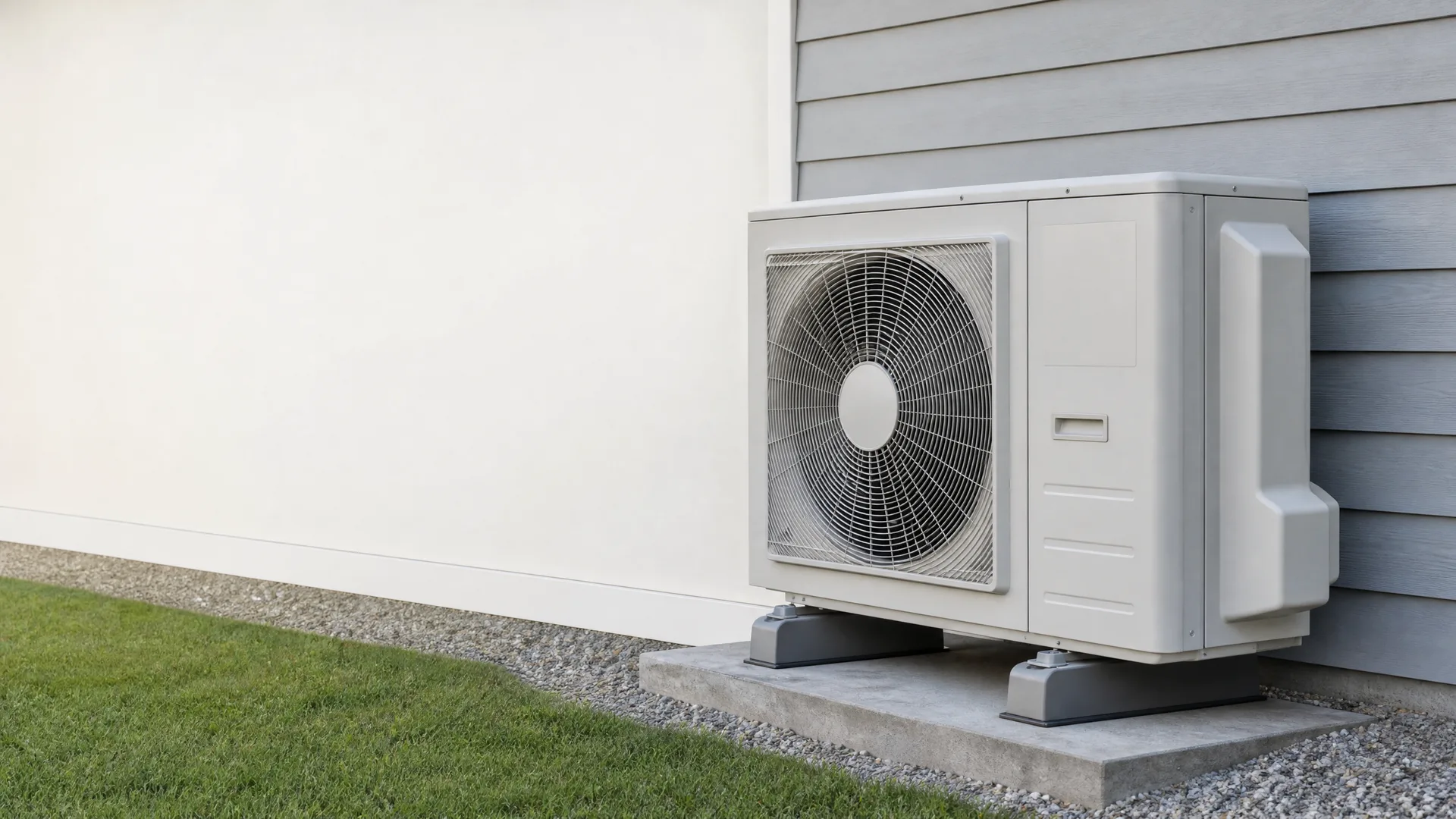
The coil fins are clean and the cabinet is clear, so outside air moves through the unit the way it was designed to. Refrigerant charge is correct and the defrost cycle switches on and off when it should. The unit pulls heat efficiently even when it's ten degrees outside.
Neglected coil
Dust and debris have packed into the fins and the wire grille until the unit can barely draw air through. A coil this dirty forces the system to run longer to move the same amount of heat, and it struggles most on the coldest days, when Hennepin County needs it most.
Tune-Up Kept Current vs. Skipped
Tune-up kept current
A contractor checks the defrost cycle before the first hard freeze, so the outdoor coil doesn't carry frost into a January cold snap.
Refrigerant charge gets verified while the system is still cycling normally, before a low charge forces the compressor to run longer for less heat.
The outdoor coil gets cleaned ahead of the season, so air moves through it the way the unit was built to pull it.
A loose or worn part turns up on a bench check rather than during a stretch of single-digit nights when the system can least afford to stall.
Electrical connections get tightened before the extra cycling of a Hennepin County winter has a chance to work them loose.
Tune-up skipped
Frost that builds on the outdoor coil has no one checking that the defrost cycle is clearing it, so it can keep building through the week.
A refrigerant charge that's drifted low stays low, and the compressor keeps running longer to move less heat.
A coil that's gone dirty over the summer stays dirty into fall, cutting the airflow the unit needs to pull warmth from cold outside air.
A part wearing out quietly has no chance to surface until it fails outright, usually on one of the coldest days of the year.
Without a seasonal check, switching between heating and cooling is left to happen on its own, with no one confirming it switches cleanly.
Before you get your heat pump maintenanceAfter you get your heat pump maintenance
A heat pump that skipped its yearly check is the one still running on a weak charge or a defrost cycle that hangs on too long, and you won't know it until a ten-degree morning finds the outdoor coil iced over and the house cooling instead of warming. By then it's a repair call, not a maintenance call, and the wait is longer because every other heat pump in Hennepin County is having the same bad week. Getting this looked at now, while the system is still cycling the way it should, is the difference between a contractor catching a problem on a mild afternoon and you catching it at 2 a.m. in January. The unit has already been running eight months a year between heating and cooling. It doesn't need to prove it can keep going. Send the request and let someone who does this for a living take the next step from here.
A heat pump that hasn't been checked still runs, right up until the morning it can't keep the coil clear of frost. By then the house is losing ground on one of the coldest days of the year.
A tune-up finds the weak charge or the slow defrost cycle in October, while the system is still working fine. That's the difference between a scheduled visit and an emergency one.
Power here costs 16.88 cents per kilowatt-hour
Your heat pump leans on electricity for every degree it moves, more than a gas furnace ever does, and at close to 17 cents a kilowatt-hour that adds up fast once it's fighting a January cold snap. A clean coil and a correct charge are what keep it from working harder than it has to.
EIA-861 2025
Skipping the fall check
A heat pump without a fall tune-up is still running on whatever charge and airflow it had last spring. Dust has settled into the outdoor coil all summer. The defrost cycle hasn't been tested since last winter, and nobody has confirmed it still switches the way it should. The unit might get through a mild stretch without showing a problem. It won't hide one once Hennepin County gets a real cold snap and the system has to pull heat from the air for hours without a break.
Going into winter checked
A heat pump that gets its fall tune-up goes into winter with a verified charge, a clean coil, and a defrost cycle a contractor has actually watched cycle on and off. That work gets done in October, while the system is still handling mild days and any weak spot shows up without costing you heat. The unit still has to work hard once temperatures drop, but it's working the way it was built to, pulling warmth from cold air without fighting a dirty coil or a charge that's drifted low.
Why does the house feel cool on a cold morning?
You'll notice it before you can explain it. The air coming out of the vents feels lukewarm instead of warm, and the thermostat shows a few degrees less than you set it. Sometimes the outdoor unit hums longer than it used to, running almost constantly instead of cycling off. You might see frost sitting on the coil fins longer than it should, or the fan running while the coil stays iced over. None of this means the heat pump has failed. It means it's working harder than it needs to, pulling more power to make less heat, and on a morning near zero that gap is what leaves the house cold while everyone's still asleep.
A unit kept up with care
The cabinet is clean and the shrubs around it are trimmed back, so air moves through the coil without a fight. The disconnect box and lines are clear of debris. Nothing here is working harder than it has to.
A unit left to sit
Dust has settled into the fins and the cabinet shows the weather it's been through. Nothing stopped it from running, but a coil this dirty makes the system pull harder for the same degree of heat, and that shows up in the bill before it shows up as a breakdown.
A heat pump that's been checked is one you can stop thinking about
A tune-up catches the weak charge and the slow defrost cycle before a ten-degree morning catches you first. That's the whole answer. The contractor checks the refrigerant, cleans the outdoor coil, tests how the unit switches between heating and cooling, and confirms the defrost cycle clears frost the way it's supposed to. Once that's done for the season, the system is carrying the load it was built for instead of fighting itself.
You don't have to track down who does this work. Fill out the form and a contractor who handles heat pumps in Hennepin County gets your information and reaches out to you. That part stops being something you have to manage, and you can go back to thinking about the house instead of the unit sitting outside it.