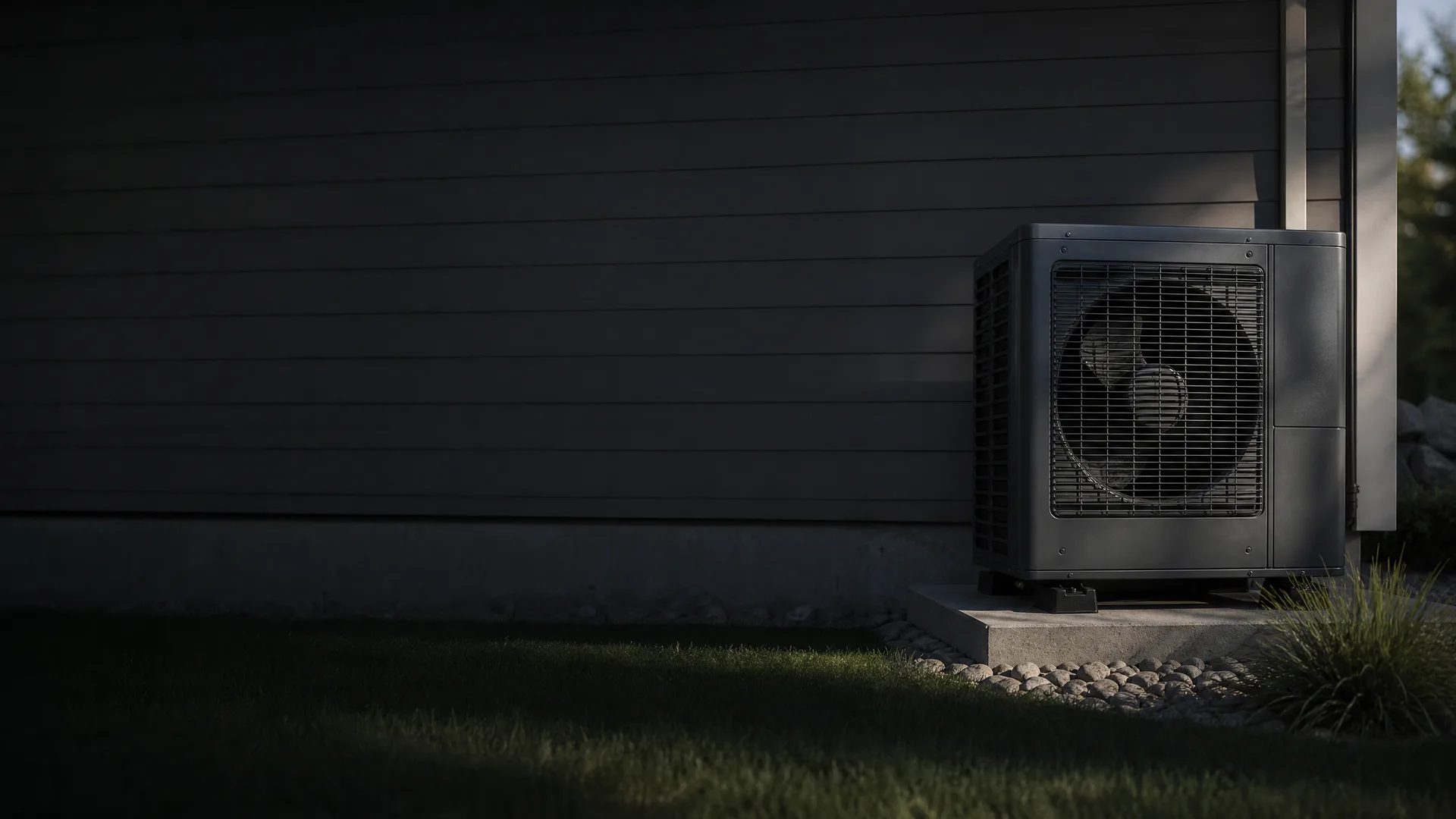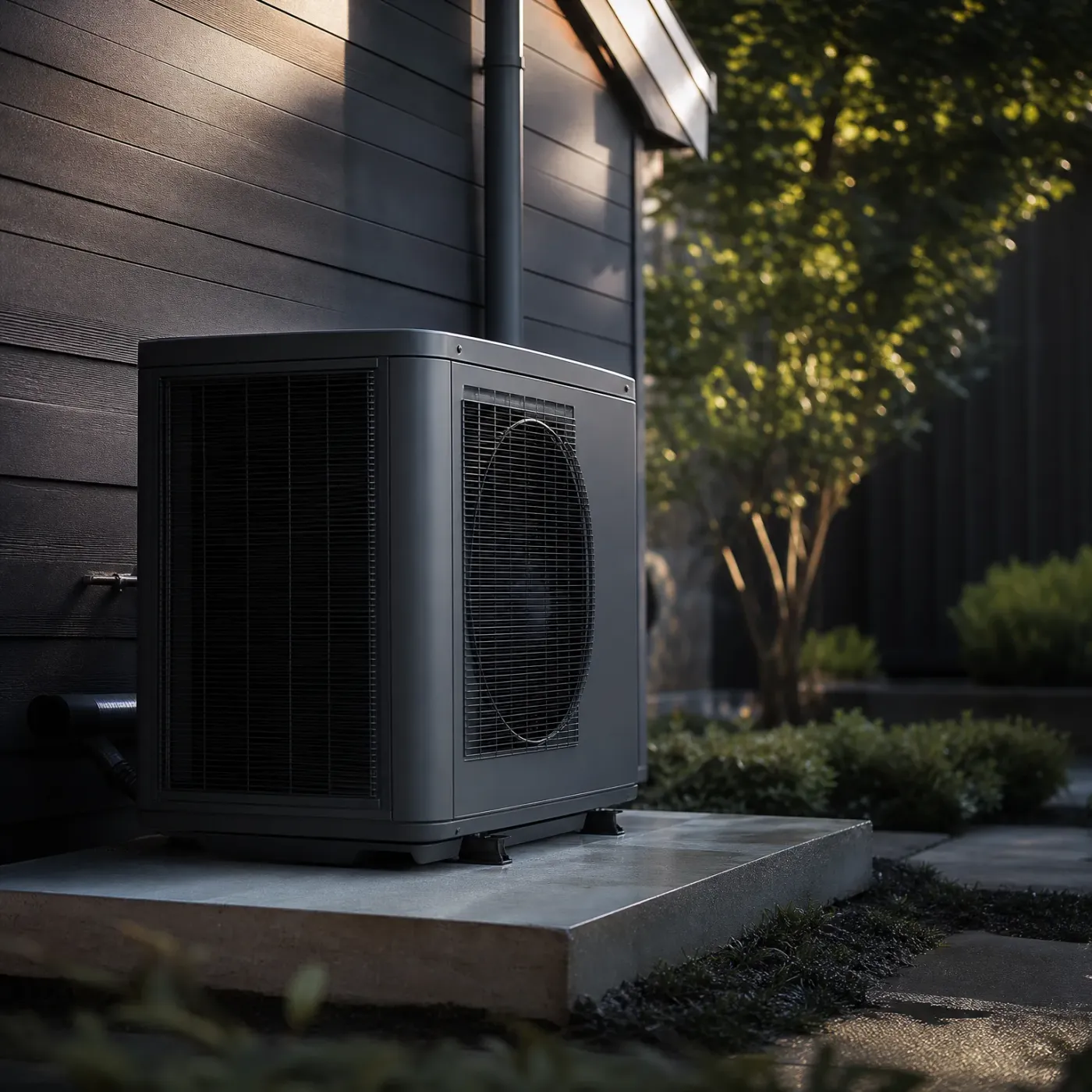







A gray outdoor condenser/heat pump unit with a side fan grille sits on a concrete pad beside a dark horizontal wood-sided house, with shrubs and a small tree nearby.

No quotes to chase

How long a heat pump lasts in Minneapolis, MN

A heat pump in Hennepin County has to work through a hard winter and pull its weight against humid summers too, so wear doesn't follow a simple number. This page gets into what actually shortens or stretches its life here, and what that means for yours. Skip the round of calls to different installers explaining the same system over and over. One licensed local contractor who works on these year-round can look at what you have and tell you where it stands.

Describe it once

A heat pump in the Minneapolis area runs 12 to 15 years, often less if it's been working hard through winters here. That's shorter than the 15 to 20 years you'll hear quoted for milder climates, because a heat pump in Hennepin County has to pull heat out of 10 degree air for months at a stretch, not just cool a house in summer. The compressor runs more hours a year than it would somewhere with a short winter, and it has to work harder doing it, which wears it down faster. Ice buildup during cold snaps forces more defrost cycles, and each one adds strain. Most homes here still lean on gas furnaces for the coldest months, so a heat pump often splits the load with a furnace rather than carrying the whole winter alone, and that pairing matters for how long it lasts. Where yours falls in that range depends on how it was sized and installed from the start.

A gray outdoor condenser unit on a concrete pad beside a light-green sided house, surrounded by mulch, ornamental grasses and a shrub, with mowed lawn in the foreground.
A unit kept clear of mulch and grass clippings, with open space around the cabinet, can pull air through its coil the way it was designed to all winter.
A gray outdoor air conditioning condenser unit on a concrete pad beside a house with light vinyl siding, with a gray electrical disconnect box and conduit on the wall to the right.
Fins packed with dirt and grime make the system work harder to move the same air, and that strain adds up over a Minnesota winter.

What does a Minneapolis winter ask of your heat pump?

  • Winter nights average 10°F

    Nights averaging 10°F mean your heat pump is pulling warmth out of air that's barely above zero, for weeks at a stretch.

  • Heat runs October through May

    Eight months of heat a year, October through May, is a long runtime that gives the compressor and coil far less rest than in milder places.

  • Cooling runs June through August

    Three months of cooling, June through August, is the lighter side of the job, so winter is what really wears a heat pump down here.

NOAA nClimDiv 1991-2020

A gray-haired bearded man in a dark knit sweater sits on a light gray sofa in a sunlit living room, looking to his left, with a framed artwork, a potted palm, and a curtained glass door behind him.
A middle-aged man in a dark green sweater sits on a light grey sofa looking toward a sunlit window, with a wooden shelving unit, lamp and potted plants in the background.
A man in a dark green sweater sits on a light grey sofa in a sunlit living room, looking to his left, with a shelving unit, houseplants, framed art and a large window behind him.
A gray-haired bearded man in a dark green sweater sits on a light gray sofa in a sunlit living room with a potted plant, framed picture, and dark shelving in the background.

Is your heat pump already showing its age?

Listen to it on a cold morning. A heat pump nearing the end of its life runs longer to hit the same setpoint, and you'll notice it cycling on and off more than it used to, or blowing air that feels cooler than it should at the vents. You might hear a rattle from the outdoor unit or notice frost building up on it even when it's not defrosting. Rooms that used to heat evenly now have cold spots. Your gas furnace, if you have one backing it up, may be kicking in more often than before. None of that means it's finished, but a unit working this hard for this long is more likely to fail on the night you need it most.

A gray outdoor heat pump unit on a concrete pad beside a house with horizontal lap siding, connected by conduit and a flexible line to a wall-mounted disconnect box, with low shrubs and mulch nearby.

Running clean

A heat pump like this, set on its pad with clear space on every side, can pull in air without a fight. The lines stay protected, the disconnect is easy to reach, and nothing around the cabinet blocks the fan. That's what lets it hold up through a Minneapolis winter without added strain.


An outdoor air conditioner condenser unit on a concrete pad beside a house with beige horizontal siding, with conduit running from an electrical box on the wall.

Under strain

Nothing here looks damaged, but a unit pressed close to the wall or crowded by growth has to work harder to move the same air. Through a long Minneapolis winter, that extra draw adds up fast. A contractor who services this equipment every season can tell you if yours is laboring before it shows.

A woman with shoulder-length graying brown hair in a cream knit cardigan sits in a dark armchair indoors, looking off to the side with a slight smile, with a shelf, window and houseplant blurred behind her.
A woman with dark hair in a bun sits on a sofa with a child resting his head on her shoulder, both wrapped in a cream knit blanket, with a lit lamp and bookshelf in the dim background.

Describe it once

A heat pump that's cycling too much or running cold air in January isn't something to watch for another season. Pulling heat out of air that's barely above zero for eight months a year is hard on a unit already near the end of its stretch, and waiting usually means a failure on the coldest night of the year, not the mildest. Finding someone to look at it means calling around, explaining the symptoms more than once, and sorting through quotes that don't tell you much until someone's actually seen the unit. A contractor working on heat pumps in Hennepin County every winter has seen what age does to them here, what usually goes first, and whether yours is worth repairing or replacing before it quits on you. Send the request once and it goes to that one contractor, not a string of them calling back at once. You get an answer about your unit, not a general one about heat pumps in cold climates.

What this comes down to

  • A heat pump in the Minneapolis area holds up 12 to 15 years when it's sized right and installed by someone who accounts for the cold.
  • Short-cycling, cooler air at the register, and longer run times on cold mornings are signs the unit is nearing the end of its stretch.
  • A clean, unobstructed cabinet and regular care through eight months of heating a year protect the years a heat pump has in it.
  • A contractor who works on heat pumps in Hennepin County every winter knows which parts give out first under nights near 10°F.
  • Matching with one licensed local contractor means a single point of contact instead of several companies competing for the job.
  • Where you land on the 12 to 15 year range depends on how the unit was installed and how it's been run since.

A heat pump in the Minneapolis area lasts 12 to 15 years, and where you land in that range comes down to two things: how it was put in and how it's been treated since. Nights near 10°F for weeks at a stretch put real strain on the system, and that strain either gets managed by a correct install and clear airflow around the cabinet, or it wears the unit down faster than it should. Short-cycling, air that feels cooler than it should at the register, and a system that runs longer to hit the same setpoint are the signs it's reaching the end of what it has.

None of that is something you have to work out on your own. Finding someone who installs and services heat pumps through winters like this one, rather than a contractor who mostly handles furnaces and treats a heat pump as an afterthought, usually means calling around and vetting licenses yourself. Matching you with a contractor who's licensed, local to Hennepin County, and on heat pump systems every winter skips that step. You hear from one contractor, not four or five competing for the job, and that contractor already knows which parts tend to give out first when a system has been pulling heat out of near-zero air for eight months straight. Whether your unit has years left or is nearing the end of its stretch, that's who you want looking at it.

An outdoor air-source heat pump unit with a large fan grille stands on a concrete pad beside a dark horizontal-slat clad house wall, bordered by gravel, grass and an ornamental grass clump.

No calling every shop in Hennepin County

A licensed installer who works in Hennepin County gets your project.

New system or replacementHeat PumpHennepin County, MN
Step 1 of 2

What ZIP code is the job in?