





A row of dark-sided cottages with brown shingled roofs behind a trimmed hedge, beside a mown lawn and large leafy trees under an overcast sky.

AC Maintenance in Grand Rapids, MN

Tell us about the job

Takes about a minute. No obligation.

Tune-up, service, or cleaningCentral ACItasca County, MN
Step 1 of 2

What ZIP code is the job in?

Itasca County saw 295 severe weather events between 2015 and 2024. Damaging wind came through 108 times in that same stretch, and hail hit 125 times. Hail dents coil fins and bends them shut, and wind throws branches and grit into the outdoor unit. Three tornadoes touched down in those years too. None of that asks your permission first. A unit that sat through hail or wind without anyone looking at it can be running on a damaged coil or a blocked fan and still turn on when you flip the thermostat.

1 months
July through July, your air conditioner is on duty
76°F
the average summer afternoon it cools against
125 hail events
in ten years, and hail bends the fins on outdoor coils
108 wind events
in ten years, and wind drives debris into outdoor units
Isometric line illustration of a cutaway house showing an indoor air handler with branching ducts in the attic space, connected by a line set to an outdoor condenser unit beside the building, with simple furniture in two rooms.
Your air conditioner works hardest from July through July.

NOAA nClimDiv, 1991–2020 normals

A dirty filter chokes airflow before the air ever reaches the coil.

Check the filter first. Everything downstream depends on air moving through it.

Half the homes here were built by 1979, so your AC is probably younger than the house next door's furnace

Half the homes here were built by 1979
Climate zone 7
Power here costs 15.43 cents per kilowatt-hour
July hits this system hardest, right from the startCooling in Itasca County runs in July alone, so book the check in June.

A newer system still needs someone to look at it every year. Nothing about being young keeps a coil clean or a refrigerant charge full. A yearly check is what tells you the unit is wearing at a normal pace and not something faster. Catching a weak fan motor or a slow refrigerant leak early costs less than finding out when the unit just stops on a hot afternoon. A system built within the last few decades has plenty of working life left in it, and a yearly check is what keeps it on track to use all of it.

Have the outdoor unit inspected before storm season tests it

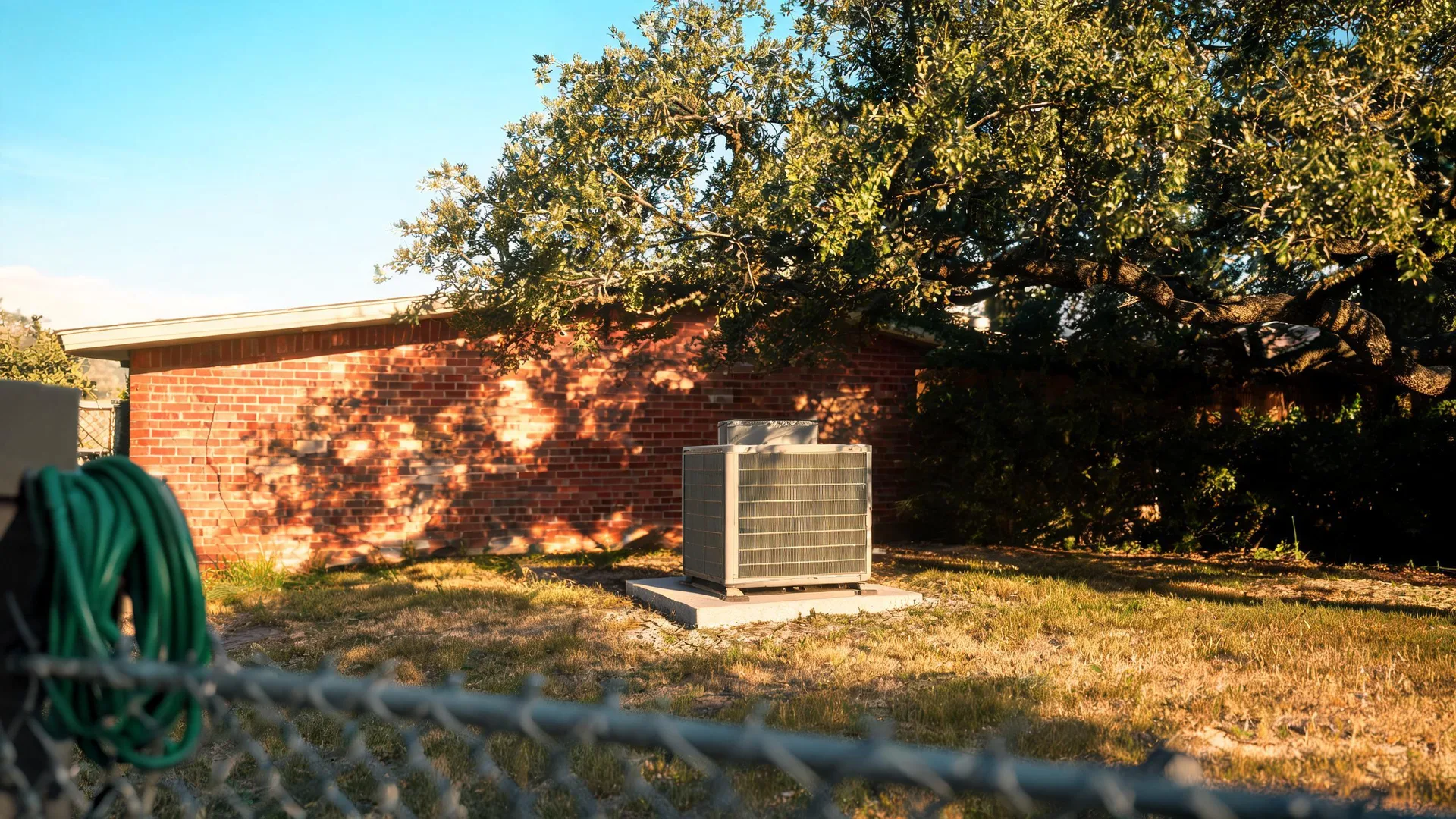
Get the outdoor unit checked before the next storm rolls through, not after. A technician can spot a bent coil fin or a fan pulling debris before it turns into a breakdown, and confirm the unit is sealed up and ready if the power happens to go with it.

Find a contractor
An outdoor air conditioning condenser unit mounted on a concrete pad surrounded by gravel, photographed against a partly cloudy blue sky.

A real tune-up opens the panel. A quick one swaps the filter

A quick visit gets the filter swapped and the thermostat checked and calls it done. That tells you nothing about whether the unit can get through the season. A thorough tune-up means the technician pulls the panel and actually looks at the coil, checks refrigerant pressure against what the system calls for, and tests the capacitor under load instead of just eyeballing it. They'll flush the condensate drain, since a clogged one backs up and shuts the system down on its own. They'll check the contactor for pitting, tighten electrical connections that work loose from vibration over time, and confirm the fan motor spins freely without wobble or noise. Ask what they checked, not just what they replaced. If the answer is the filter and nothing else, that was a quick look, not a tune-up.

The system tells you before it quits

An air conditioner rarely fails without warning. It starts short cycling, shutting off a few minutes after it kicks on, because a dirty coil or low airflow makes it overheat and trip its safety switch. It blows air that never gets quite as cold as it used to. It takes longer to bring the house down to the set temperature. The outdoor fan runs louder, or rattles, because a bearing is wearing out or a blade is hitting something it shouldn't. Any of these is worth a call before the unit just stops.

Waiting for a breakdown costs more than the check does

A capacitor that's weakening still starts the compressor, until the day it can't, and then the compressor is straining against a load it wasn't built to take alone. A refrigerant leak that's small today still lets the compressor run low on charge every day until someone finds it, and a compressor run that way wears out faster than one that's properly charged. A technician can catch a failing capacitor or a slow leak on a check and replace or repair it for far less than what it costs to replace a compressor that burned out doing its job without enough refrigerant behind it.

An outdoor air conditioning condenser unit installed beside the exterior wall of a blue vinyl-sided house at sunset.

Book your AC tune-up in June, before homes here start needing cooling in July.

  1. Jan
  2. Feb
  3. Mar
  4. Apr
  5. May
  6. Jun
  7. Jul
  8. Aug
  9. Sep
  10. Oct
  11. Nov
  12. Dec

A tune-up checks the refrigerant charge, cleans the coils, tests the capacitor and tightens the electrical connections.

A proper tune-up starts outside, at the coil. The technician washes it out from the inside, not just hoses off the fins, because dirt packed between the fins blocks airflow the same as a dent does. They check the refrigerant charge against the pressure the system is built to run at, not just whether it's cold enough to the hand. Low charge makes the compressor work harder for less cooling, and it won't get better on its own. They test the start and run capacitors under an actual electrical load, since a capacitor can read fine sitting still and still fail to start the compressor under power. The condensate drain gets cleared too, because algae and dirt build up in that line over time and a blocked drain will shut the whole system down as a safety measure. Belts aren't part of it. Most outdoor fans and compressors run direct drive, so what matters is whether the motor bearings are worn and whether the fan spins true without wobbling.