






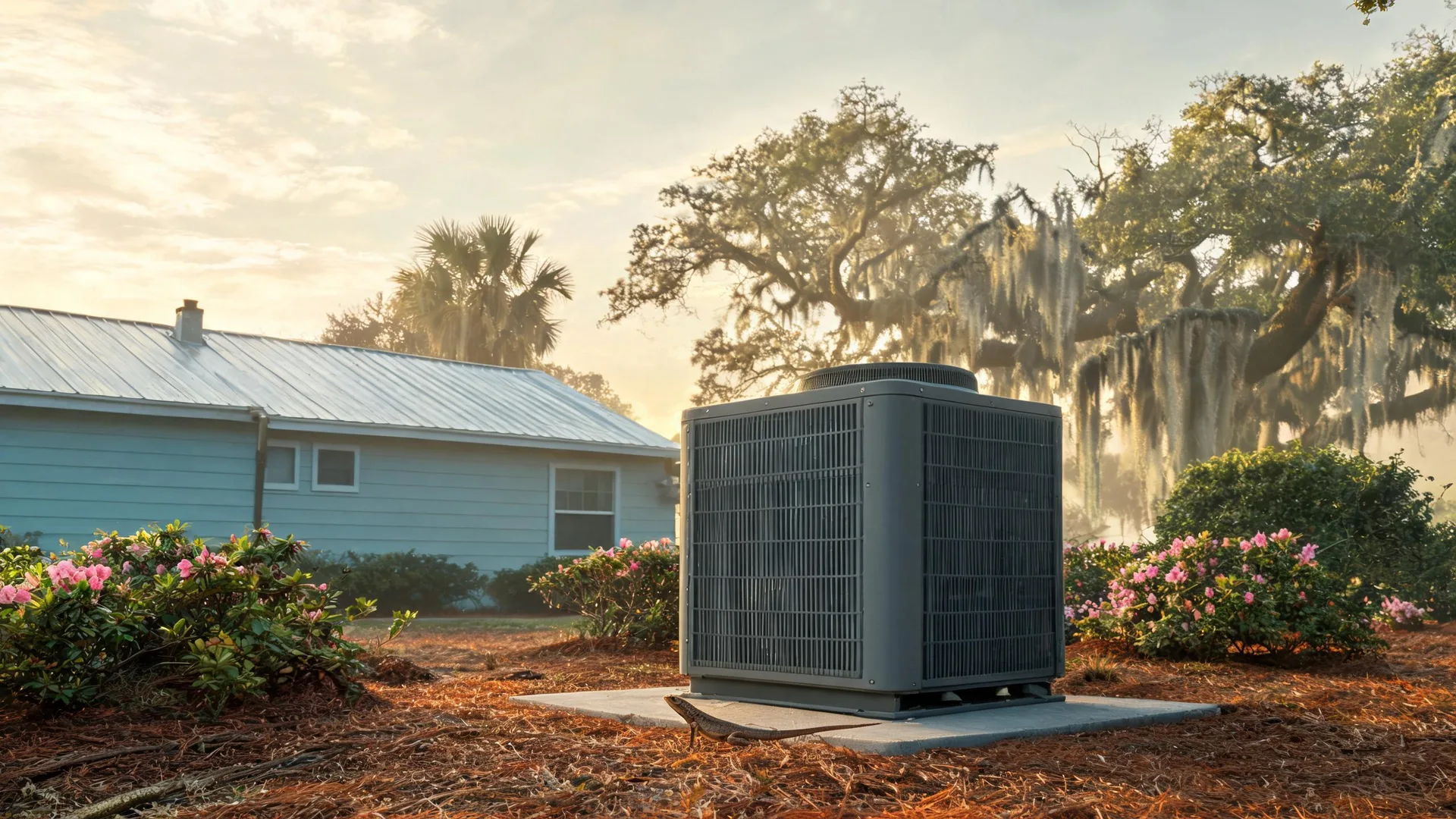
An outdoor air conditioning condenser unit positioned on a concrete pad next to a blue-sided house, surrounded by green shrubs and flowering hydrangeas at sunset.

AC Maintenance in Duluth, MN

Tell us about the job

Takes about a minute. No obligation.

Tune-up, service, or cleaningCentral ACSt. Louis County, MN
Step 1 of 2

What ZIP code is the job in?

Afternoons here average 76°F through June, July and August. An air conditioner in Duluth isn't working against much, so the compressor and the coil don't take the beating they would in a hotter state. That light duty is also why a yearly check still matters. A system that runs easy for most of the year can sit idle for long stretches, and a loose connection or a slow refrigerant leak won't show itself until the one hot stretch it's actually needed. Catching that early, before the weather asks anything of it, is what keeps a small fix from turning into a system down on the one week you wanted it.

76°F
the average summer afternoon it cools against
215 hail events
in ten years, and hail bends the fins on outdoor coils
284 wind events
in ten years, and wind drives debris into outdoor units
Isometric line illustration of a cutaway single-story house showing interior rooms, attic ductwork and an air handler, connected by a line to an outdoor condenser unit on a pad.
Your air conditioner works hardest from July through August.

NOAA nClimDiv, 1991–2020 normals

Half the homes in St. Louis County were built in 1962 or earlier.

An air conditioner that old has had a lot of years for a small problem to start, so a yearly check is how it gets caught early.

St. Louis County sees 695 severe weather events a decade. Your AC still only needs one checkup a year.

695 severe weather events from 2015 to 2024
13% of homes statewide lost power a day or more in 2024
284 damaging wind events from 2015 to 2024
Light duty, not no dutySummer afternoons here average 76°F. A yearly check is still the right call.

Between visits, the main thing worth doing is keeping the filter clean. A dirty filter chokes the airflow across the coil, and the coil needs that airflow to pull heat out of the house. Check it monthly and swap it when it looks gray or clogged. Outside, keep the area around the condenser clear. Grass clippings, leaves and shrubs crowding the unit block the airflow it needs to dump heat, and that makes the compressor work harder than it should. A few feet of clearance on all sides is enough. Indoors, keep an eye on the vents and make sure furniture or rugs aren't blocking them. Beyond that, leave the refrigerant, the electrical connections and anything inside the cabinet to a licensed contractor.

Keep up the yearly check

Easy duty still wears parts. A yearly check keeps it going a long time.

Find a contractor
An outdoor air conditioning condenser unit mounted on a concrete pad beside a house, with electrical conduit running to a wall-mounted disconnect box.

Know the warning signs

An air conditioner gives warnings before it fails outright. Warm air out of the vents while the thermostat is set low points to a refrigerant problem or a failing compressor. Short cycling, where the system kicks on and off every few minutes instead of running a full cooling cycle, wears the compressor harder every time it happens. Ice on the refrigerant lines or the coil means airflow or refrigerant charge is off, and running it that way only pushes the damage further. A fan that rattles, squeals or hums without turning usually means a motor bearing is going. Water pooling near the indoor unit means the condensate drain is clogged and needs clearing before it backs up into the house. Any of these is worth a call before the next hot stretch, not after.

The filter protects the coil

Every bit of air the system moves passes through the filter before it reaches the coil. A clogged filter starves the coil of airflow, and a coil running without enough air over it can frost up even on a mild day. Once ice forms, it blocks airflow further, and the problem feeds itself.
The drain line needs a clear path

The coil pulls moisture out of the air as it cools, and that water has to leave through the condensate drain. Dust, algae or a kink in the line can block that path, and once it backs up the water has nowhere to go but into the cabinet or down into the house. A yearly check includes clearing that line before it becomes a leak.

A tune-up gets at what the filter and a clear condenser can't fix. A technician checks the refrigerant charge against what the system calls for, since a slow leak can run a unit low for months without any sign but a weaker cool. They test the capacitor and contactor, the parts that get the compressor started and keep it running, because a capacitor loses strength gradually and usually fails on the hottest day rather than warning you first. They check the condensate drain for a clog starting to form and clear it before it backs up. They also check the electrical connections at the disconnect and inside the cabinet, since a loose connection builds heat over time and that heat is what burns through a wire or a terminal. None of this shows up from the thermostat.

A tune-up also covers things that never show up as a symptom until they fail outright. A technician checks the blower motor and wheel, since a wheel caked with dust moves less air even when the motor sounds fine. They check refrigerant line insulation, because bare or cracked insulation makes the compressor work harder to get the same cool. They check that the outdoor fan blade is tight on its shaft and spins freely, since a wobble there wears the bearing faster than normal running would. They also check the system's starting and running amps against what the compressor is rated for, which catches a motor that is drawing too hard before it trips a breaker or burns out. A visual check alone misses most of this.