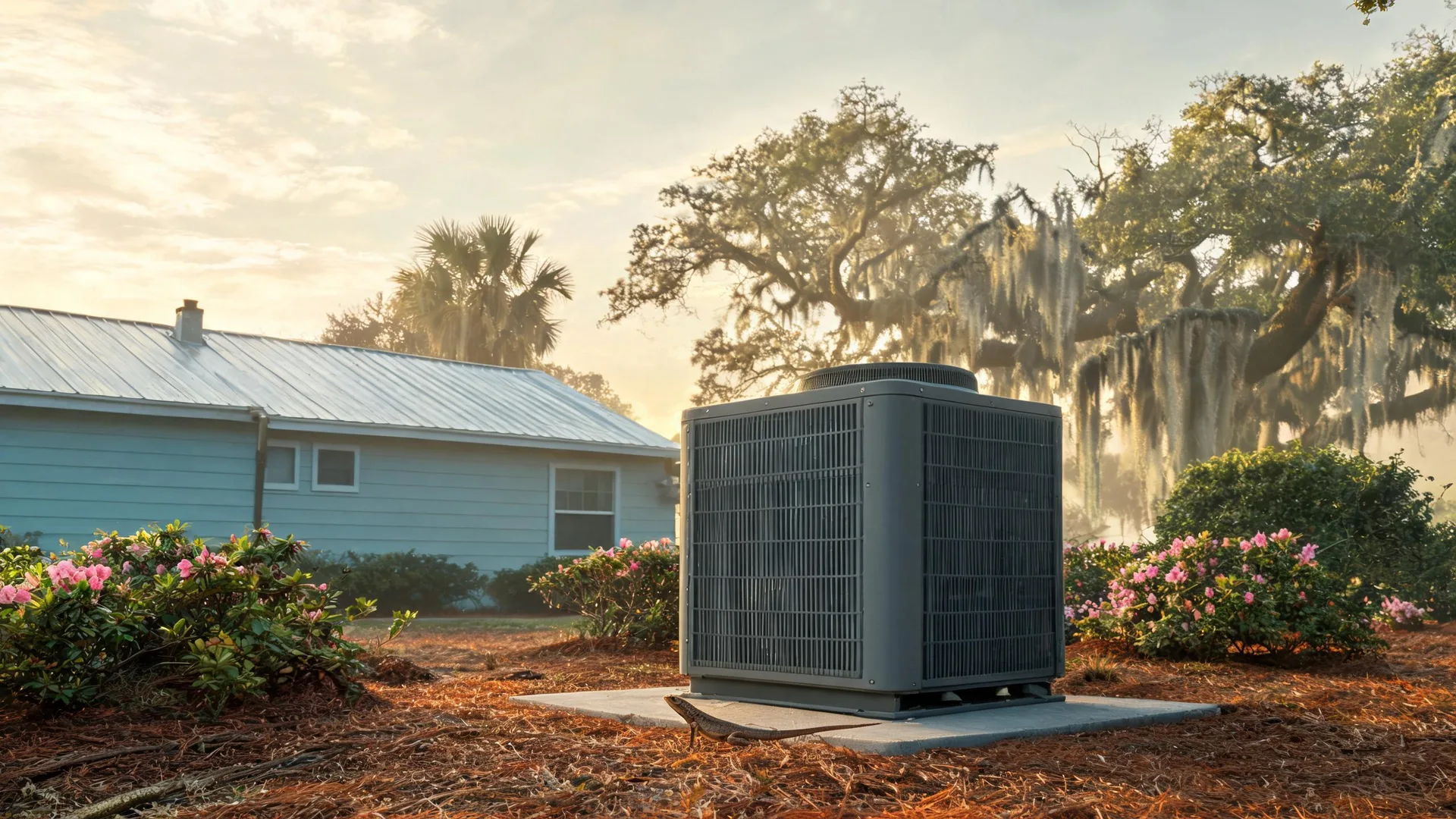
An outdoor air conditioning condenser unit positioned on a concrete pad next to a blue-sided house, surrounded by green shrubs and flowering hydrangeas at sunset.

AC Maintenance in Faribault, MN

Tell us about the job

Takes about a minute. No obligation.

Tune-up, service, or cleaningCentral ACRice County, MN
Step 1 of 2

What ZIP code is the job in?

The system gives you warning signs

An air conditioner rarely quits without warning. It runs longer than it used to before the house cools down. The air at the vents feels less cold than it should. It starts short cycling, kicking on and off instead of running a steady stretch. Any one of these on its own is worth a look before it turns into a breakdown.


What a check actually catches

A technician goes after the things a homeowner can't see from the thermostat. Refrigerant charge drifts low over time. A capacitor weakens before it fails outright. A dirty coil makes the whole system work harder than it should to do the same job. Catching any of those early means a small adjustment now instead of a system down on the hottest day of the year.

3 months
June through August, your air conditioner is on duty
80°F
the average summer afternoon it cools against
41 hail events
in ten years, and hail bends the fins on outdoor coils
36 wind events
in ten years, and wind drives debris into outdoor units
Isometric line illustration of a cutaway single-story house showing interior rooms, attic ductwork and an air handler, connected by a line to an outdoor condenser unit on a pad.
Your air conditioner works hardest from June through August.

NOAA nClimDiv, 1991–2020 normals

Faribault summers only push an air conditioner about three months, June through August, with afternoon highs around 80.

A system here wears down from age or neglect more than from the work it does, so a yearly check is usually catching that, not fighting heat damage.

June through August is the only stretch that calls for it

Half the homes here were built by 1978
Cooling runs June through August
Summer afternoons average 80°F

One visit a year covers it. Spring is the right time, before the heat shows up and before a tech's schedule fills with calls from people whose systems already quit. Electricity in Minnesota ran 15.45 cents per kilowatt-hour in 2024, and a system working harder than it should, because of a dirty coil or a weak capacitor, shows up on that bill before it shows up as a breakdown. A yearly check catches that drift early, while it's still an adjustment and not a repair. There's no case here for more than that, and no case for skipping a year either. Once, timed right, is what this system needs.

Spring is the time to get it looked at

Book the spring check before the system has to work. It catches the slow stuff, drift in the refrigerant charge, a capacitor on its way out, while it's still an easy fix.

Find a contractor
An outdoor air conditioning condenser unit mounted on a concrete pad beside a house, with electrical conduit running to a wall-mounted disconnect box.

What you can check yourself, and what to leave shut

The filter is the one thing worth checking yourself, and the only one. Pull it monthly through the summer. Hold it up to a light. If you can't see light through it, it's blocking airflow, and the system has to run longer to move the same amount of air through the house. A dirty filter also lets the coil behind it collect dust, and that's a job for a technician, not something you can rinse off yourself. Keep anything planted or stacked away from the outdoor unit too. It needs open air on all sides to shed the heat it's pulling out of the house. Beyond the filter and keeping the area around the unit clear, leave the rest alone. The refrigerant charge and the electrical parts aren't something to open up between visits.

What keeps slipping past unchecked

A coil left dirty stays dirty. Dust and pollen settle into it a little more each season, and normal running never clears it back off. Left alone long enough, a coil like that can ice over even in warm weather, and the system stops cooling until it thaws.

Why the compressor pays for it

The compressor absorbs the strain from everything else going wrong. Low refrigerant, a weak capacitor, a dirty coil, all of it means the compressor works harder to do the same job. It can take that strain for a while. It cannot take it indefinitely, and it gives no warning when it finally gives out.

Aerial view of a square outdoor air conditioning condenser unit on a concrete pad beside a house wall with a sliding glass door.

Book your AC tune-up in May, before homes here start needing cooling in June.

  1. Jan
  2. Feb
  3. Mar
  4. Apr
  5. May
  6. Jun
  7. Jul
  8. Aug
  9. Sep
  10. Oct
  11. Nov
  12. Dec

A tune-up checks the refrigerant charge, cleans the coils, tests the capacitor and tightens the electrical connections.

A tune-up starts outside, at the unit itself. The coil gets checked and cleaned if it's caked with dust, since that's what lets the system pull heat out of the house in the first place. The capacitor gets tested under load, not just looked at, because a weak one can still start the compressor and still be close to done. Refrigerant charge gets checked against what the system calls for, not topped off out of habit. The condensate drain gets cleared too, since a clogged one backs up and can shut the system down on its own. Electrical connections get tightened, because a loose one generates heat right at the connection and that's how wires and terminals burn. None of this is guesswork. Each part gets checked against a number the manufacturer sets for it, and anything outside that range gets flagged before it turns into a service call.