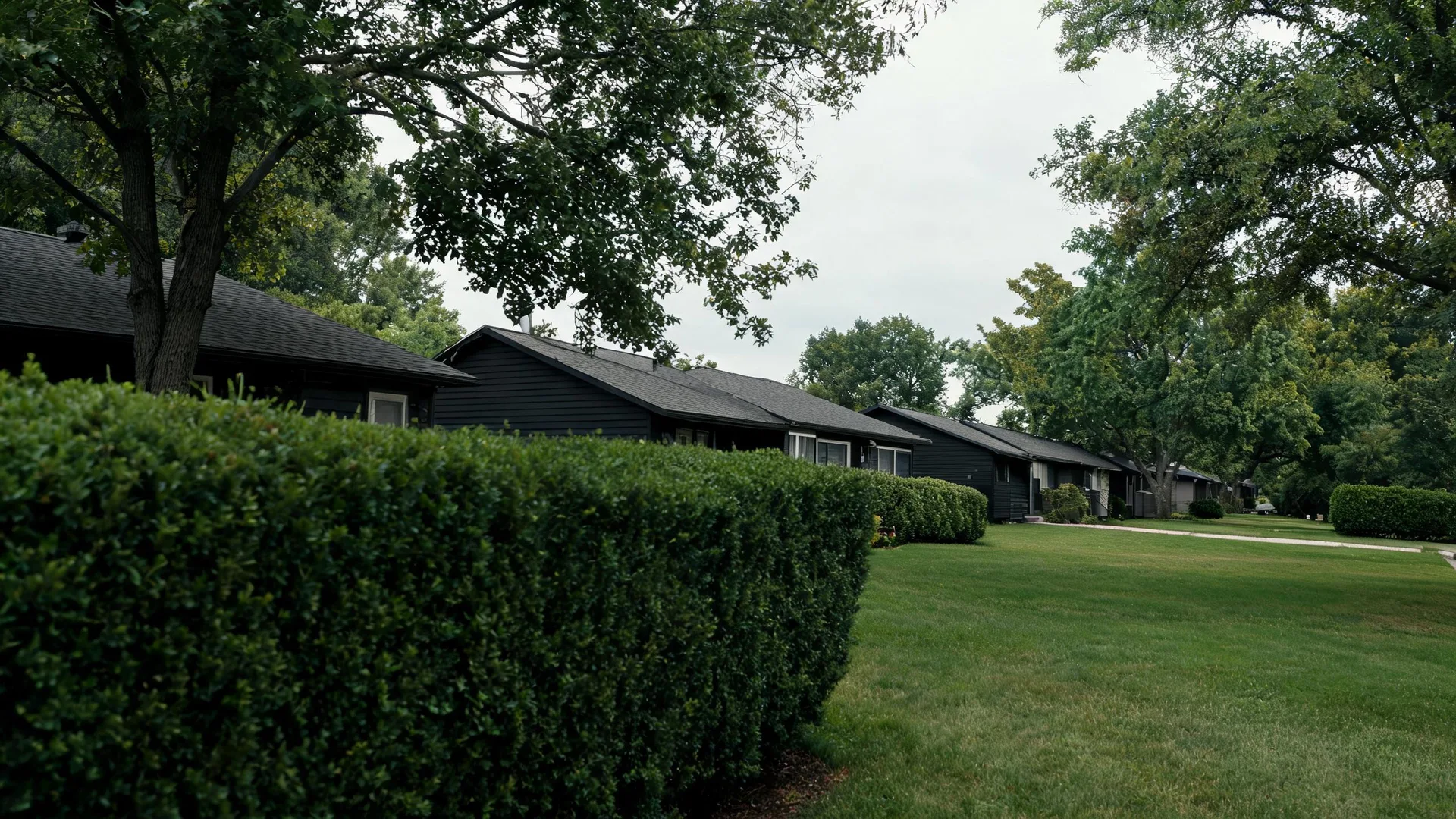






A row of dark-sided single-story houses behind a long trimmed hedge, with mown lawn, a paved path and large leafy trees under an overcast sky.

AC Maintenance in Austin, MN

Tell us about the job

Takes about a minute. No obligation.

Tune-up, service, or cleaningCentral ACMower County, MN
Step 1 of 2

What ZIP code is the job in?

Summers here run about three months, June through August, with afternoon highs averaging 79°F. That is not hard duty for a central air conditioner. The compressor isn't working against day after day of extreme heat, and the rest of the year it sits idle. A system with this little asked of it tends to fail from age or from something small left unchecked, not from being run hard. That's the case for a yearly check, done before June asks more of the unit than any other month will.

3 months
June through August, your air conditioner is on duty
79°F
the average summer afternoon it cools against
32 hail events
in ten years, and hail bends the fins on outdoor coils
59 wind events
in ten years, and wind drives debris into outdoor units
Isometric illustration of a cutaway house showing interior rooms, an attic furnace with large ducts, and an outdoor condenser unit connected by a line set, on a white background.
Your air conditioner works hardest from June through August.

NOAA nClimDiv, 1991–2020 normals

June is the first month this system runs all year in Austin.

Have it checked in May, before it has to start up cold for the season.

Half the homes in Mower County date to 1958 or earlier, old enough that a yearly check is how problems get caught small

Half the homes here were built by 1958
Cooling runs June through August
Summer afternoons average 79°F

A tune-up starts with the refrigerant charge, and that's not something you can eyeball. Too little and the coil can ice over on a mild day, not just a hot one. The tech also checks the capacitor, the part that gives the compressor and fan motor their starting kick. A weak capacitor still runs the system most days, right up until the morning it doesn't start at all. Outside, the condenser coil collects a season of dust and cottonwood against its fins, which makes the whole system work harder to shed heat even though nothing looks wrong from a few feet away. None of this shows up as a symptom you'd notice from inside the house. It shows up as a breakdown, usually on the first really hot day, which is exactly when a compressor is least forgiving of a problem that's been building all along.

Schedule the check now, before summer asks more of it

A yearly check is what keeps a lightly used system lasting this long. Most of what goes wrong here is a weak capacitor or a dirty coil, both easy to catch before summer asks something of the unit that it can't deliver.

Find a contractor
A man in a cap, dark shirt and olive pants climbs porch steps toward a dark green paneled door, carrying a worn canvas duffel bag, with a potted shrub beside the entry.
An outdoor air conditioning condenser unit mounted on a concrete pad surrounded by gravel, photographed against a partly cloudy blue sky.

What you can check yourself, and what you can't

The filter is the one thing worth checking yourself between visits. Look at it once a month through the summer and swap it when it looks gray or matted rather than waiting for a fixed date. Keep the ground around the outdoor unit clear too. Grass clippings, leaves, anything piled against the fins makes the condenser work harder to shed heat, and that's something you can see just by walking outside and looking. Inside the house, pay attention if the system suddenly sounds louder than usual, or if the air coming out feels weaker than it did. Those are things you'll notice before any tech does. What you can't do yourself is check the refrigerant charge, test the capacitor, or clear a condensate line that's starting to clog. Those need gauges and training, and working on them without either one usually turns a small problem into a bigger one.

The filter is what the coil depends on

A clogged filter starves the indoor coil of airflow, and that coil needs air moving across it to give up its cold. Restrict that airflow enough and the coil drops below freezing and ices over, even on a mild day. Once ice builds, it blocks even more air, so the problem feeds itself until the system is blowing warm or not blowing at all.

The drain line fails quietly, then all at once

The indoor coil pulls moisture out of the air all summer, and that water has to leave through a drain line. Algae and dust build up inside that line the same way they would in any slow drain. Most systems shut themselves off when the drain backs up, which stops a flooded pan but also stops your cooling, usually with no warning beyond the day it happens.

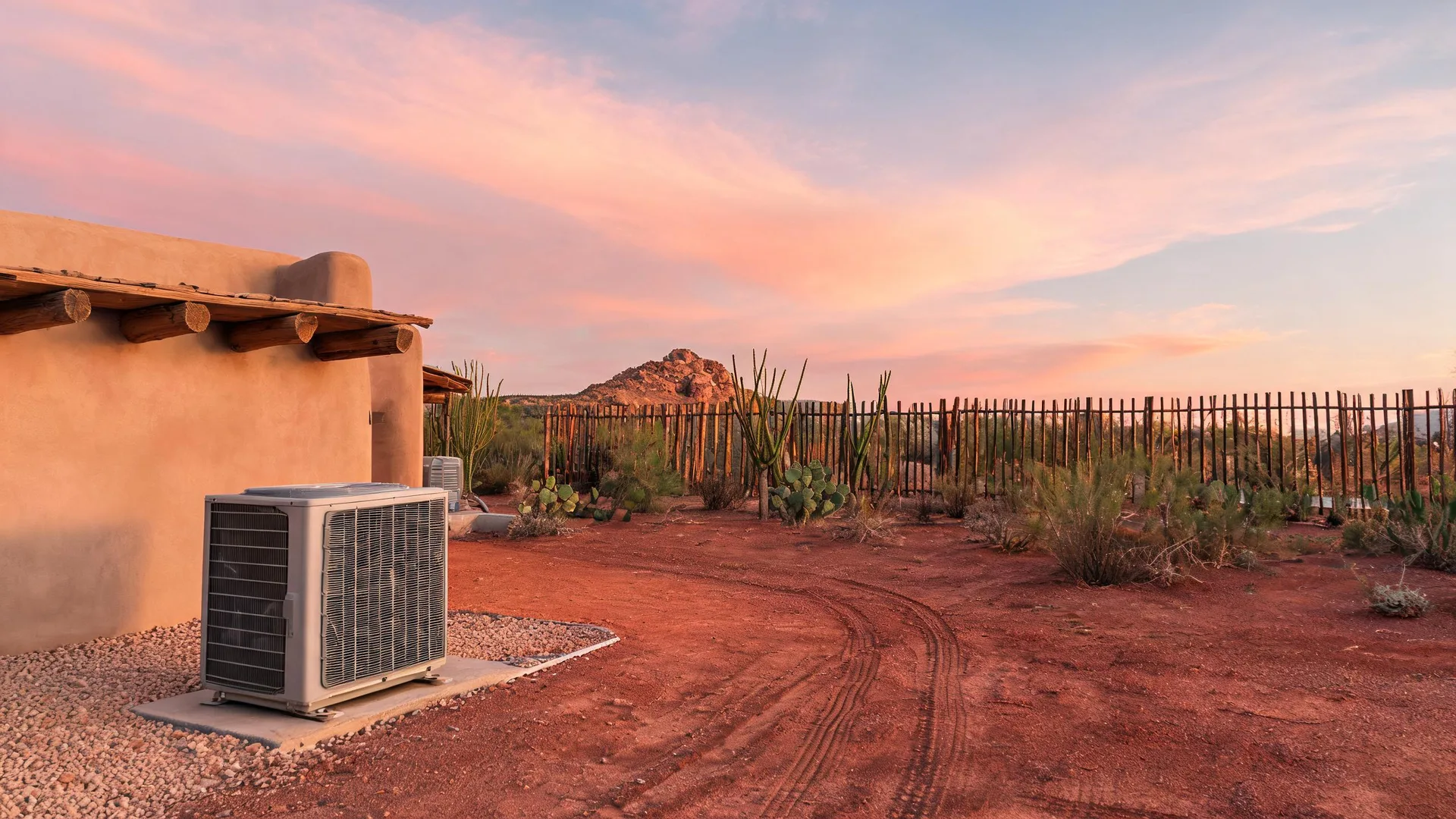
An outdoor central air conditioning unit mounted on a concrete pad beside a blue-sided house at sunset.

Book your AC tune-up in May, before homes here start needing cooling in June.

  1. Jan
  2. Feb
  3. Mar
  4. Apr
  5. May
  6. Jun
  7. Jul
  8. Aug
  9. Sep
  10. Oct
  11. Nov
  12. Dec

A tune-up checks the refrigerant charge, cleans the coils, tests the capacitor and tightens the electrical connections.

A tune-up also covers things that never show up as a breakdown, just as a slow loss of comfort. The tech checks the blower motor and the fan belt or wheel, since a blower losing speed means less air across the coil no matter how clean that coil is. Thermostat calibration gets checked too, because a thermostat reading the room wrong will short-cycle the compressor, and short cycling wears the same parts a long summer would. Electrical connections at the disconnect box and inside the unit get tightened, since a loose connection builds heat and that heat is what burns a wire or a terminal. None of this is glamorous work. It is the kind of thing that only matters on the day it would have failed.