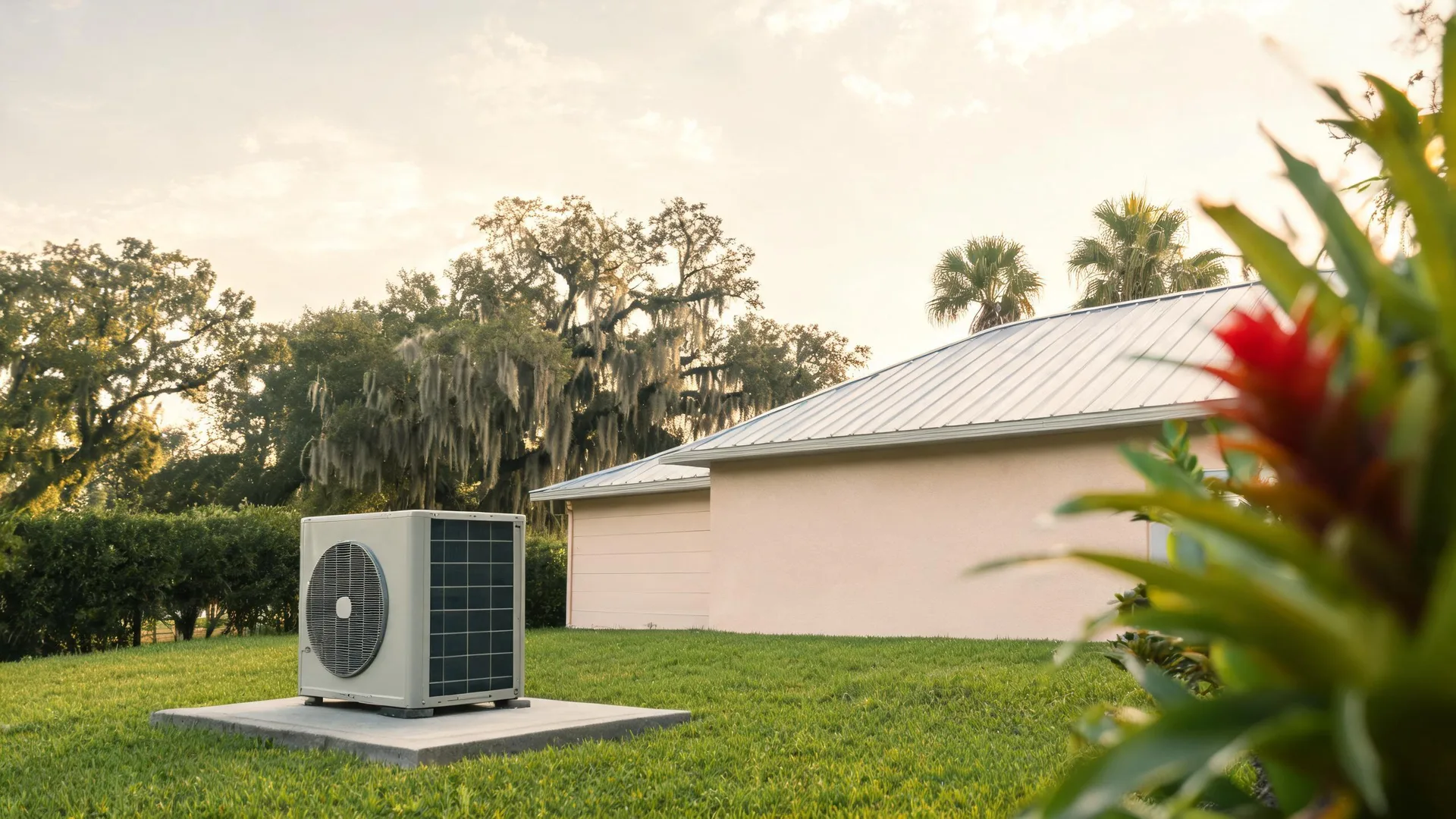
Your air conditioner only has to work June through August here, with afternoon highs averaging around 80°F. That's a short stretch, and the dew point averages 59°F across those months, so the air isn't pressing hard on the system either. One check before that stretch starts is enough to catch a weak capacitor or a dirty coil before it has to run. Anoka County does see its share of hail and wind, so it's worth having the outdoor unit looked at for bent fins or dents after a bad storm. Outside of that, there's nothing here that wears this machine down faster than it would anywhere else.
3 months
June through August, your air conditioner is on duty
80°F
the average summer afternoon it cools against
75 hail events
in ten years, and hail bends the fins on outdoor coils
40 wind events
in ten years, and wind drives debris into outdoor units
Your air conditioner works hardest from June through August.
Jan
Feb
Mar
Apr
May
Jun
Jul
Aug
Sep
Oct
Nov
Dec
NOAA nClimDiv, 1991–2020 normals
Cooling starts in June here, and that's when your AC goes from idle to running every day.
Have it checked in May, before that first hot stretch asks anything of it.
Half these homes were built by 1986, so the AC in a lot of them still has years ahead of it
Half the homes here were built by 1986Cooling runs June through AugustSummer afternoons average 80°F
One checkup a year is enough here150 severe weather events hit this county in the last decade. One AC check a year covers it.
A system with years ahead of it is worth keeping that way. A yearly check is what does that. The tech can catch a refrigerant level drifting low or a capacitor starting to weaken before either one forces a breakdown mid summer. That matters more over the system's working life than any single season does. Skip a few years of checks and small problems get the chance to turn into bigger ones, the kind that shorten how long the unit lasts. If your system came with the house, a yearly check is the cheapest way to get the rest of its years out of it.
The filter, the coil and the drain do the quiet work
The filter is the one part the system can't work around. Once it loads up with dust, air can't pull through it the way the blower expects, and the coil behind it starts picking up the dirt that would have stayed on the filter. A dirty coil doesn't move heat the way a clean one does, so the system runs longer to do the same job. Keep that up and ice can start forming on the coil instead of condensation, which blocks airflow even more. The drain line is the quiet one. It carries condensation out of the house, and when it clogs, that water backs up into the pan under the coil and from there into the ceiling or the closet around the unit. None of these three parts are expensive to check. All three get overlooked because the system still runs while they're failing, right up until the day it doesn't.
The system hides its own decline
A capacitor weakens slowly, not all at once, so the compressor and fan motor keep starting even as it fades. Refrigerant drops the same way, a little at a time through a slow leak rather than all at once. The air coming out of the vents still feels cool, so there's nothing telling you to worry, right up until the day the compressor can't start at all.
The breakdown always lands on the worst day
A system left unchecked doesn't fail during a mild stretch. It fails on the hottest afternoon, because that's when it's working hardest and whatever was already weak finally gives out. A capacitor that's been struggling for months picks the one day it can't keep up. A check ahead of that stretch catches the weak part while it's still just weak, not yet broken.
Book your AC tune-up in May, before homes here start needing cooling in June.
Jan
Feb
Mar
Apr
May
Jun
Jul
Aug
Sep
Oct
Nov
Dec
A tune-up checks the refrigerant charge, cleans the coils, tests the capacitor and tightens the electrical connections.
A proper tune-up starts outside, at the condenser. The tech checks the refrigerant charge against what the system calls for, since too little means the compressor works harder to move the same heat. The coil gets cleaned if it's caked with dirt, because a dirty coil can't shed heat the way a clean one does. They'll test the capacitor and the contactor, the two parts that get the compressor and fan started and running, since a weak capacitor is one of the most common reasons a system won't start on a hot day. Inside, the blower and the evaporator coil get checked too, along with the drain line that carries condensation out of the house. Electrical connections get tightened, since a loose one generates heat and can burn a wire over time. None of this takes long, and none of it matters until the one day it does.