







A snow-covered residential street at twilight with illuminated houses, bare trees, and an orange horizon glow beneath a deep blue sky.

AC Maintenance in East Grand Forks, MN

Tell us about the job

Takes about a minute. No obligation.

Tune-up, service, or cleaningCentral ACPolk County, MN
Step 1 of 2

What ZIP code is the job in?

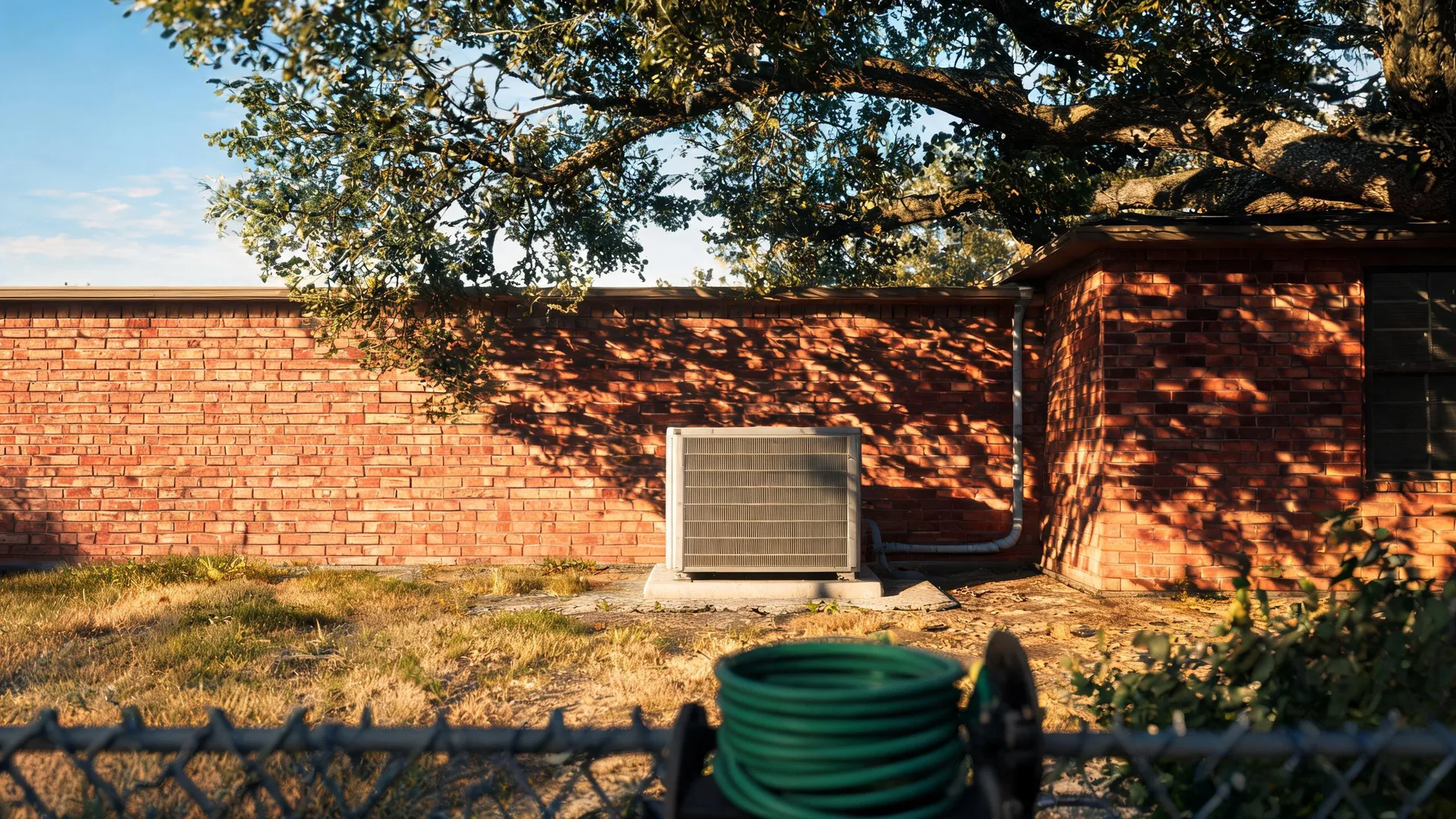
Your air conditioner in East Grand Forks only has to work about two months a year, July and August, with afternoon highs averaging around 78. That is a short, mild run compared to what AC units handle in a lot of the country. The low strain means a unit here can last a long time on its original parts. But hail and wind come through Polk County often, enough that the outdoor unit can take a hit even when the system inside is fine. A yearly check catches a bent fin or a loose connection from weather like that before it turns into a breakdown in the middle of August.

2 months
July through August, your air conditioner is on duty
78°F
the average summer afternoon it cools against
98 hail events
in ten years, and hail bends the fins on outdoor coils
136 wind events
in ten years, and wind drives debris into outdoor units
Isometric line illustration of a cutaway house showing interior rooms, ceiling ductwork, an indoor air handler unit, and an outdoor condenser connected by lines along the exterior wall.
Your air conditioner works hardest from July through August.

NOAA nClimDiv, 1991–2020 normals

July is when cooling starts here.

Book the check in June, before the system has to work.

Weather here is hard on the unit outside, not the one inside your walls

353 severe weather events from 2015 to 2024
13% of homes statewide lost power a day or more in 2024
136 damaging wind events from 2015 to 2024
Once a year covers itMinnesota homeowners paid 15.45 cents per kilowatt-hour in 2024, and a clean system is what keeps that bill from creeping up

Half the homes in Polk County were built in 1971 or earlier. If your air conditioner came with the house, it's working through parts and wiring that have been there a long time too. A system that old can still run fine, especially given how little this climate asks of it. But the connections loosen and the contacts wear a little more each year, and none of that shows up until the unit just doesn't start. A yearly check catches that kind of wear while it's still small, before it decides the matter for you in the middle of a hot week.

Book the check before July starts

A yearly check in June catches a bent fin or a loose connection before July puts the system to work. The low strain here means a unit can run a long time, but it still needs that once-a-year look to stay ahead of what the weather does to the outdoor unit.

Find a contractor
A man in a cap, dark t-shirt and work pants climbs porch steps toward a dark green door, carrying a worn canvas and leather tool bag, with a potted shrub beside the entry.
A gray residential air conditioning condenser unit mounted on a concrete pad outdoors, surrounded by green grass under a partly cloudy blue sky.

An old system is worth a yearly look, not a wait and see

Over on a system working through old wiring, nothing shows up until the day it doesn't start. A yearly check puts a tech in front of that unit on a day it was already scheduled, looking at the same connections and contacts that would otherwise go unchecked for another year. That is the whole value of doing it annually instead of waiting for a sign of trouble, since this system does not really give one.

The filter protects the coil, not just the air

A dirty filter blocks airflow across the evaporator coil, and a coil that can't move enough air gets colder than it should. Past a certain point it frosts up, and once ice builds on the coil the system cools worse, not better. Checking the filter is the one part of maintenance that can't wait for a yearly visit.

The drain line is a quiet failure

The evaporator coil pulls moisture out of the air, and that water has to leave through the condensate drain. Algae and dust build up inside that line over time, and when it clogs, the water backs up into the drain pan and then into the house. Nothing about the cooling tells you this is happening. A tech clears that line as part of the same visit that checks the coil and the wiring.

An outdoor air conditioning condenser unit positioned beside a blue-sided house at sunset.

Book your AC tune-up in June, before homes here start needing cooling in July.

  1. Jan
  2. Feb
  3. Mar
  4. Apr
  5. May
  6. Jun
  7. Jul
  8. Aug
  9. Sep
  10. Oct
  11. Nov
  12. Dec

A tune-up checks the refrigerant charge, cleans the coils, tests the capacitor and tightens the electrical connections.

A tune-up starts outside, at the condenser. The tech checks the refrigerant charge against what the system calls for, since a unit low on charge cools poorly and wears its compressor out faster doing it. The capacitor and contactor get tested, because a weak capacitor is one of the most common reasons a condenser fan won't start even though the unit hums like it wants to. The coil and fins get cleaned and straightened, since dirt and bent fins both choke airflow across the coil. Inside, the tech checks the blower motor, tightens electrical connections, and confirms the thermostat is calling for cooling correctly. None of this takes the system apart. It is a check of the parts most likely to fail quietly, before they do.