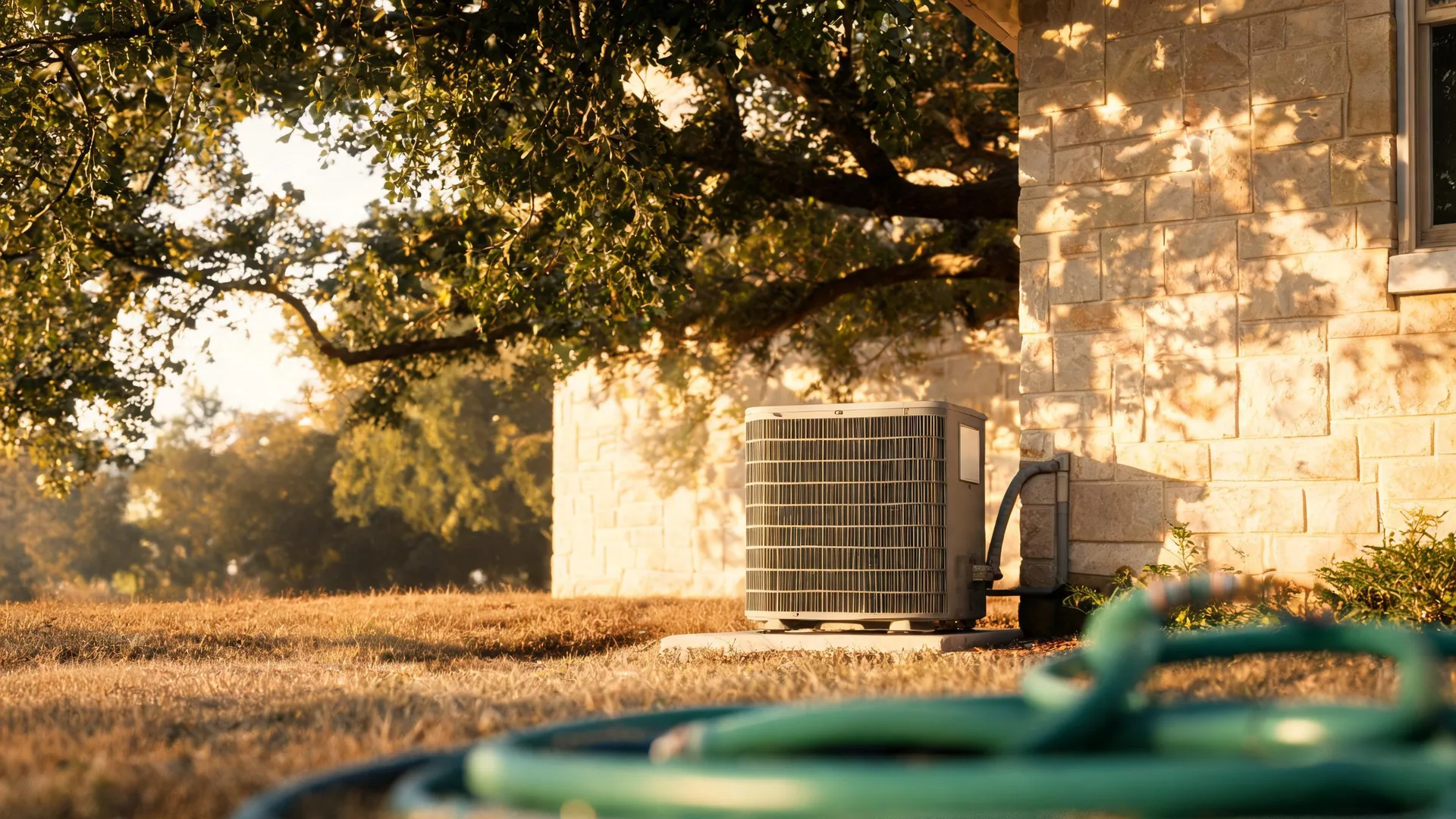
An outdoor air conditioning condenser unit installed beside the exterior wall of a blue vinyl-sided house at sunset.

AC Maintenance in Long Prairie, MN

Tell us about the job

Takes about a minute. No obligation.

Tune-up, service, or cleaningCentral ACTodd County, MN
Step 1 of 2

What ZIP code is the job in?

A dirty filter starves the whole system

When the filter clogs, the blower has to pull harder to move air across the coil. That coil can start icing over even though the house feels warm inside. Keep the filter clean and the rest of the system stops working so hard to do its job.


The drain line is where water goes to leave

Your air conditioner pulls moisture out of the air and that water has to go somewhere. It runs off the indoor coil into a drain line and out of the house. If that line clogs with algae or dirt, the water backs up and can spill out around the unit instead of draining away.

2 months
July through August, your air conditioner is on duty
78°F
the average summer afternoon it cools against
41 hail events
in ten years, and hail bends the fins on outdoor coils
27 wind events
in ten years, and wind drives debris into outdoor units
Isometric grayscale illustration of a cutaway house with the roof lifted, showing interior rooms, ductwork, an indoor air handler, and an outdoor condenser unit beside the building.
Your air conditioner works hardest from July through August.

NOAA nClimDiv, 1991–2020 normals

Air conditioners in Todd County only run about two months a year, July and August.

A light load like that means a yearly check is almost always worth doing, since trouble here tends to come from age or a part sitting idle, not from the system working too hard.

Two months of work a year is light duty for any AC

Half the homes here were built by 1975
Cooling runs July through August
Summer afternoons average 78°F
Light duty, once a yearThis system runs about two months a year here.

A yearly check before July is the right time to catch what months of sitting idle can cause. A capacitor loses its charge whether the unit runs or not, and a contactor can pit from humidity alone. A technician looking over the outdoor unit each spring is also a chance to catch a bent fin or a cracked line, since hail and wind both turn up in this county often enough to matter. With afternoon highs only averaging around 78 in summer here, this system was never built to strain. A check makes sure age and a slow winter are the only things it has to recover from.

Keep up the yearly check

Easy duty still wears parts. A yearly check keeps it going a long time.

Find a contractor
An outdoor air conditioning condenser unit mounted on a concrete pad beside a house, with electrical conduit running to a wall-mounted disconnect box.

What you can check, what you can't

Between visits, keep the area around the outdoor unit clear. Grass clippings, leaves and mulch piled against it block airflow across the coil, and a trimmer too close can nick the fins or clip a wire. Leave a couple feet of open space on every side. Check the filter and change it when it looks gray or matted, not on a fixed schedule, since how fast it loads up depends on the house. Walk past the indoor unit now and then and look for water at the base. A little standing water or a musty smell near it usually means the drain line is backing up, and that's worth a call before it stains a ceiling or floor. Beyond that, there isn't much to do yourself. Refrigerant charge, electrical connections and the capacitor all need a meter and a gauge set to check properly.

The gauges see the charge, eyes can't

A system low on refrigerant can still blow cold air at the vent and still cool the house some. The only way to know the charge is right is to connect gauges and check the pressures against what that refrigerant should read at that temperature. Run it low too long and the compressor wears faster, since it ends up working harder to move less.

A capacitor fails without warning

The capacitor gives the compressor and fan motor the push they need to start. It weakens slowly, with no sign from inside the house, until the day it can't deliver that push anymore and the outdoor unit just hums or won't start at all. A technician can test it with a meter and read the strength left in it, catching a weak one before it leaves the system down.

An outdoor air conditioning condenser unit positioned on a concrete pad next to a blue-sided house, surrounded by green shrubs and flowering hydrangeas at sunset.

Book your AC tune-up in June, before homes here start needing cooling in July.

  1. Jan
  2. Feb
  3. Mar
  4. Apr
  5. May
  6. Jun
  7. Jul
  8. Aug
  9. Sep
  10. Oct
  11. Nov
  12. Dec

A tune-up checks the refrigerant charge, cleans the coils, tests the capacitor and tightens the electrical connections.

A real tune-up starts outside with the coil and fan, not just a glance. A technician washes the coil fins clean, since dirt packed into them acts like a blanket and keeps the system from shedding heat the way it should. The fan motor gets checked for noise and play in the bearing, and the blades get looked over for a wobble that strains the shaft over time. Inside, the evaporator coil gets inspected for the same buildup, along with the blower wheel, which can carry a layer of grime thick enough to throw it off balance. Electrical connections get tightened, since a loose one heats up and burns before it ever trips a breaker. None of this takes long when the system has been sitting idle rather than working hard, but skipping it lets small wear turn into a failed part.