






A nighttime view of a tree-lined residential street with illuminated two-story brick houses and street lamps.

AC Maintenance in Cloquet, MN

Tell us about the job

Takes about a minute. No obligation.

Tune-up, service, or cleaningCentral ACCarlton County, MN
Step 1 of 2

What ZIP code is the job in?

A tune-up checks things you'd never see from the thermostat. The refrigerant charge, for one. A system low on refrigerant still blows air, so nothing feels wrong, but it's working harder than it should and the compressor takes the wear. A tech also checks the capacitor, which pushes the compressor and fan motor to start. A weak one can still get the system running today and fail outright next week. Then there's the condensate drain, which clogs quietly with algae until the pan backs up. And the coils, both inside and out, get checked for the kind of dirt buildup that chokes airflow long before you'd notice the house feels warmer than it should.

1 months
July through July, your air conditioner is on duty
76°F
the average summer afternoon it cools against
45 hail events
in ten years, and hail bends the fins on outdoor coils
52 wind events
in ten years, and wind drives debris into outdoor units
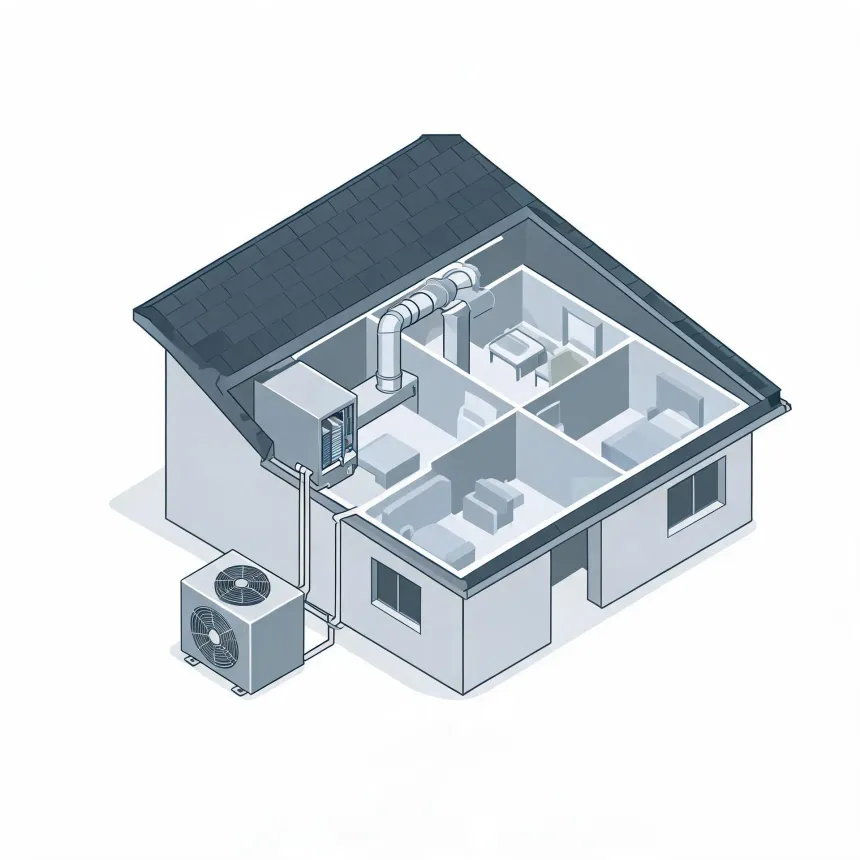
Isometric cutaway illustration of a single-story house showing interior rooms, ceiling ductwork connected to an indoor air handler, and an outdoor condenser unit beside the exterior wall.
Your air conditioner works hardest from July through July.

NOAA nClimDiv, 1991–2020 normals

Cloquet's air conditioner works one month a year, July.

A system that light on duty still needs that yearly check, because what wears it out here is age and dust, not heat.

One check a year covers a one-month job

Half the homes here were built by 1975
Cooling runs July through July
Summer afternoons average 76°F
One month of heat. One visit before it starts.Cooling here runs in July. Have it checked in June.

Book that check in spring, before July's heat arrives. A tech can clear the drain, check the capacitor, and look over the coils while the system is sitting idle, not while it's trying to keep the house cool. Wind and hail hit this county often enough that an outdoor unit is worth a visual check too, bent fins or debris in the cabinet can restrict airflow the same way a dirty coil does. None of that takes long to look at once a year. Skipping it just means finding out about a weak part in the one month you need it working.

Keep up the yearly check

Easy duty still wears parts. A yearly check keeps it going a long time.

Find a contractor
A man in a cap, dark t-shirt and work pants climbs porch steps toward a dark green door, carrying a worn canvas and leather tool bag, with a potted shrub beside the entry.
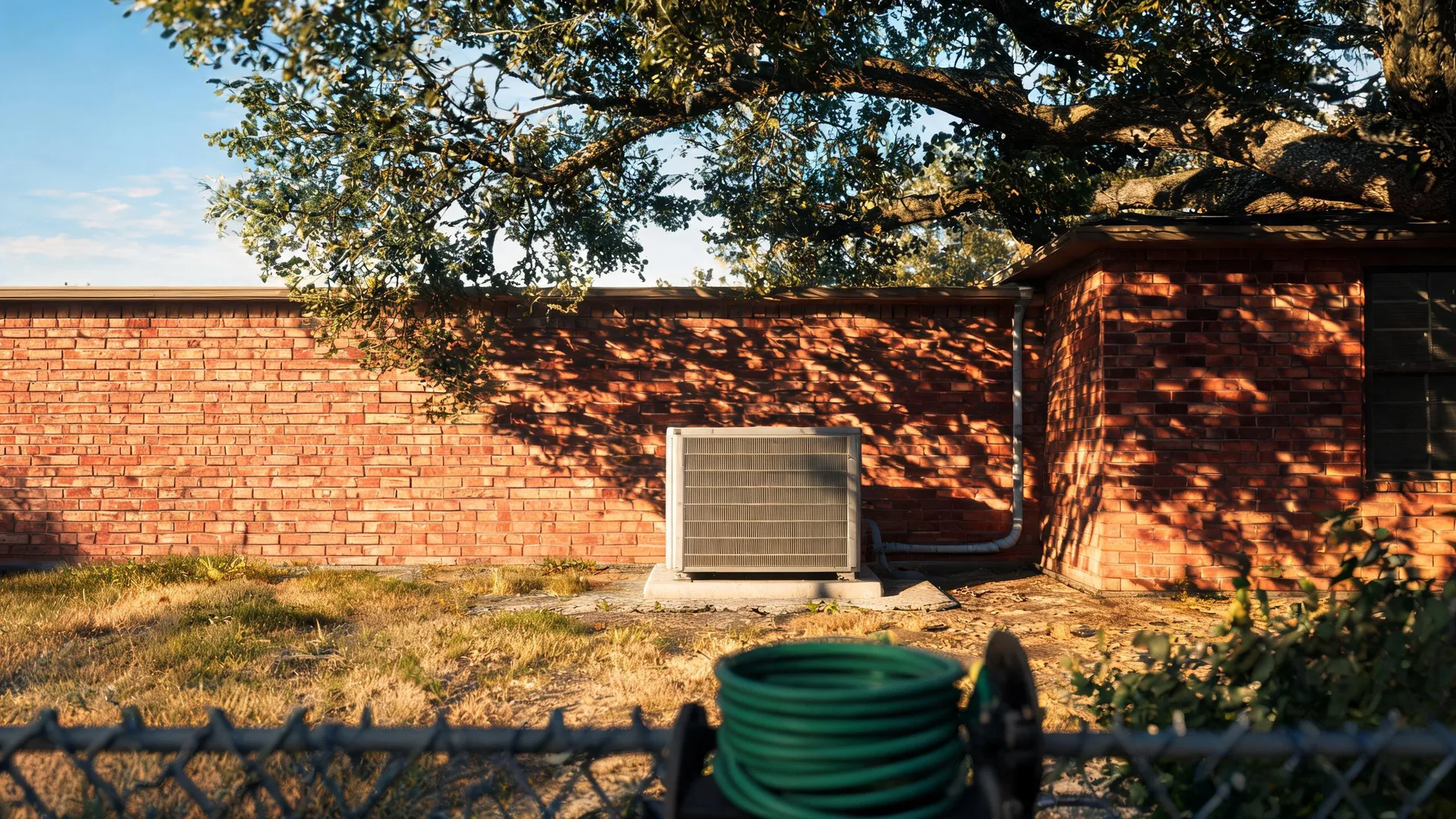
A gray residential air conditioning condenser unit mounted on a concrete pad outdoors, surrounded by green grass under a partly cloudy blue sky.

Running it tells you more than looking at it

A quick visit gets you a filter swap and a glance at the thermostat. That's it. A thorough one starts with the system running, because some things only show up under load. A tech will check the suction line temperature and the pressures to confirm the refrigerant charge is right, not just top it off and move on. They'll test the capacitor under load rather than just looking at it, since a capacitor can read fine sitting still and still be the one that fails when the compressor tries to start. The condensate drain gets flushed, not just checked for a drip. Coils get washed if they're dirty, not just inspected. A quick tune-up looks at the system. A thorough one tests it.

The filter protects the coil, not just the air

A dirty filter starves the system of airflow. The indoor coil needs that airflow moving across it to stay above freezing. Starve it long enough and the coil ices over, and once it's coated in ice it can't absorb heat at all. The fix at that point isn't a new filter, it's turning the system off and letting the ice melt before anything else gets checked.

The drain backs up whether the system ran hard or not

Condensation drips off the coil any time the system runs, and that drain line grows algae on its own schedule, not the compressor's. A system that barely runs still makes condensation every time it cycles, so the line can clog just as easily on light duty as heavy. Once it backs up, the water has nowhere to go but the pan, and from there, into the house.

An outdoor central air conditioning unit mounted on a concrete pad beside a blue-sided house at sunset.

Book your AC tune-up in June, before homes here start needing cooling in July.

  1. Jan
  2. Feb
  3. Mar
  4. Apr
  5. May
  6. Jun
  7. Jul
  8. Aug
  9. Sep
  10. Oct
  11. Nov
  12. Dec

A tune-up checks the refrigerant charge, cleans the coils, tests the capacitor and tightens the electrical connections.

A tune-up also means pulling the system apart enough to see what a visual check misses. The blower wheel gets looked at, since dust builds up on the blades over time and throws the airflow off even when the motor itself is fine. Electrical connections get checked for anything loose or corroded, because a connection that's working loose today is a connection that arcs or fails next season. A tech will check that the system cycles properly too, turning on, running a full cycle, and shutting off the way it should, not short cycling or running long after the house has cooled. None of this shows up by looking at the outside of the unit. It shows up by running it and watching what it does.