







Overhead view of a gray residential air conditioning condenser unit mounted on a concrete pad beside a house with asphalt shingle roofing.

AC Maintenance in St. Paul, MN

Tell us about the job

Takes about a minute. No obligation.

Tune-up, service, or cleaningCentral ACRamsey County, MN
Step 1 of 2

What ZIP code is the job in?

A few things tell you it's time to get the system looked at before it fails outright. Warm air out of the vents when the thermostat is set to cool points to a problem with the refrigerant charge or the compressor. Short cycling, where the unit kicks on and off every few minutes instead of running a full cycle, strains the compressor and wears it out early. Ice on the refrigerant line usually means airflow is restricted, either from a dirty filter or low refrigerant. A musty smell when the air kicks on can mean moisture sitting somewhere in the system, which left alone turns into mold. If the unit is making a grinding or squealing noise it wasn't making before, something inside, often a motor bearing, is wearing out. None of these mean the system is done for, but they're the kind of thing a tech should look at before the next hot stretch.

3 months
June through August, your air conditioner is on duty
80°F
the average summer afternoon it cools against
64 hail events
in ten years, and hail bends the fins on outdoor coils
42 wind events
in ten years, and wind drives debris into outdoor units
Isometric cutaway illustration of a house showing attic ductwork, an indoor air handler, refrigerant lines running outside, and an outdoor condenser unit on a pad.
Your air conditioner works hardest from June through August.

NOAA nClimDiv, 1991–2020 normals

St. Paul's AC only runs about three months a year, June through August.

A machine that rests most of the year doesn't ask much of a yearly check, as long as it gets one.

One check before June covers it

Power costs 15.45 cents a kWh statewide
Climate zone 6A
Cooling runs June through August
This is an older countyHalf the homes in Ramsey County were built in 1965 or earlier.

Spring is the right time for that check, before the first warm week fills up every tech's schedule. With the system idle, there's time to test the capacitor and contactor, clear the condensate drain, and look over the refrigerant charge without the unit under load. It's also a chance to look over the outdoor unit itself. Ramsey County gets damaging wind and hail most years, and a bent fin or a loose connection from last fall's storm won't show up until the unit is working hard in July. Catching it in spring means it gets fixed instead of found the hard way.

Keep up the yearly check

Easy duty still wears parts. A yearly check keeps it going a long time.

Find a contractor
A man in a cap, gray shirt and tan pants steps up a concrete porch stair toward a dark green front door, carrying a canvas tool bag filled with hand tools, beside a potted shrub.
An outdoor residential air conditioning condenser unit mounted on a concrete pad, surrounded by gravel with a blue sky in the background.

A tune-up and a once-over aren't the same visit

A quick visit gets through a checklist. Swap the filter, glance at the pressures, hose off the outdoor coil. That catches the obvious stuff. A thorough one puts a meter on the capacitor instead of eyeballing it. A capacitor can test weak long before it fails outright, and a glance won't tell you that. The tech checks the contactor for pitting, pulls the blower wheel to look for caked-on buildup that cuts airflow without tripping any alarm, and checks the refrigerant charge against the manufacturer's numbers rather than just confirming the system is cold. It means flushing the condensate drain, not just looking at it, since a clog there backs up slowly and shows up as a leak months later. If the tech is done in a few minutes and never opened the electrical panel or hooked up gauges, most of what matters got skipped.

A small problem doesn't stay small

A capacitor that tests weak in spring doesn't fix itself by summer. It gets weaker. Same with a coil losing airflow to dust or a contactor with a little pitting on the contacts. None of it heals on its own. Skip the check and the system just keeps running on parts that are closer to done than anyone knows.

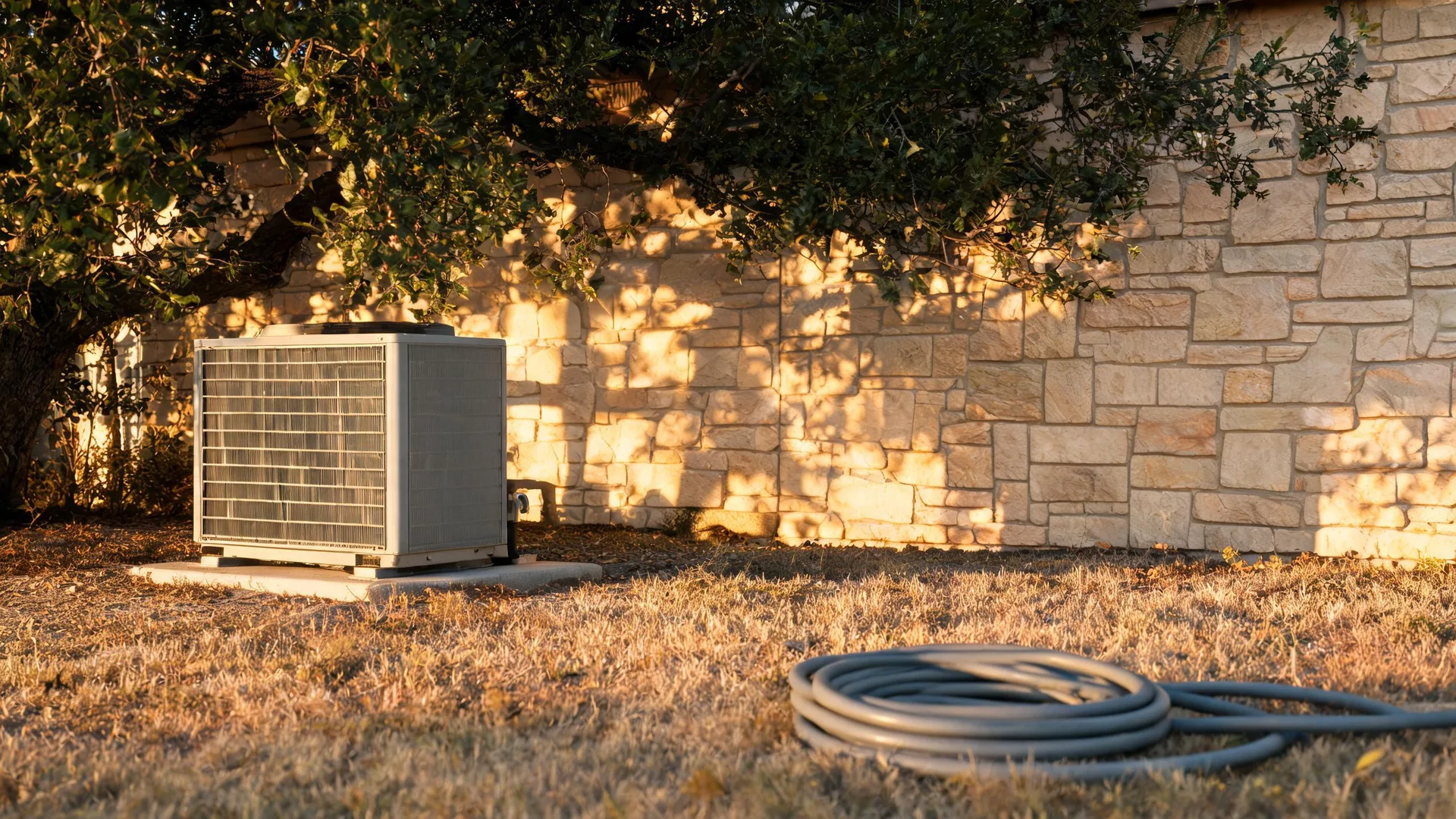
Worn parts fail when they're working hardest

A system low on refrigerant or short on airflow can still run for a while, just worse than it should. The part that's already strained is the one that gives out first, and it tends to happen on the hottest day of the stretch, not a mild one. That's when the compressor is working the hardest and has the least room for a weak capacitor or a dirty coil.

Aerial view of a residential air conditioning condenser unit mounted on a concrete pad next to a house with vinyl siding and a sliding glass door.

Book your AC tune-up in May, before homes here start needing cooling in June.

  1. Jan
  2. Feb
  3. Mar
  4. Apr
  5. May
  6. Jun
  7. Jul
  8. Aug
  9. Sep
  10. Oct
  11. Nov
  12. Dec

A tune-up checks the refrigerant charge, cleans the coils, tests the capacitor and tightens the electrical connections.

A tune-up starts outside at the condenser. The tech checks refrigerant charge against the manufacturer's target, not just a quick read on whether the lines feel cold. Subcooling and superheat numbers show whether the system is actually moving heat the way it should. The coil gets inspected for dirt and bent fins, since either one blocks airflow and makes the compressor work harder to do the same job. Inside, the evaporator coil and blower wheel get checked for buildup, and the drain line gets cleared so condensate has somewhere to go. The capacitor gets tested under load, not just eyeballed, and the contactor gets checked for pitting. Loose connections get tightened, since a loose wire heats up and fails before anything else does. The thermostat gets checked too, because a bad reading there can hide a problem anywhere else in the system.