






An overhead view of a residential air conditioning condenser unit mounted on a concrete pad next to a house with vinyl siding.

AC Maintenance in East Gull Lake, MN

Tell us about the job

Takes about a minute. No obligation.

Tune-up, service, or cleaningCentral ACCass County, MN
Step 1 of 2

What ZIP code is the job in?

Your air conditioner only earns its keep from July through August here, with afternoon highs averaging 77°F those two months. That is light, short duty compared to most of the country, and the compressor sits idle the rest of the year. A system that runs that little does not wear out from the heat. What it does face is the weather sitting outside year round, and Cass County gets a lot of damaging wind and hail. A yearly check catches a bent fin or a loose connection before next summer asks the system to work.

2 months
July through August, your air conditioner is on duty
77°F
the average summer afternoon it cools against
106 hail events
in ten years, and hail bends the fins on outdoor coils
107 wind events
in ten years, and wind drives debris into outdoor units
Isometric cutaway illustration of a small home interior with furniture and ducting, showing an indoor air handler connected by lines to an outdoor condenser unit on a pad.
Your air conditioner works hardest from July through August.

NOAA nClimDiv, 1991–2020 normals

Half the homes in Cass County were built in 1990 or later.

A newer air conditioner still has years ahead of it, and a yearly check is what gets it there.

Cooling starts in July. Have it checked in June.

Cooling runs July through August
Summer afternoons average 77°F
107 damaging wind events from 2015 to 2024

The filter is the cheapest thing to stay ahead of and the one most people forget. A dirty filter starves the coil of airflow, and a starved coil can ice over even on a mild day. Once ice builds up, the system stops cooling and needs time to thaw before anyone can tell what is actually wrong with it. The outdoor coil has its own problem. Cottonwood, grass clippings and dust settle into the fins and block airflow from the other direction, making the compressor work against itself. Inside, the drain line clears condensation from the evaporator coil, and when it clogs with algae the water backs up and finds the nearest ceiling or floor instead. None of this is complicated to check. It just has to get looked at before the system is asked to run again.

Get it looked at before it has to run

Book the check before the heat arrives. One visit catches the wind and hail damage sitting on the unit now, so July doesn't find it first.

Find a contractor
A man in a cap, dark jacket and tan work pants carries a worn canvas tool bag up concrete steps toward a dark green paneled front door of a house with horizontal siding and a potted shrub.
A gray residential air conditioner condenser unit mounted on a concrete pad in an open grass field.

A real tune-up takes longer than a glance

A quick visit is a glance and a gauge reading. A thorough one takes the system apart enough to see what the glance misses. That means pulling the blower access panel, not just the filter door, and checking amp draw on the compressor while it runs instead of assuming it's fine because it started. It means washing the coil, not just looking at it, because a coil can look clean on the fin edges and still be packed with dust between the rows where air actually has to pass. A tech who checks pressure but never pulls the panel is doing part of the job. Ask what they actually opened up, not just what they looked at.

What the unit won't tell you on its own

A capacitor can be failing for weeks before the system stops starting, and a refrigerant leak can run low slowly enough that the house still feels cool while the compressor struggles more each week. Nothing beeps when this happens. The only way to catch it is to have someone measure what the system is actually doing, not just listen for a problem that announces itself.

What a check looks for before it's a failure

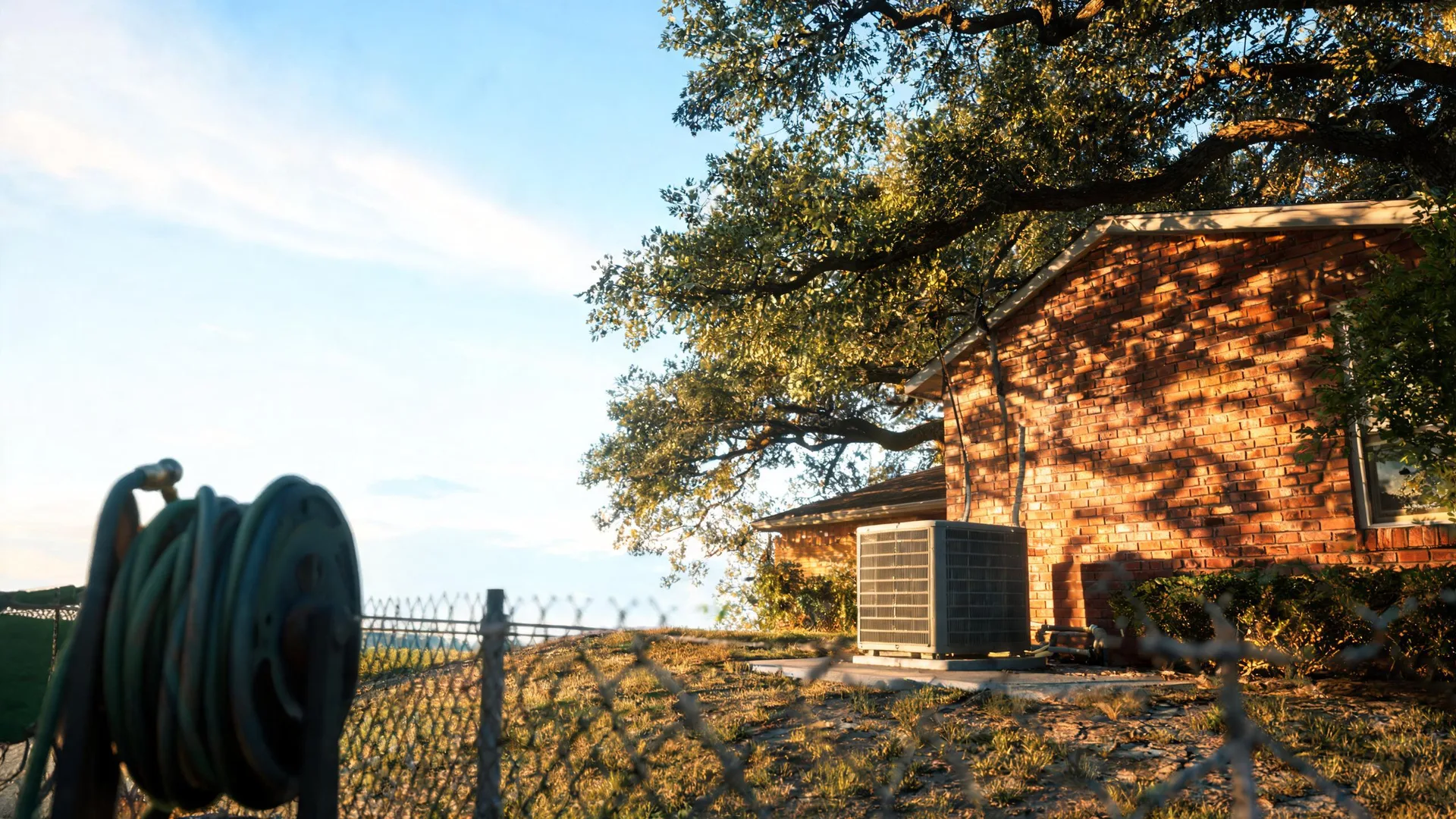
A tech checks refrigerant pressure, tests the capacitor and contactor, and looks at the condensate line and the coil itself for the kind of buildup that cuts cooling long before it causes a breakdown. Catching a weak part on a bench reading means it gets swapped on a slow afternoon instead of the first hot week, when the same part failing leaves the system down until someone can get to it.

An outdoor air conditioning condenser unit mounted on a concrete pad next to a blue-sided residential house at sunset.

Book your AC tune-up in June, before homes here start needing cooling in July.

  1. Jan
  2. Feb
  3. Mar
  4. Apr
  5. May
  6. Jun
  7. Jul
  8. Aug
  9. Sep
  10. Oct
  11. Nov
  12. Dec

A tune-up checks the refrigerant charge, cleans the coils, tests the capacitor and tightens the electrical connections.

A tune-up starts with the electrical side because that's where parts fail without warning. The contactor gets checked for pitting, since burnt contacts can weld shut or stop making contact at all. The capacitor gets tested under load, not just looked at, because a capacitor can read fine sitting still and still be too weak to start the compressor. From there it's refrigerant pressure, checked against what the system is supposed to run at, since too little pressure means the coil can't pull heat out of the air the way it should. The blower wheel gets looked at too. Dust builds up on the blades over time and that alone can cut airflow as much as a dirty filter does. Last comes the condensate line, flushed clear so it keeps draining instead of backing up the first humid week it's asked to work hard.