






An outdoor central air conditioning unit mounted on a concrete pad beside a blue-sided house at sunset.

AC Maintenance in Moorhead, MN

Tell us about the job

Takes about a minute. No obligation.

Tune-up, service, or cleaningCentral ACClay County, MN
Step 1 of 2

What ZIP code is the job in?

Your air conditioner only runs about three months a year here, June through August, with afternoon highs averaging around 80 degrees. The air stays fairly dry too, so the compressor isn't working as hard to pull moisture out along with the heat. That's a light workload compared to what the same unit would face further south. Light duty doesn't mean no duty, though. The coil still collects dust, the capacitor still ages, and a unit that sits idle most of the year can develop problems nobody notices until the first hot week. A yearly check before summer catches that early, while the fix is still small.

3 months
June through August, your air conditioner is on duty
80°F
the average summer afternoon it cools against
45 hail events
in ten years, and hail bends the fins on outdoor coils
78 wind events
in ten years, and wind drives debris into outdoor units
Isometric cutaway illustration of a single-story house showing interior rooms, ceiling ductwork connected to an indoor air handler, and an outdoor condenser unit beside the exterior wall.
Your air conditioner works hardest from June through August.

NOAA nClimDiv, 1991–2020 normals

A dirty coil makes the compressor run longer to hit the same temperature.

That's the strain a tune-up is meant to catch before the compressor pays for it.

Half the homes here were built in 1981 or later, and the AC is probably younger too

Half the homes here were built by 1981
Cooling runs June through August
Summer afternoons average 80°F
June is day one, not the warm-upCooling starts in June here. Book the check in May, before the season asks anything of it.

Between visits, the filter is the one thing worth checking yourself. Pull it out every month or so through the summer and hold it up to a light. If you can't see light through it, swap it or rinse it, depending on the kind you have. A clogged filter starves the coil of airflow, and a coil that can't breathe gets colder than it should, to the point where it ices over. Keep the area around the outdoor unit clear too. Grass clippings, leaves and fence lines closer than a couple feet all block the airflow the condenser needs to dump heat outside. Beyond that, leave the cabinet closed. The capacitor and the contactor inside carry voltage that doesn't forgive a mistake, and that's what the yearly visit is for.

A newer system is worth keeping that way

A system built alongside a newer home still has most of its working life in front of it. A yearly check is what keeps it that way. Catching a weak capacitor or a dirty coil now, while the fix is small, is what makes sure that newer system is still running well years from now.

Find a contractor
A gray residential air conditioning condenser unit mounted on a concrete pad outdoors, surrounded by green grass under a partly cloudy blue sky.

Light use adds up slowly, so check it every year

Three months of light work a year still adds up over time, just slower than it would elsewhere. That's the case for booking the check every year instead of waiting until something sounds off. A capacitor losing strength or a coil going dirty doesn't announce itself. It just makes the system run a little longer each cycle until one day it doesn't start at all. The yearly visit is what catches it on the slow side of that curve, not the end of it.

What gets checked, not just wiped down

A real tune-up means taking a reading off the refrigerant charge, not guessing from how cold the air feels at the vent. It means checking the capacitor's actual rating against what's stamped on it, since a capacitor can be weak long before it fails outright. The contactor gets looked at for pitting. The coil gets cleaned, not just glanced at. A quick visit skips straight to the question of whether the air coming out is cold.

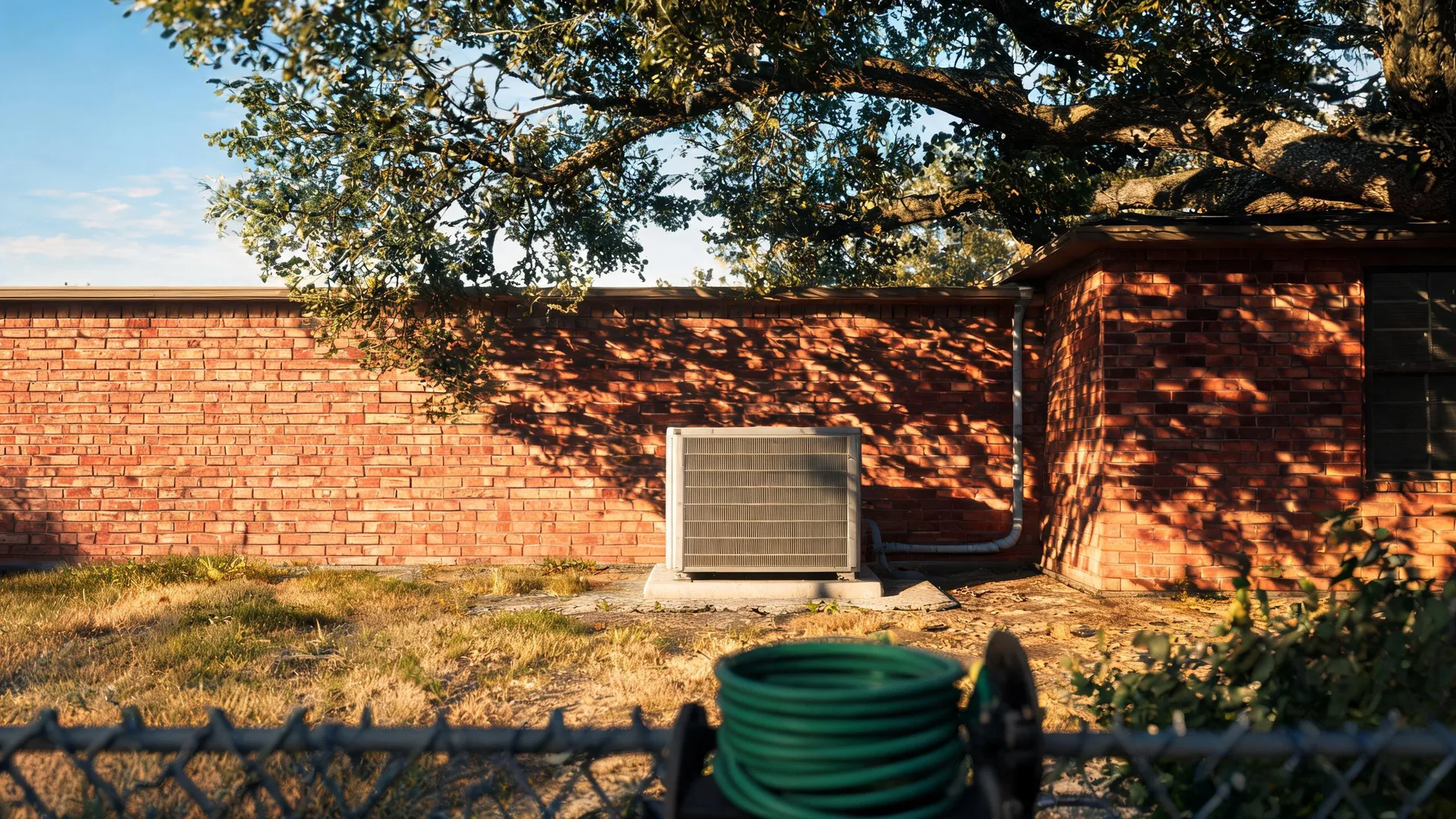
The difference shows up later, not that day

A system that only got a quick look will run fine the day of the visit either way. The gap shows up later, when the weak capacitor that was never tested finally gives out, or the dirty coil that never got cleaned has the compressor running long cycles to keep up. A thorough visit catches the part that's wearing out before it's the part that failed.

An outdoor air conditioning condenser unit positioned beside a blue-sided house at sunset.

Book your AC tune-up in May, before homes here start needing cooling in June.

  1. Jan
  2. Feb
  3. Mar
  4. Apr
  5. May
  6. Jun
  7. Jul
  8. Aug
  9. Sep
  10. Oct
  11. Nov
  12. Dec

A tune-up checks the refrigerant charge, cleans the coils, tests the capacitor and tightens the electrical connections.

A tune-up starts outside, with the system running. The technician checks the refrigerant charge against what the manufacturer specifies, using gauges, not a guess based on how cold the air feels. Low charge means a leak somewhere in the line set or coil, and running it low for a season makes the compressor work harder than it should. Next comes the electrical side. The capacitor gets tested under load, since a capacitor can be putting out half its rated strength and still start the system most days. The contactor gets checked for pitting on the contacts, because a pitted contactor can stick or fail to pull in at all. The condenser coil gets cleaned, not just inspected, since dust and grass matted into the fins block the airflow the system needs to shed heat. Inside, the evaporator coil gets looked at for the same reason, along with the blower wheel, which collects a layer of grime over time that cuts airflow even when the filter is clean. The drain line gets flushed too, since algae and debris can clog it quietly until the pan backs up. Last comes the thermostat, confirming it calls for cooling correctly and the system responds.