






An outdoor air conditioning condenser unit mounted on a concrete pad next to a blue-sided residential house at sunset.

AC Maintenance in Hutchinson, MN

Tell us about the job

Takes about a minute. No obligation.

Tune-up, service, or cleaningCentral ACMcLeod County, MN
Step 1 of 2

What ZIP code is the job in?

Your air conditioner only has to work about three months a year here, June through August, with afternoon highs averaging around 80°F. The air stays fairly light too, with dew points near 59°F, so the system isn't fighting heavy moisture the way it would further south. That's a short, mild stretch of duty compared to most places. It still matters to get it checked every year. Parts wear from age and from sitting unused most of the year, not just from hard use, and a yearly look catches a weak capacitor or a clogged coil before it leaves you without cooling in August.

3 months
June through August, your air conditioner is on duty
80°F
the average summer afternoon it cools against
44 hail events
in ten years, and hail bends the fins on outdoor coils
50 wind events
in ten years, and wind drives debris into outdoor units
Isometric line illustration of a cutaway house showing interior rooms, ceiling ductwork, an indoor air handler unit, and an outdoor condenser connected by lines along the exterior wall.
Your air conditioner works hardest from June through August.

NOAA nClimDiv, 1991–2020 normals

Warm air blowing from the vents usually means a dirty coil or a low charge, not a dead system.

Either one is easy to catch in a check and hard to catch on your own until the house stops cooling.

Half the homes here were built in 1979 or later, young enough to be worth the yearly check

Half the homes here were built by 1979
Cooling runs June through August
Summer afternoons average 80°F
June Starts It FastCooling starts in June here, so May is the month to get it checked.

A real tune-up starts outside at the condenser. The tech cuts power first, then pulls debris and cut grass off the coil fins and checks that the fan spins freely without wobbling or grinding. The coil itself gets cleaned, since a coated coil can't shed heat the way a clean one does. Refrigerant charge gets checked against what the system calls for, because too little or too much both make it run longer than it should. Inside, the tech checks the capacitor and contactor, the parts that get the compressor and fan started and keep them running, since those wear out from age as much as use. The drain line gets flushed too, so condensation has somewhere to go instead of backing up. Last, the tech checks airflow, because a system can have good refrigerant and a clean coil and still underperform if air isn't moving through it the way it should.

A newer system here is worth keeping up

If your house dates to 1979 or later, your AC is young enough that a yearly check is what keeps it that way. Catching a weak capacitor or a dirty coil now is a lot cheaper than replacing a system that didn't have to go yet.

Find a contractor
A gray cylindrical air conditioning condenser unit mounted on a concrete pad next to a light-colored vinyl-sided house exterior.

What Skipping It Costs the System

A system that never gets checked doesn't fail all at once. The capacitor loses strength slowly, so the compressor and fan motor start to labor on startup years before one of them finally fails to start at all. A coil that collects a season of dust and pollen sheds heat worse and worse, so the compressor has to run longer to do the same job, and running longer wears everything in it faster. Low refrigerant from a slow leak does the same thing, and a system run low on charge for long enough can carry liquid back into the compressor, which does lasting damage. None of this shows up as a dead system right away. It shows up as a system that runs more, cools less, and costs you a compressor instead of a capacitor when it finally gives out.

Keep the Airflow Open

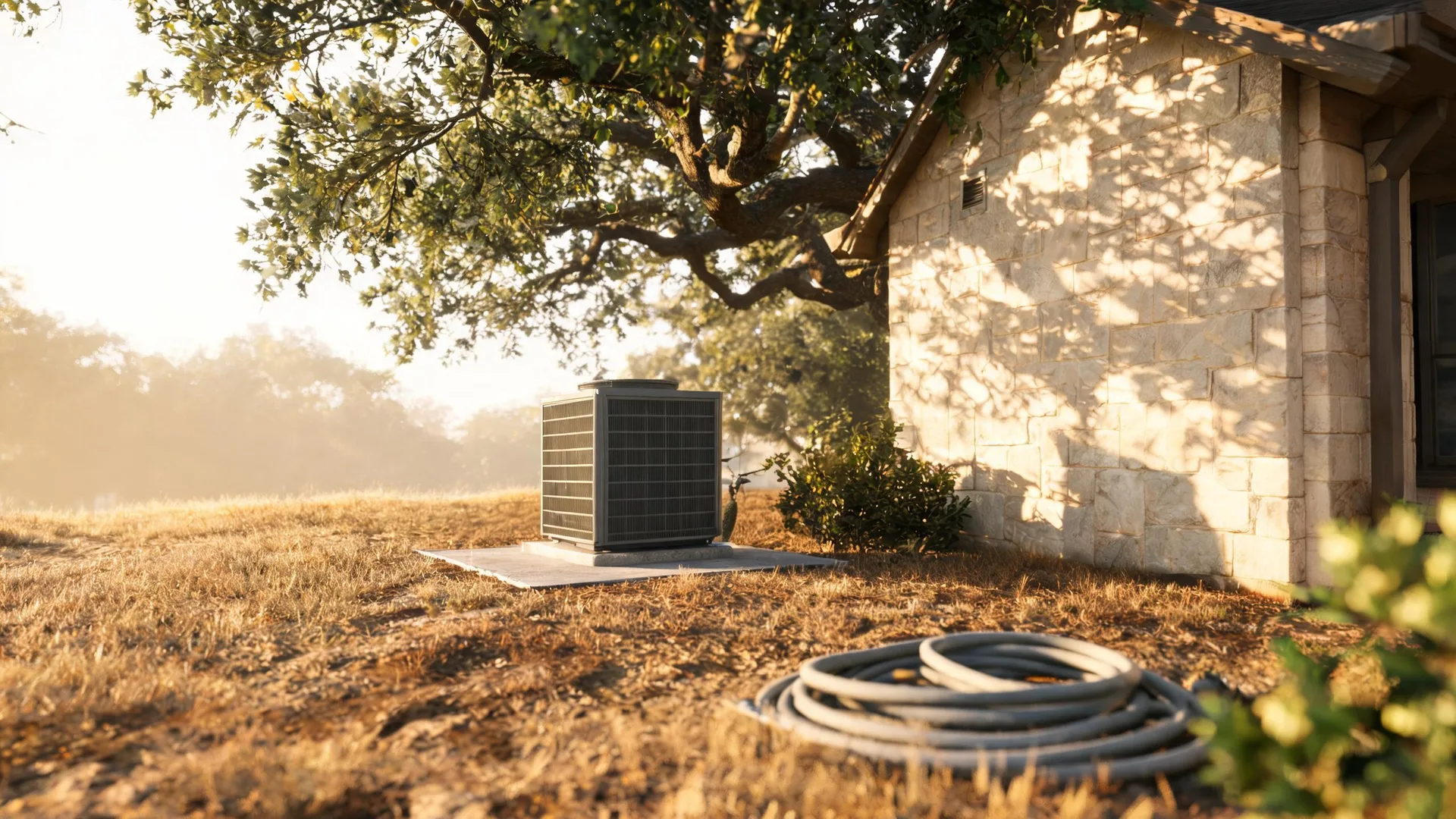
Walls, furniture and curtains in front of a vent make the system work harder to push air where it needs to go. Checking that supply and return vents are clear, and that the outdoor unit has a couple feet of open space around it, free of plants or stacked anything, is safe to do anytime and keeps strain off the compressor between visits.

The Filter Is Yours to Watch

A dirty filter is the one part a homeowner should check without waiting for a tech. Pull it out, hold it to the light, and if you can't see through it, swap it or rinse it if it's a reusable type. A clogged filter starves the coil of airflow, and a starved coil can ice over even on a mild day, which only makes the system work harder to cool anything at all.

An outdoor central air conditioning unit mounted on a concrete pad beside a blue-sided house at sunset.

Book your AC tune-up in May, before homes here start needing cooling in June.

  1. Jan
  2. Feb
  3. Mar
  4. Apr
  5. May
  6. Jun
  7. Jul
  8. Aug
  9. Sep
  10. Oct
  11. Nov
  12. Dec

A tune-up checks the refrigerant charge, cleans the coils, tests the capacitor and tightens the electrical connections.

A tune-up turns up things a homeowner has no way to see from inside the house. Static pressure in the ductwork is one. If the ducts are too restrictive, the blower strains against it every time the system runs, and nothing on the thermostat or the vents will tell you that's happening. The temperature split between the air going into the system and the air coming out is another. A tech measures both sides, and a split that's too narrow or too wide points to a charge problem or an airflow problem before either one leaves you without cooling. Electrical readings on the compressor and fan motor matter too. A motor can draw more current than it should while still running and still cooling the house, which means it's working harder than it needs to, with no outward sign until the day it stops. None of this shows up by watching the vents or listening to the unit run. It shows up on a gauge.