






Three lit brick homes on a tree-lined residential street photographed at dusk.

AC Maintenance in Owatonna, MN

Tell us about the job

Takes about a minute. No obligation.

Tune-up, service, or cleaningCentral ACSteele County, MN
Step 1 of 2

What ZIP code is the job in?

Between visits, the easiest thing you can check is the filter. Hold it up to a light. If you can't see light through it, swap it out, because a clogged filter starves the system of airflow and makes the coil work harder than it should. Outside, keep the condenser clear. Grass clippings, leaves, and mulch pressed against the fins block airflow the same way a dirty filter does. Walk around the unit now and then and pull back anything growing close to it. Inside, keep an ear out for the system running longer than it used to, or the air coming from the vents feeling less cold than you remember. Those are the kinds of things worth mentioning at your next visit, not emergencies on their own, but useful clues for the tech.

3 months
June through August, your air conditioner is on duty
79°F
the average summer afternoon it cools against
17 hail events
in ten years, and hail bends the fins on outdoor coils
24 wind events
in ten years, and wind drives debris into outdoor units
Isometric cutaway illustration of a small home interior with furniture and ducting, showing an indoor air handler connected by lines to an outdoor condenser unit on a pad.
Your air conditioner works hardest from June through August.

NOAA nClimDiv, 1991–2020 normals

Cooling in Steele County starts in June and runs through August.

Have the AC checked in May, before it has to work its hardest month.

One AC checkup a year covers it here

Half the homes here were built by 1975
Cooling runs June through August
Summer afternoons average 79°F

The filter protects more than airflow. Once it's clogged, dust gets past it and settles on the evaporator coil, the one inside the air handler, and that coil can't shed heat the way it's supposed to with a layer of dust acting like a blanket. A dirty coil also sweats more than it should, and that water has to find its way out through the condensate drain. That drain line is narrow, and it's the kind of thing nobody thinks about until it clogs, usually with the same dust and a bit of algae growth inside the line. Once it backs up, the water has nowhere to go but into the pan under the unit, and from there into the ceiling or the closet floor if the pan overflows. A clean filter means a clean coil, and a clean coil means a drain that isn't fighting a losing battle every time the system runs.

Light duty here means a yearly check goes a long way

Three months of cooling, with afternoons around 79°F, is not hard duty for an AC. Most of the wear this system sees here comes from age and dust, not from heat. A yearly check catches a worn part early. That's a better use of a tune-up than finding damage a harder-working system elsewhere would already have.

Find a contractor
A man in a cap, dark jacket and tan work pants carries a worn canvas tool bag up concrete steps toward a dark green paneled front door of a house with horizontal siding and a potted shrub.
A gray residential air conditioner condenser unit mounted on a concrete pad in an open grass field.

What a yearly check catches that you won't

A dirty filter and a blocked condenser are easy enough to spot. What a tech checks goes deeper than that. The run and start capacitors get tested against their rated values, because a capacitor loses its charge slowly, long before it fails outright, and a weak one makes the compressor work harder just to start up. Electrical connections get checked too. The unit vibrates every time it cycles, and over the years that works screws and wire connections loose. Refrigerant pressure gets checked against what the system calls for, since a slow leak can drop the charge without any sign of it from inside the house. None of this shows up as something you'd notice. The system keeps cooling the same as always, right up until the part that was quietly wearing down finally gives out.

What a skipped year adds up to

Nothing fails the first summer a checkup gets missed. The capacitor keeps starting the compressor, the contactor points keep conducting, the charge holds close enough to cool. Skip a second year and a third, and whatever was already wearing keeps wearing with nobody watching it. A capacitor that was weak and still working becomes one that gives out on the hottest afternoon of the year, with the compressor trying to start against it.

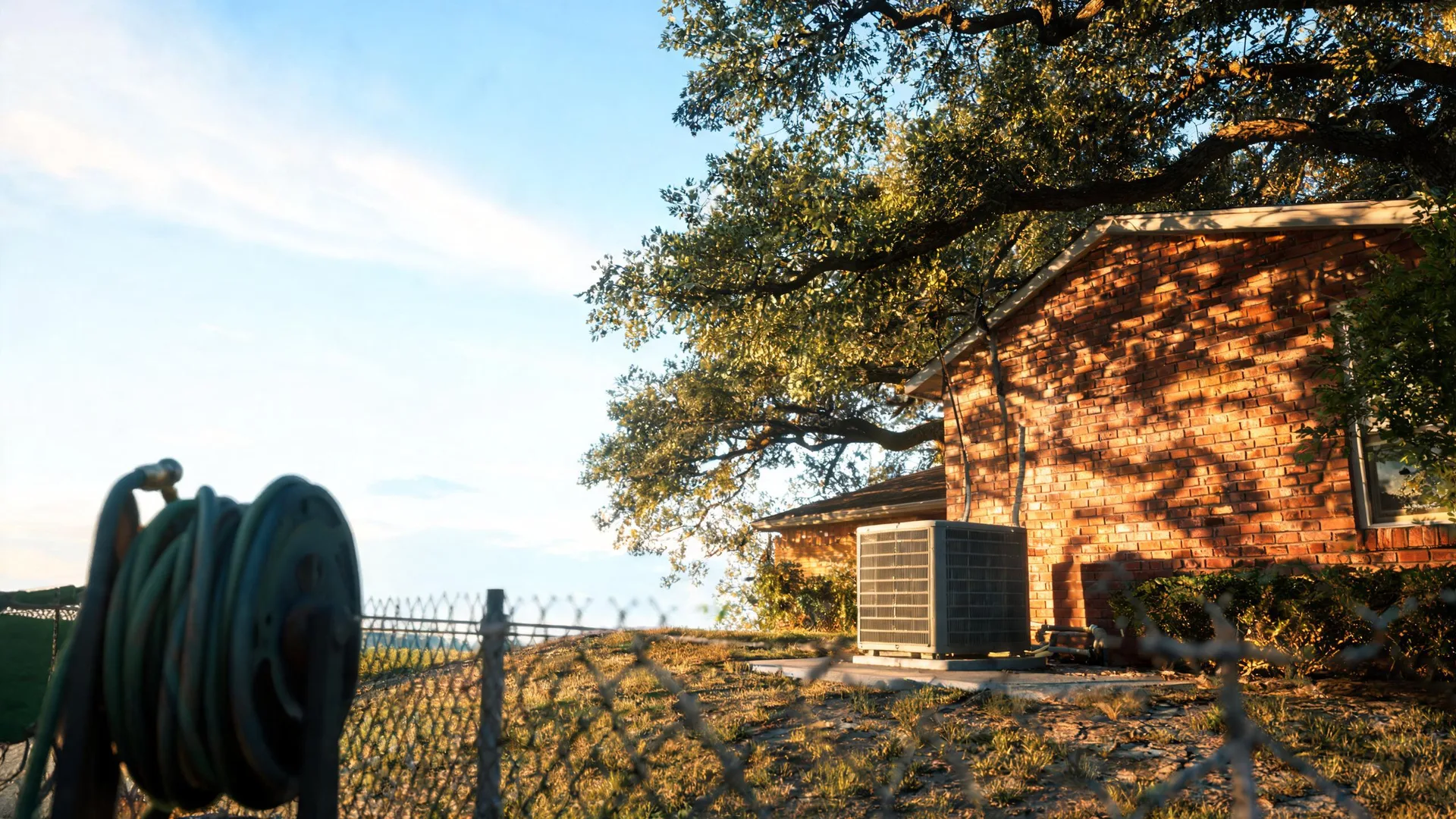
The compressor pays for what else wore out

Most AC failures that bring a system down for good trace back to something smaller that ran too long unchecked. A low charge makes the compressor work harder to move the same heat, and it runs hotter doing it. A failing capacitor turns every start into a hard start. The compressor is almost always the last part to fail, worn down by problems that showed up first somewhere else and went unfixed.

An overhead view of a residential air conditioning condenser unit mounted on a concrete pad next to a house with vinyl siding.

Book your AC tune-up in May, before homes here start needing cooling in June.

  1. Jan
  2. Feb
  3. Mar
  4. Apr
  5. May
  6. Jun
  7. Jul
  8. Aug
  9. Sep
  10. Oct
  11. Nov
  12. Dec

A tune-up checks the refrigerant charge, cleans the coils, tests the capacitor and tightens the electrical connections.

A tune-up starts with a static check, measuring airflow and pressures before anything is adjusted. From there the tech checks the refrigerant charge, because too much or too little both make the compressor work harder than it should. The condenser fins get cleaned, not just cleared of debris but washed so heat actually transfers off them. Electrical connections get tightened, since a loose connection arcs and burns before it ever trips a breaker. The blower wheel gets looked at too. Dust builds up on the blades the same way it builds up on a coil, and an unbalanced wheel wears its motor bearings faster. Every part of this is checking something that fails slowly, so the system is still cooling the day it gets worse.