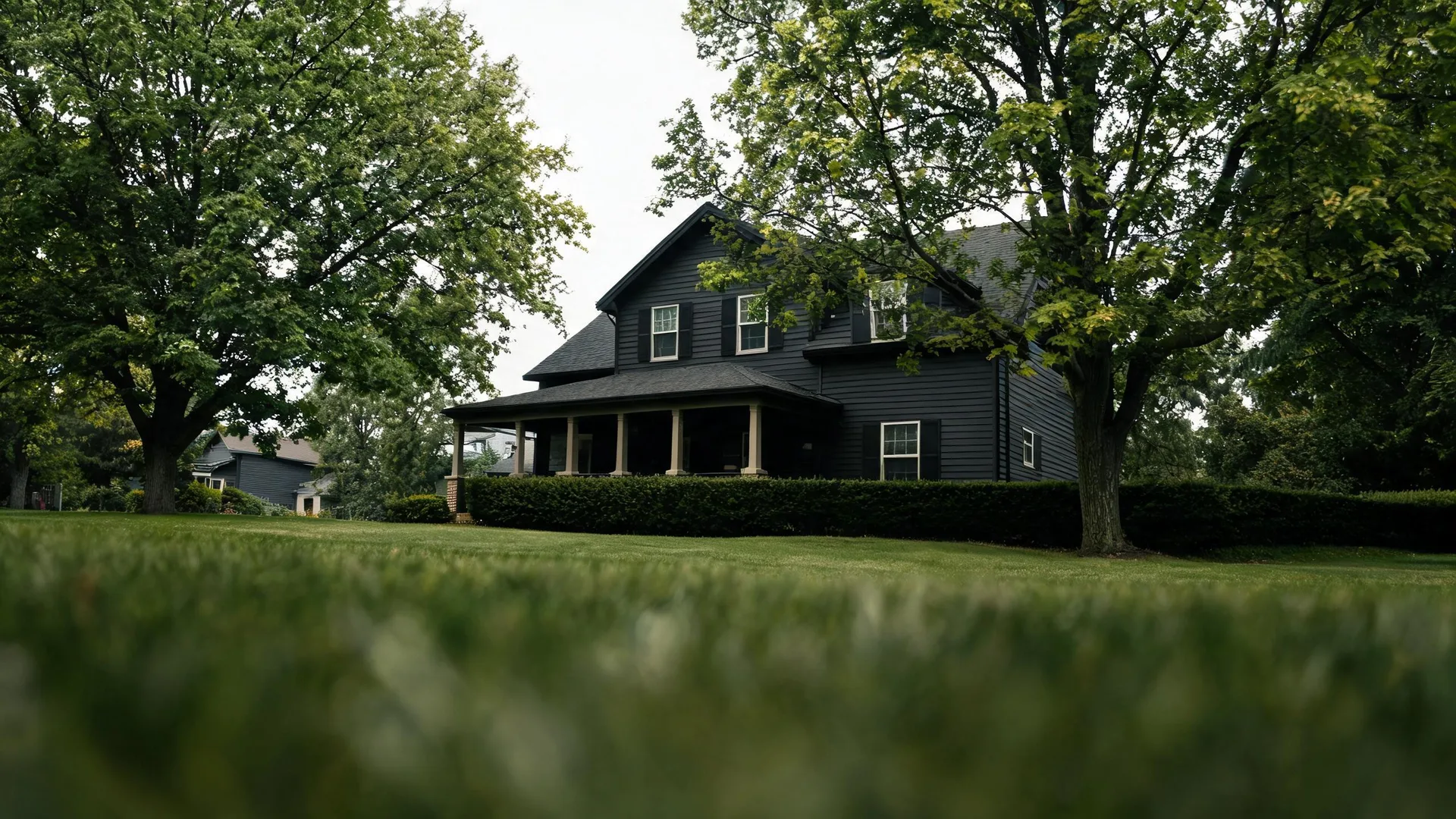






A two-story dark-painted house with a covered front porch, white-trimmed windows and a trimmed hedge, framed by large deciduous trees, photographed from ground level across a lawn with blurred grass in the foreground.

AC Maintenance in Lakeville, MN

Tell us about the job

Takes about a minute. No obligation.

Tune-up, service, or cleaningCentral ACDakota County, MN
Step 1 of 2

What ZIP code is the job in?

A tune-up finds the things you'd never spot from the thermostat. A technician checks refrigerant charge against what the system calls for, since a unit running low still blows cold air but works harder and wears faster doing it. They'll clean the condenser coil outside, where a season of grass clippings and cottonwood can block airflow without ever tripping an alarm. Electrical connections get checked too, because a loose one generates heat right at the connection point and that's how components fail early. The capacitor gets tested under load, not just looked at, since a weak one can still start the system most days and then fail on the one hot afternoon you need it most. None of this shows up as a symptom until it does.

3 months
June through August, your air conditioner is on duty
80°F
the average summer afternoon it cools against
102 hail events
in ten years, and hail bends the fins on outdoor coils
56 wind events
in ten years, and wind drives debris into outdoor units
Isometric line illustration of a cutaway house showing interior rooms, ceiling ductwork, an indoor air handler unit, and an outdoor condenser connected by lines along the exterior wall.
Your air conditioner works hardest from June through August.

NOAA nClimDiv, 1991–2020 normals

Cooling in Lakeville runs June through August.

May is when to get the system checked, before it has to work.

Half the homes in Dakota County date to 1988 or later, so a lot of the AC out there is still within its working life, and a yearly check is what keeps it that way

Half the homes here were built by 1988
Cooling runs June through August
Summer afternoons average 80°F
One check a yearMinnesota homes paid 15.45 cents per kilowatthour in 2024, and a clean system is what keeps that bill from climbing.

Between visits, the filter is the one thing worth checking yourself. Pull it out and hold it up to light. If light barely gets through, change it. A clogged filter starves the system of airflow, and the evaporator coil behind it can ice over when that happens, even on a hot day. Keep plants and grass clippings a couple feet clear of the outdoor unit so it can breathe. Beyond that, leave it alone. If the system is short cycling, blowing warm, or making a new noise, that is a call for a technician, not a project for a homeowner with a screwdriver.

Keep a newer system working like one

If the system in your house is still within its working life, a yearly check is what keeps it there. Get it looked at before the months it works hardest.

Find a contractor
A gray residential air conditioning condenser unit mounted on a concrete pad outdoors, surrounded by green grass under a partly cloudy blue sky.

What a real tune-up actually touches

A quick visit ends with a filter change and a gauge check from the driveway. A thorough one has the technician popping the panel off the outdoor unit and pulling the access panel on the indoor coil too, because the real wear shows up where the air actually moves, not just at the service ports. They should be flushing the condensate line, not just glancing at it, since algae builds up in there and a clogged line backs water up into the drain pan or the house. The contactor gets a look under magnification for pitting, since a pitted contactor still closes the circuit most days right up until it doesn't. Static pressure gets measured across the whole system, not assumed, because a duct that's too restrictive makes the blower motor work past what it was built for even when the thermostat says everything is fine. If the visit takes long enough to check all of this, it's doing its job. If it's over before you've finished your coffee, it probably skipped most of it.

The system doesn't tell you what it's losing

A dirty coil or a weak capacitor doesn't make the air stop blowing cold. The system just works harder to get there, pulling more than it should to hit the same temperature, and nothing on the thermostat shows that strain. It keeps running that way until the part it's leaning on hardest gives out.

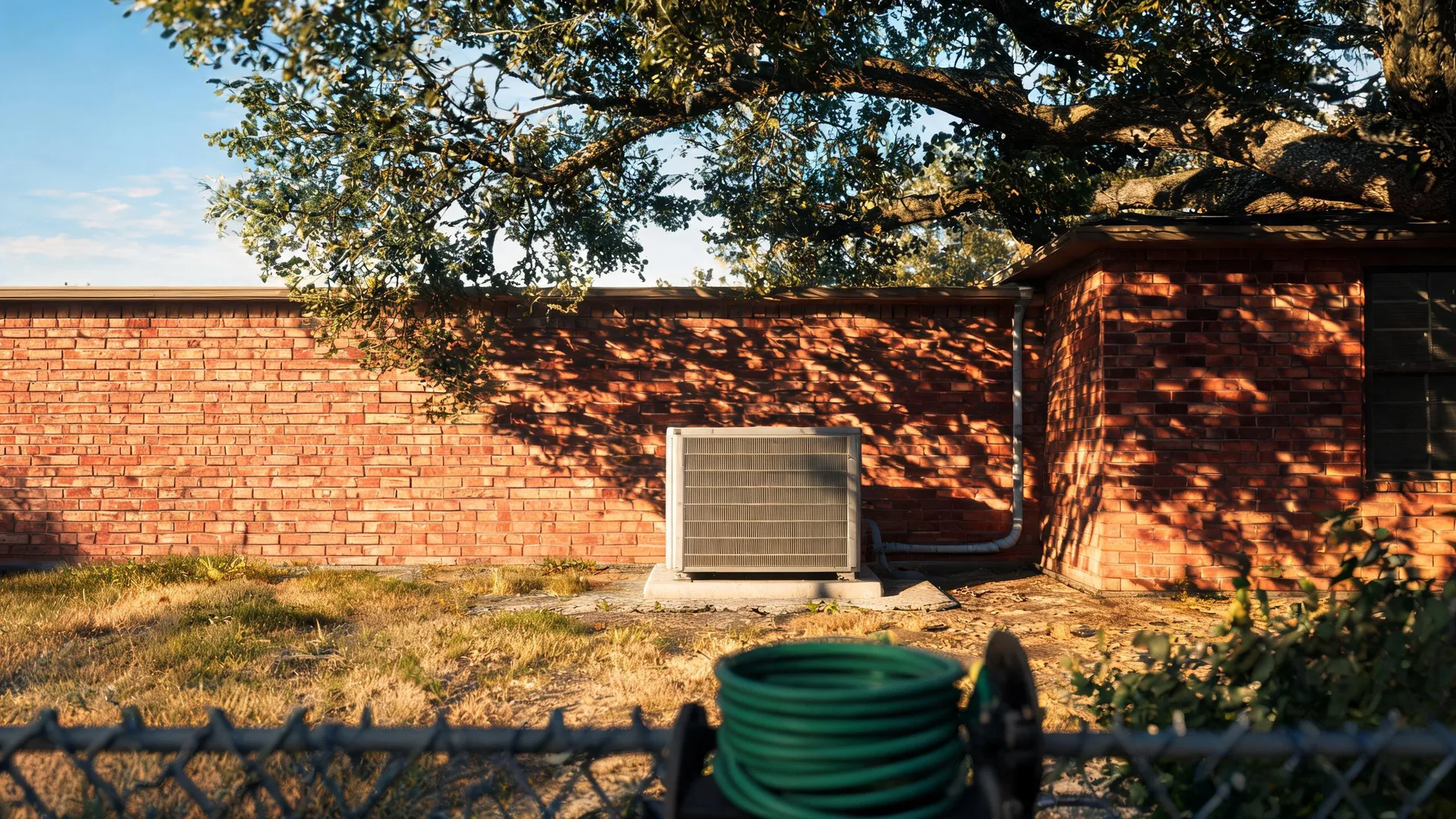
The failure shows up on the worst day

Parts under strain tend to hold on right up until they don't, and that moment usually lands on the hottest afternoon of the year, when the system is working its hardest and a contractor's schedule is fullest. A check done in a slow month catches the weak part while there's still time to replace it on your terms.

An outdoor air conditioning condenser unit positioned beside a blue-sided house at sunset.

Book your AC tune-up in May, before homes here start needing cooling in June.

  1. Jan
  2. Feb
  3. Mar
  4. Apr
  5. May
  6. Jun
  7. Jul
  8. Aug
  9. Sep
  10. Oct
  11. Nov
  12. Dec

A tune-up checks the refrigerant charge, cleans the coils, tests the capacitor and tightens the electrical connections.

A tune-up also means checking the blower motor and the ductwork it feeds. The technician runs the system and listens, because a bearing going bad in the blower makes a sound before it makes a failure. They check that the thermostat is actually calling for the right temperature and that the system responds to it, since a miscalibrated thermostat can make a perfectly good system seem like it's falling behind. Refrigerant lines get checked for insulation that's worn through or come loose, because bare line outside the unit means the system is losing some of its cooling before the air ever reaches a vent. None of these are repairs. They're the difference between a system that's checked and one that's just assumed to be fine.