






Low-angle view across a mown green lawn toward a dark-sided building at left and a cream-colored single-story house with trees in the background under an overcast sky.

AC Maintenance in Rochester, MN

Tell us about the job

Takes about a minute. No obligation.

Tune-up, service, or cleaningCentral ACOlmsted County, MN
Step 1 of 2

What ZIP code is the job in?

A quick tune-up has the tech glance at the outdoor unit, hose off the coil, and check the refrigerant pressure before heading out. A thorough one takes longer because there's more to check. The tech should pull the capacitor and test it under load, not just look at it, since a capacitor can read fine sitting still and still fail once the compressor draws on it. The condenser coil gets cleaned, not just rinsed, so the fins can actually shed heat. The contactor points get checked for pitting, the refrigerant charge gets measured against what the system calls for rather than eyeballed, and the drain line gets cleared so condensate has somewhere to go. Ask what they checked, not just what they did. If the answer is only coil and freon, that's the short version.

3 months
June through August, your air conditioner is on duty
79°F
the average summer afternoon it cools against
91 hail events
in ten years, and hail bends the fins on outdoor coils
92 wind events
in ten years, and wind drives debris into outdoor units
Isometric grayscale illustration of a cutaway house showing interior rooms, ductwork, an indoor air handler, and an outdoor condenser unit on a pad connected by lines.
Your air conditioner works hardest from June through August.

NOAA nClimDiv, 1991–2020 normals

Cooling here runs three months a year, June through August.

One tune-up before summer covers the stretch this system actually has to work.

Half the homes here were built in 1989 or later, which means a lot of these systems are still young

Half the homes here were built by 1989
Cooling runs June through August
Summer afternoons average 79°F
Get it checked in MayOlmsted County AC runs June through August, and June is when it has to work hardest.

One visit a year, timed before summer, is enough for most systems here. A working capacitor and a clean coil going into the season will carry the system through its busy months without another look. Minnesota homes paid 15.45 cents per kilowatt-hour for electricity in 2024, and a system working harder than it should, because of a dirty coil or a weak capacitor, burns more of it for every hour it runs. One tune-up catches that before the heat does.

A newer system is worth keeping that way

A young system still wears out capacitors and dirties coils. The checks are the same either way. Keeping up with them now is what keeps a system built in the last few decades running like it.

Find a contractor
A man in a cap, dark jacket and brown work pants climbs porch steps toward a dark green front door, carrying a waxed canvas tool bag, with a potted shrub to the right.
A gray metal air conditioning condenser unit mounted on a concrete pad in a flat grassy field under a partly cloudy sky.

The problems you can't see from the thermostat

The outdoor unit looks fine from a few feet away, running and blowing cold air, which is exactly why problems inside it go unnoticed until they don't. A capacitor can be days from failing and still hold a charge when the system isn't under load. A coil can look clean on the fins facing out while the ones behind it are packed with debris, so airflow drops and the compressor works harder to do the same job. Refrigerant can be low enough to strain the system without being low enough to stop it from running. None of that shows up as a change you'd notice from the thermostat, not right away. It shows up as the system running longer to hit the same temperature, and running longer wears the same parts faster. A tune-up catches those things while they're still small, before the compressor has spent a summer compensating for them.

The system tells you before it quits

An AC that's about to need real work usually says so first. It runs longer than it used to to hit the same temperature. It short cycles, kicking off shortly after it starts. The air coming out of the vents is cooler than the room but not as cold as it used to be. Any of those is worth a check before the part actually fails.

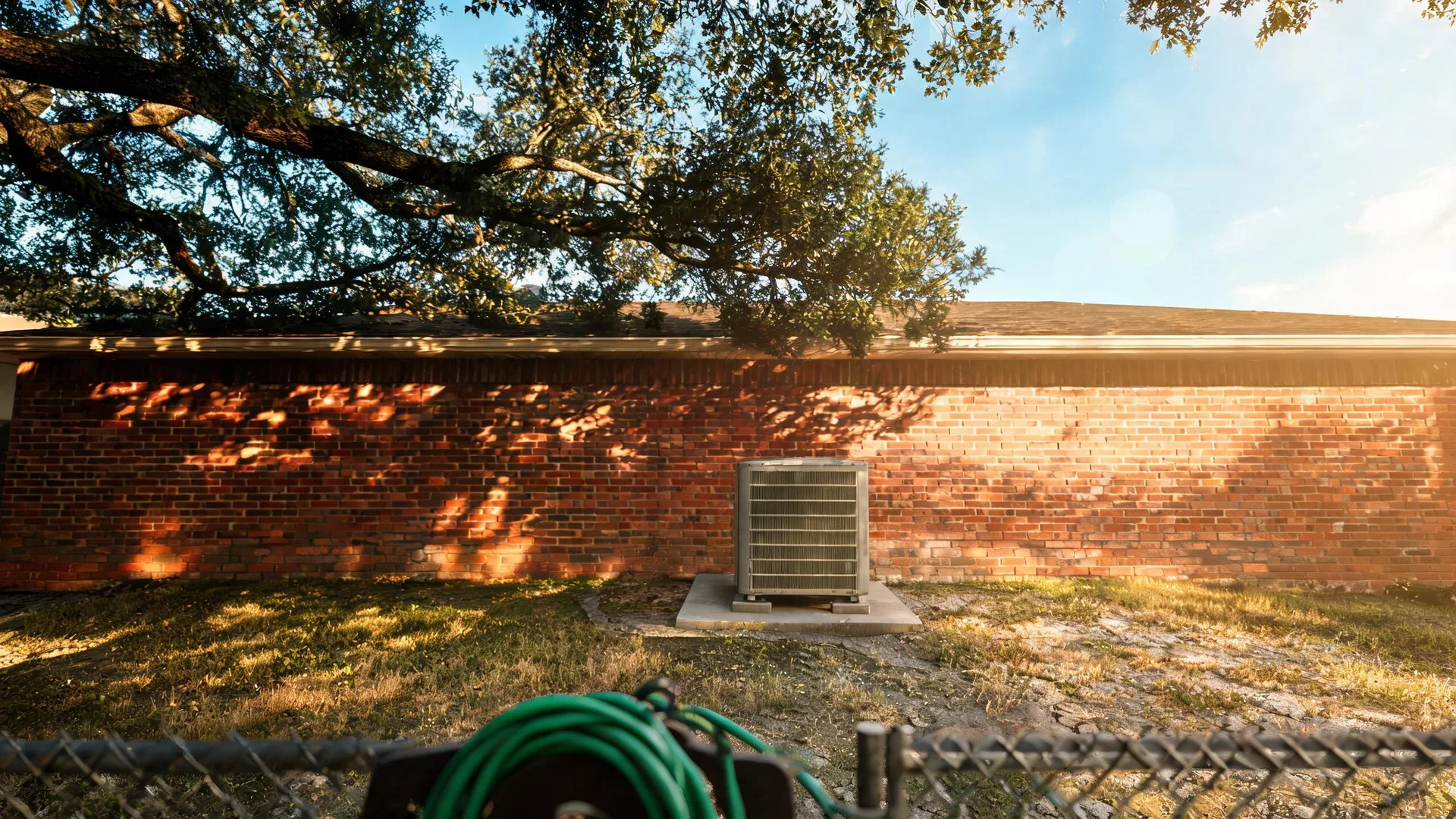
Some signs aren't on the unit at all

A warm room that used to cool fine, a breaker that trips when the compressor kicks on, an outdoor unit that's louder than it used to be. These point at the system even though you're not standing next to it. Catching them early is the difference between a tune-up and a repair call.

Aerial view of a residential air conditioning condenser unit mounted on a concrete pad next to a house with vinyl siding and a sliding glass door.

Book your AC tune-up in May, before homes here start needing cooling in June.

  1. Jan
  2. Feb
  3. Mar
  4. Apr
  5. May
  6. Jun
  7. Jul
  8. Aug
  9. Sep
  10. Oct
  11. Nov
  12. Dec

A tune-up checks the refrigerant charge, cleans the coils, tests the capacitor and tightens the electrical connections.

A tune-up worth paying for starts outside. The tech checks that the outdoor unit is level and the fan spins freely, then pulls the panel to get at the electrical side. Wiring connections get tightened, since a loose one heats up and burns before it ever trips a breaker. The blower motor and its wheel get checked too, not just the outdoor fan, because a blower caked with dust moves less air even when the motor sounds fine. Thermostat settings get confirmed against how the system actually responds, not just what the display says. The whole point is catching the parts that fail quietly, before they fail loudly.