
AC unit frozen up in Rochester, MN
Get matched with someone who does this kind of work in Olmsted County.
Find my proWhy is my AC unit frozen up?
You went outside to check on your air conditioner and found ice on the lines or coil, or the air coming from your vents went warm. It's an odd thing to see in the middle of a Rochester summer, and your first instinct is probably to shut it off before it gets worse. That instinct is right, and there's a clear reason this happens.
It's not getting enough airflow, or it's low on refrigerant
A frozen AC almost always comes down to one of two things. Either air isn't moving across the indoor coil the way it should, usually from a clogged filter or blocked vents, or the system is low on refrigerant, which lets the coil get too cold. Either way, moisture in the air freezes right onto the coil instead of draining off as condensation. Once ice builds up, it blocks airflow even more, so the problem feeds itself. Turn the unit off and let the ice melt fully before anyone looks at it further, running it while frozen can damage the compressor. A system that freezes up on a muggy Rochester afternoon is working against more humidity than it can handle with reduced airflow or a low charge.

Why the coil ices over
Your AC coil stays cold because refrigerant inside it is absorbing heat from the air passing over it. That only works if enough air keeps moving across the coil. Cut that airflow down, whether from a clogged filter, a blocked vent, or a dirty coil, and the coil gets too cold. Moisture in the air freezes on it instead of draining off. Once ice forms, it blocks even more airflow, so the problem builds on itself until the whole coil is covered.

Low refrigerant does the same thing
A refrigerant leak drops the pressure in the system, and low pressure makes the coil run colder than it should. The system was charged for a specific amount of refrigerant when it was installed, and it doesn't use any up over time. If the level is low, something is leaking, and a contractor has to find the leak and fix it, not just add refrigerant and send you on your way for the same thing to happen again.
Cooling runs June through August
Three months isn't long, so most homeowners here don't think much about their AC until it acts up. When it freezes in July or August, right in the middle of the stretch it's supposed to be working hardest, that's the sign something's actually wrong with it, not just a fluke.
NOAA nClimDiv 1991-2020
Keep running it while it's iced over, and you're asking the compressor to work against a coil that can't do its job. That's the part that costs real money to replace.
Shut it off and let the ice melt first, and you give the coil a chance to recover before anyone has to diagnose what caused it. Switch the thermostat to fan only, or off, and check back in a few hours.




The coil in your outdoor unit runs cold on purpose. Refrigerant moves through it at close to 40 degrees so it can pull heat out of the air your system pushes across it. That works fine as long as air keeps moving. Slow that air down, from a dirty filter, a closed vent, or a fan losing strength, and the coil has nowhere to put the cold except into the moisture sitting in that air. Ice forms first on the lower part of the coil, where the refrigerant runs coldest, then works its way up as it builds. The same thing happens from the other direction. If refrigerant is low because of a leak, the pressure inside the coil drops, and so does its temperature, cold enough to freeze even when airflow is normal. Either way, once ice starts covering the coil, it blocks more of the air behind it, so the unit makes its own problem worse the longer it keeps running. That's why a system that seemed fine that morning can be solid ice by afternoon.
What's Actually Happening Inside the Coil
- Refrigerant runs through the coil at close to 40 degrees, cold enough to freeze any moisture in the air around it.
- A dirty filter or a closed vent cuts airflow across the coil first, and the ice follows a few hours later.
- Low refrigerant from a leak drops the pressure in the coil, which drops its temperature low enough to freeze even with normal airflow.
- Ice usually starts on the lower part of the coil, where refrigerant is coldest, then spreads upward as it builds.
- A fan that's slowing down or has failed stops pulling air through the coil, and ice forms within the hour.
- Once ice covers the coil, it blocks the airflow further, so the problem speeds itself up the longer the unit keeps running.



Get matched with an air conditioner pro in Olmsted County
A licensed pro who repairs air conditioners in Olmsted County gets your request.
Get matched with a pro who fixes air conditioners in Olmsted County.
No charge to send it. You decide if you hire them.


What This Means for Your House
- A frozen coil blocks airflow completely, so warm air stops coming from your vents even though the unit is running.
- Rochester's humid summer air melts into water as the ice thaws, and that water can run past the drain pan onto your floor or ceiling below.
- Running a frozen unit for hours puts extra strain on the compressor, which is the most expensive part to replace.
- If the freeze is from low refrigerant, the system keeps losing capacity every day it runs iced over.
- A closed vent in one room or a dirty filter can cause the freeze, so the rest of your house may stay warm through the whole fix.
- Letting ice sit for a day or more can soak insulation around the lines, which stays wet long after the coil itself clears.
Once the coil ices over, your system stops cooling your house even if it's still running. You'll feel it first as warm air from the vents, then notice the unit itself still humming along like nothing's wrong, because the problem is at the coil, not the blower. Rochester summers carry enough humidity that the ice holds a fair amount of water, and all of it has to go somewhere as it melts. If the drain pan and condensate line can't keep up, that water tracks past them, and depending on where your unit sits, that can mean a wet spot on the floor nearby or a stain on the ceiling below if the unit is upstairs or in an attic. The longer it runs iced over, the harder the compressor works against a coil that can't move heat anymore, and the compressor is the one part in the system that costs the most to replace. If low refrigerant caused the freeze, that's not a one-time hit either. The system loses a little more cooling capacity every day it keeps running that way. And the fix doesn't always mean the whole house was affected. If a closed vent or a dirty filter caused the freeze, the rooms farthest from the return can stay warm the entire time, while the real problem sits at the unit itself. Ice left sitting for a day or more can also soak into the insulation wrapped around the refrigerant lines, and that stays damp well after the coil itself has cleared.


What's happening in your house right now
Right now your house is probably getting warmer by the hour, even with the thermostat set where it always is. You might hear the outdoor unit still running, or notice the air from your vents barely moving at all. Check the indoor coil or the lines near the outdoor unit and you'll likely find ice built up, sometimes just a thin layer, sometimes a thick coating over the whole coil. If this keeps running, that ice keeps the system from doing anything useful while it melts, and the water it leaves behind has to go somewhere. In a lot of homes that means water finding its way past the drain pan, onto a floor or through a ceiling below, on top of a house that's staying hot through a Rochester summer with no good reason to be.

Olmsta County's summer air carries a dew point around 60°F, according to NOAA climate data, which is high enough to feel heavy and damp the moment you step outside. Your air conditioner has to pull a lot of moisture out of that air before it can cool it, and all that moisture means more condensation forming on the coil. If airflow across the coil is already weak, from a dirty filter or a closed vent, that extra moisture freezes onto the coil faster than it would in drier air. That's part of why frozen coils show up more in Rochester summers than they would somewhere dry.
NASA POWER T2MDEW
Call Now or Let It Thaw
Call now
- A contractor can tell you over the phone whether to shut the unit off right away or if it's safe to let the fan run alone to speed up the thaw.
- Getting someone out while the coil is still icing means they can watch it happen, which makes finding the cause, a filter, a vent, a refrigerant leak, faster.
- If water is already working past the drain pan, waiting even a day risks it reaching your ceiling or floor below.
- A local contractor who services AC units all over Olmsted County every summer has likely seen this exact freeze-up pattern before and knows what to check first.
- You'll be matched with one contractor, not a handful calling you back at once.
Wait it out
- Shutting the system off and letting the ice melt on its own can take several hours, longer if the coil is heavily iced.
- Running only the fan, not the compressor, during that time can help the thaw along without you doing anything else.
- If the cause was something simple, a dirty filter you can swap yourself or a vent you'd closed off, you may not need anyone to look at it once it's thawed.
- Without someone checking the refrigerant charge and airflow once it's clear, you won't know if the same freeze happens again next week.
- A unit that iced over once because of low refrigerant will keep doing it until the leak is found, no matter how long you wait between thaws.
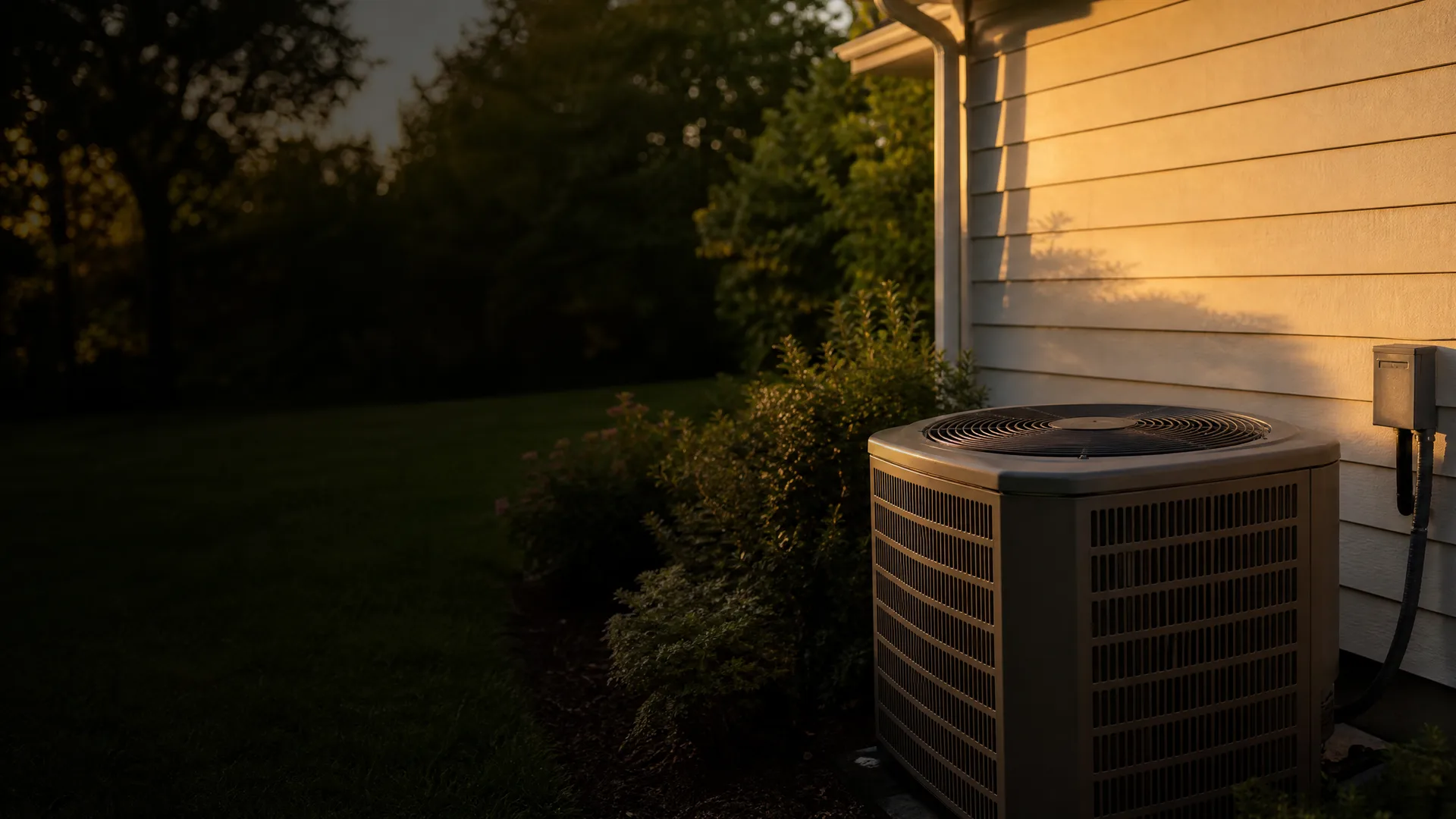
You're out back around seven, the light still gold but losing its heat, and you walk over to check on the condenser because the house never cooled down today. The fan isn't moving. You crouch down and it's dead quiet where it should be humming, just a faint tick from the motor trying. No ice down here that you can see, but you already know the coil up top is why your vents have been blowing warm since dinner. The grass is still damp from this morning. Somewhere down the block a sprinkler is running, and your unit just sits there, silent, while the evening stays muggy and close around you.
A frozen coil almost always traces back to one thing: something cut off the airflow or the refrigerant wasn't right to begin with, and once you know which, the fix is usually straightforward. The ice is a symptom, not the problem itself, and it won't clear on its own for good until whatever caused it gets found. That's the part worth having someone local look at, someone who works on units like yours all summer and has a good idea what's behind it before they even open the panel. You'll get matched with one contractor for this, not a handful competing for your callback, and they'll know the humidity and the heat your system is fighting here because they're working on the same conditions down the street. Your AC should be able to keep up with a Rochester summer without icing over. If it just did, something's off, and it's worth getting in front of before it costs you the compressor.

Find an air conditioner repair pro in Olmsted County