Heat pump frozen over in Rochester, MN
A heat pump icing over in a Rochester winter is normal to a point. The outdoor unit pulls heat out of cold air, and moisture in that air turns to frost on the coil. Every heat pump runs a defrost cycle to melt it off, reversing itself for a few minutes every so often, and you'll see steam rising off the unit when it does. That's expected. What isn't expected is a coil that stays covered in thick ice or a layer that keeps building between cycles. That points to something keeping the defrost cycle from doing its job: a stuck reversing valve, a failed defrost sensor or control board, a fan that's slowed down, or low refrigerant charge. Left alone through a Minnesota winter, a frozen coil makes the system work harder to pull any heat at all, and it can push the backup heat to carry the load instead. If the ice isn't melting on its own within an hour or two, the unit needs a look from someone who knows what's failing.
Why does your heat pump have to work so hard here?
Winter nights average 10°F
Nights this cold mean the coil is pulling heat from air that has almost none to give, so frost builds fast and defrost cycles kick in more often.
Heat runs September through May
Nine months of heat means your heat pump carries most of the year's work here, so a unit that struggles to defrost costs you comfort for months, not weeks.
Cooling runs June through August
Only three months of cooling means the same unit spends most of its life heating, so a defrost problem in January matters more here than in milder places.
NOAA nClimDiv 1991-2020
How Defrost Actually Works
- The defrost cycle reverses the system, sending hot gas through the outdoor coil to melt frost while the indoor unit briefly blows cool air.
- A timer-and-temperature control or a demand defrost sensor decides when the cycle starts, not just the outdoor temperature alone.
- The outdoor fan shuts off during defrost so the heat stays at the coil instead of blowing away into the cold air.
- If frost keeps coming back thick within an hour of a cycle ending, the reversing valve or a sensor is usually the cause, not the cold itself.
- A unit that ices over solid and stays white instead of wet means defrost isn't completing, which points to a stuck reversing valve or a failed sensor.
- Auxiliary heat strips often kick in during defrost to cover the house while the outdoor unit is busy melting itself instead of heating.
A heat pump defrosts by running backward for a few minutes. The reversing valve sends hot refrigerant gas out to the outdoor coil instead of the indoor one, and that heat melts the frost off the coil fins. While this happens, the indoor unit keeps blowing air, but it comes out cool instead of warm, since the system isn't delivering heat inside during those few minutes. The outdoor fan turns off too. If it kept spinning, the cold air moving across the coil would work against the heat trying to melt the frost, so it shuts down until the cycle ends.
What triggers the cycle varies. Some systems just run a timer alongside an outdoor thermostat, defrosting every so often when it's cold enough. Others use a demand defrost sensor that reads how much frost has actually built up and calls for a cycle only when it's needed. Either way, once the coil is clear, the valve switches back and the system returns to heating the house.
Trouble shows up when this process doesn't finish what it starts. A unit that goes back to solid white frost within an hour of a cycle ending isn't clearing the coil the way it should. That usually traces back to the reversing valve sticking partway, or a sensor misreading the coil and cutting the cycle short. Auxiliary heat strips often carry the house through these cycles, so if the system calls for aux heat constantly, something in the defrost side is working harder than it should.




Get matched with a heat pump pro in Olmsted County
A thin layer of frost that melts off in a defrost cycle is one thing. A thick coat of ice that stays, or a unit that keeps running while it's buried, is another. That points to a problem in the system that decides when to defrost, a stuck reversing valve, or a fan that has slowed down and stopped pulling enough air across the coil. None of that clears on its own, and running a frozen heat pump through a Rochester cold snap puts strain on the compressor, the one part in the system that costs the most to replace. A local contractor who works on heat pumps all winter has seen which of these causes shows up most and can tell from how the ice is sitting, and where, which one is likely yours. Getting it looked at while the unit is still forcing itself through cycles matters more than waiting to see if the next thaw clears it.
Frost that melts off on its own
A thin white coating on the outdoor coil in the morning, gone by afternoon, is the defrost cycle doing its job. You might see steam coming off the unit while it runs. The fan keeps turning once the cycle ends. If you press the coil and feel bare metal under a light frost, or the ice is gone within an hour or two, the system is managing it the way it was built to. This happens more on the coldest nights, when the coil is pulling heat from air that barely has any. Nothing about this calls for a repair, and running the system through it is the right move.
Ice that stays and builds
Ice that's still there after several hours, or that comes back thicker each day, is a different problem. You might see ice creeping up the refrigerant lines, or a solid sheet instead of a thin coat. The unit may keep running without ever switching into defrost, or it may cycle but the ice never clears. Sometimes the fan stops turning under the weight of it. This is the system failing to defrost itself, not managing a normal frost load. Left alone through a Rochester winter, it can mean no heat in the house when you need it most, and ice that stresses the coil and the fan motor.



A sensor or timer tells the control board frost has built up.
The reversing valve switches, sending hot refrigerant gas outdoors.
The outdoor fan shuts off while hot gas melts the frost.
Indoor air blows cool for a few minutes during the switch.
Is the ice on your heat pump actually a problem
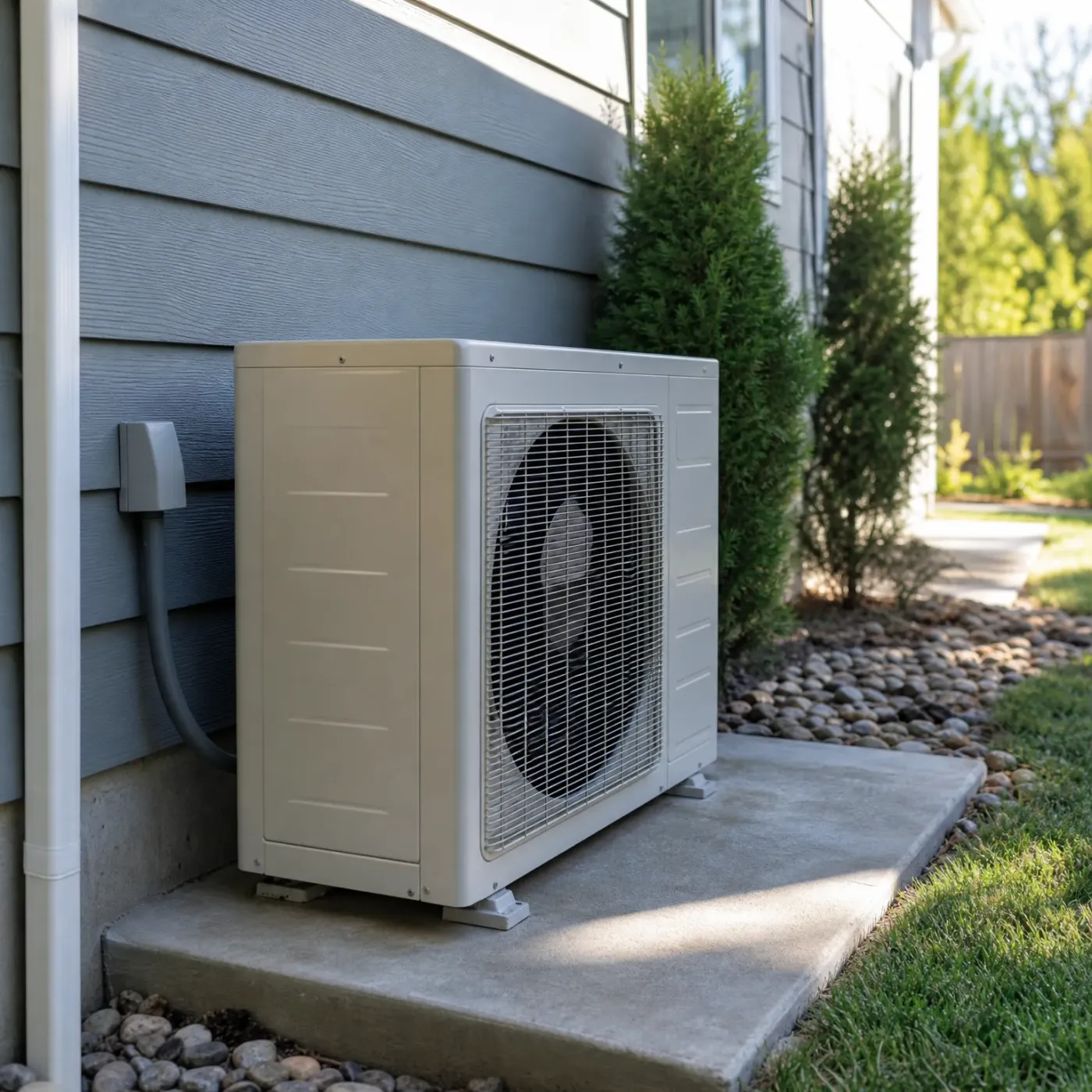
Walk outside and look at the unit. Ice that covers the whole cabinet, builds up over the top, or stays through the afternoon instead of melting off is past what a normal defrost cycle should leave behind. Inside, you might notice the air from the vents feels cooler than it should, or the system runs and runs without the house warming up. You may hear it cycling on and off more than usual, or notice it stayed in defrost mode with the outdoor fan off for longer than a few minutes. Left alone through a Rochester winter, a heat pump that can't clear its own ice will keep losing ground, and the house will have to lean harder on backup heat to stay warm.


Power here costs 18.20 cents per kilowatt-hour
At 18.20 cents per kilowatt-hour, a heat pump that's stuck defrosting instead of heating runs up your bill fast, since it's drawing power to melt ice instead of warming the house. A unit running efficiently keeps those costs where they belong.
EIA-861 2025

So is your heat pump okay, or not
A thin frost that clears on its own is the system doing what it's built to do. Ice that stays, builds up, or keeps growing through a cold Rochester day means something in the defrost cycle isn't finishing its job, and that won't fix itself before spring.
Someone who works on heat pumps through Olmsted County winters has seen this pattern before and knows which part tends to be behind it. Get matched with a licensed local contractor who can look at your unit directly, and you'll hear back from that one contractor, not a handful of different companies calling about the same job.

Find a heat pump repair pro in Olmsted County
A licensed pro who works in Olmsted County gets your request.
It costs nothing to send, and you don't have to hire anyone.