Gas heats most of St. Paul
Utility gas heats 70.4% of occupied homes in Ramsey County. A furnace handles that job on its own, so a mini split going into a gas home is almost always new ground, not a replacement.
Takes about a minute. No obligation.
Utility gas heats 70.4% of occupied homes in Ramsey County. A furnace handles that job on its own, so a mini split going into a gas home is almost always new ground, not a replacement.
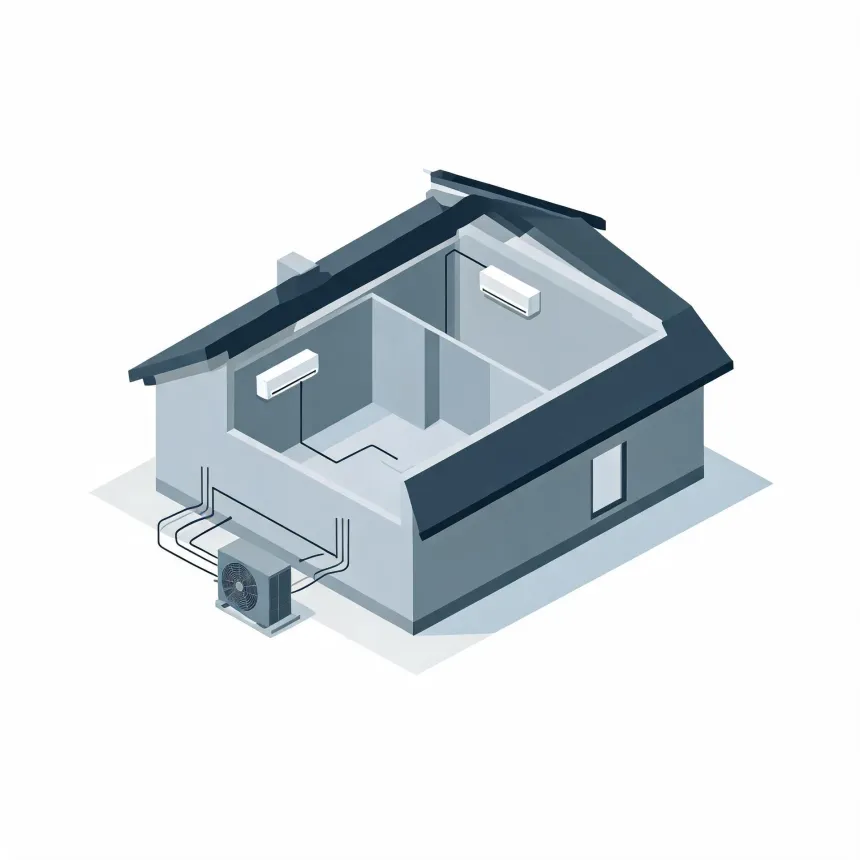
A gas home usually has no ductwork built for heat pump airflow and no outdoor unit already in place. The contractor has to find a spot for the condenser and run line sets fresh, rather than reusing anything from a central system.
NOAA nClimDiv, 1991–2020 normals
A standard mini split sized for one or two rooms runs on normal household current.
At 15.45 cents per kilowatt-hour, there's no reason to size up or down from what the room actually needs.




Cooling only has to carry June through August here, with afternoon highs averaging around 80°F. That's a short, mild season compared to what a mini split handles in a hot climate. The compressor isn't working against long stretches of extreme heat, so wear from the cooling side stays low over the life of the unit. Winter is the opposite story, long and cold, which is why the heating side of a mini split matters more here than the cooling side does. A unit rated for cold climates will handle that load without strain. You don't need to pay for the highest efficiency tier on the market. A well matched, correctly sized system will do this job for a long time.
A standard size and efficiency fit fine here. There's no local reason to go bigger or pricier.
Find a contractor
The efficiency rating on a mini split's label describes how much heat it moves per unit of power it uses, not how much heat it can put out. A unit can carry a room fine and still sit low on that scale, or carry it poorly and sit high. Paying for a higher rating buys a lower running cost over the years ahead, nothing more. It won't make an undersized unit keep up on the coldest night, and it won't stop an oversized one from short cycling. What actually decides whether you're comfortable is the low temperature rating, the point where the unit stops pulling heat from outside air and falls back on backup heat or just quits. That number has nothing to do with the efficiency tier. A mid tier unit rated for cold climates and sized right for the room will outperform a top tier unit that's rated for a milder climate or sized wrong.
Every heat pump has a low temperature where it stops pulling heat from outside air and switches to backup or just quits. That number is on the spec sheet, not the sales brochure. Ask for it directly and compare it against the coldest nights the system will actually face.
A contractor should walk through the room, the windows, the ceiling height, and the insulation before naming a number. If someone quotes a size before seeing the space, they're guessing. A unit too big will short cycle and never dehumidify right. Too small, and it runs flat out without keeping up.
Sizing a mini split comes down to how much heat the room gains and loses, not how big the room looks. A contractor works that out by checking the floor area, the ceiling height, the windows and which way they face, and how well the walls and attic hold heat. Rooms that look about the same can need different size units if one gets full afternoon sun and the other sits in shade most of the day. Oversize it and the compressor satisfies the thermostat fast and shuts off again before it's pulled any humidity out of the air, so the room feels cool but damp. Undersize it and the compressor runs constantly, straining to keep up on the hardest days and never quite getting there. The right size runs long, steady cycles instead of short bursts, which is easier on the compressor over the years ahead.
Installation day starts with the line set, not the indoor unit. The contractor runs refrigerant lines and wiring from where the outdoor condenser sits to where the indoor head goes on the wall, usually through a single small hole drilled through the exterior wall. That hole gets sealed properly, which matters for keeping water and air out of the wall cavity for years after the crew is gone. Once the lines are run, the system gets evacuated with a vacuum pump to pull out moisture and air before any refrigerant goes in. Skipping that step or rushing it is the single most common reason a mini split underperforms from day one, long before anything mechanical wears out. After charging, a tech checks line set pressures and confirms the indoor head is pulling the temperature down the way the spec sheet says it should. The outdoor unit needs a pad or mount off the ground, clear of snow and debris, with room around it for airflow. A clean installation looks almost nothing happened. That's the point.