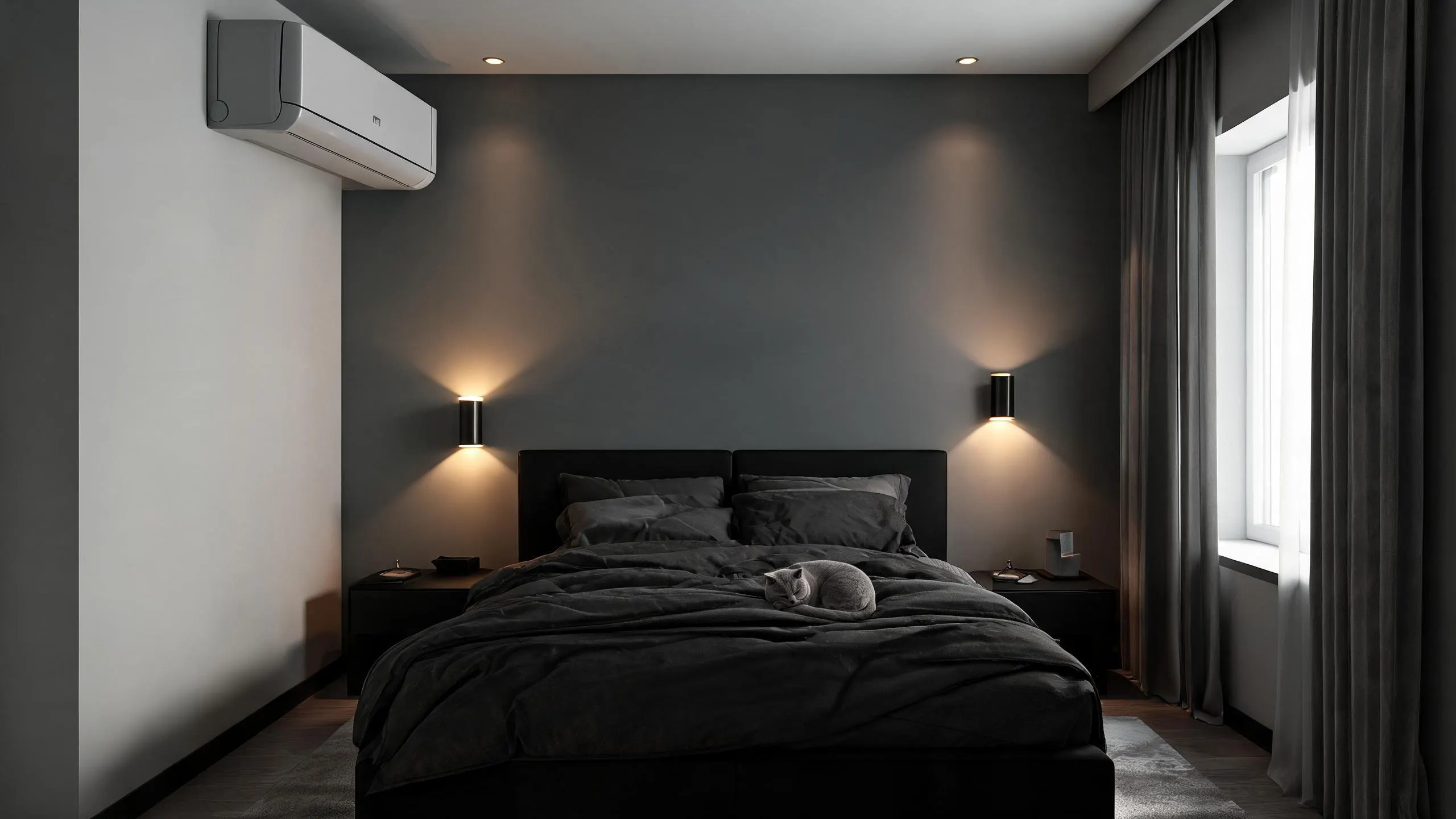





A minimalist bedroom with dark grey walls, a large bed with charcoal bedding, a sleeping cat, two warm-toned wall sconces, and a wall-mounted air conditioning unit.

Mini Split Installation in Shakopee, MN

Tell us about the job

Takes about a minute. No obligation.

New system or replacementMini-splitScott County, MN
Step 1 of 2

What ZIP code is the job in?

Gas heats 81.2 percent of homes in Scott County. A mini split doesn't compete with that furnace, it works alongside it. Most installs here add ductless heads to a room or addition the furnace doesn't reach well, or to replace window units for cooling. Some homeowners run the mini split as the main source in the shoulder months and let the furnace handle the deep cold. Either way it's a second system, not a replacement for what's already heating the house.

8 months
October through May, your system heats
3 months
June through August, it cools
10°F
the average winter night it heats against
80°F
the average summer afternoon it cools against
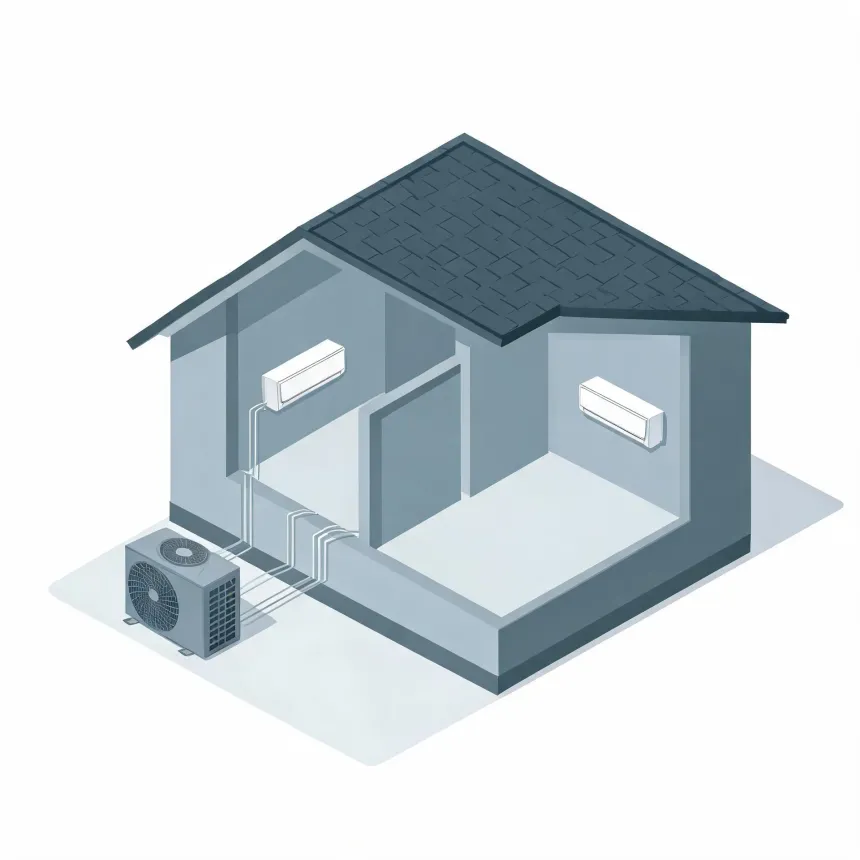
Isometric cutaway illustration of a small house showing two wall-mounted indoor air conditioning units connected by refrigerant lines to an outdoor condenser unit on the ground outside.
Your system heats October through May and cools June through August.

NOAA nClimDiv, 1991–2020 normals

Minnesota homes paid 15.45 cents per kilowatt-hour in 2024.

A properly sized mini split keeps that cost down. There's no reason to size up here.

May is the month to get this done, before June asks something of it

Cooling runs June through August
Summer afternoons average 80°F
53 damaging wind events from 2015 to 2024

Scott County is zone 6A, cold enough that the energy code treats winter here as the main event, not the exception. Any mini split going in has to clear the federal minimum for a split-system heat pump, 14.3 SEER2 for cooling and 7.5 HSPF2 for heating, since the standard doesn't treat ductless units as their own category. That floor applies to equipment built from 2023 on, so most of what a contractor quotes you will already meet it. A system that clears the minimum can still qualify for the federal tax credit on qualifying equipment. Ask which models on the truck qualify before you settle on one.

Cooling runs three months a year here, so the system doesn't need to work hard

Cooling here runs three months a year, June through August, with afternoon highs averaging 80°F. That's not a heavy load for any system to carry. The wear that shortens a mini split's life comes from long, hard runs against high heat, and this climate doesn't ask for that. A reliable unit sized right for the space will hold up fine here. You don't need the top efficiency tier to get a system that lasts.

Find a contractor
A man in a cap, dark work jacket and tan pants climbs porch steps toward a green front door, carrying a worn tool bag in his right hand, with a potted shrub beside the entry.
A beige split-system air conditioner outdoor condenser unit mounted on metal wall brackets atop a stucco wall.

Light duty, year after year

Three months of light work a year adds up to not much wear over time. When a mini split here needs a repair, it's almost always age, a refrigerant leak, or something that got skipped at install, not a compressor worn down from running hard. Pick the contractor on reliability and the install itself, not the spec sheet. That's where a system's long life actually gets decided.

Ask what each head is rated to heat or cool, not just the total

A mini split system's total capacity gets split across the indoor heads, and a contractor should be able to tell you what each room needs on its own, not just the sum. A head too small for its room runs constantly and never quite catches up. A head too big cycles on and off and leaves the room feeling clammy. Ask for the room by room breakdown, not just the outdoor unit's rating.
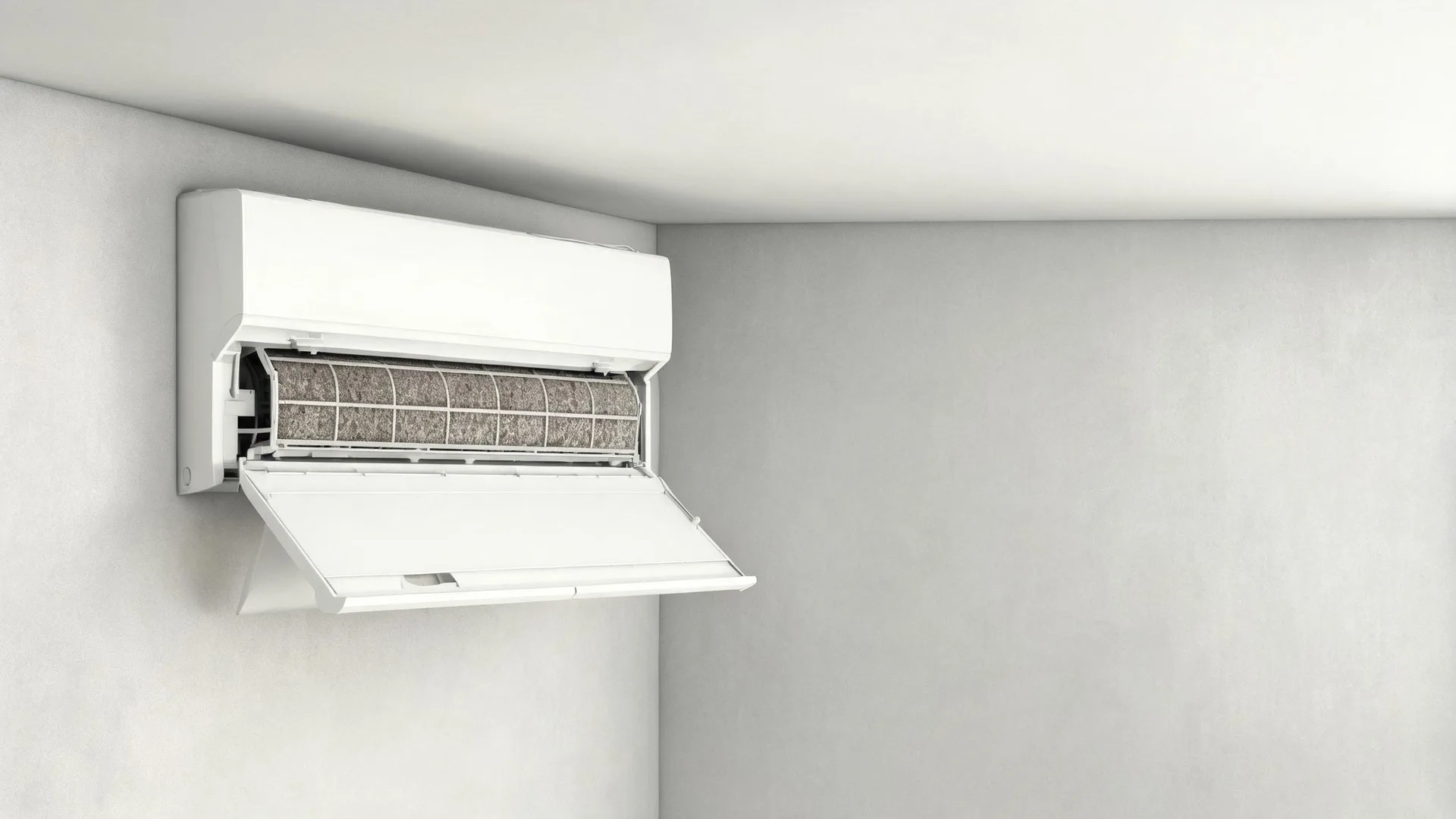
Ask where the line set and condensate drain will run

Every indoor head needs a line set carrying refrigerant back to the outdoor unit, plus a condensate line to drain water away. Where these run affects how much wall or ceiling gets opened up, and whether the drain can actually flow downhill the whole way. A contractor who hasn't walked the route and told you where lines will go hasn't finished sizing the job yet.

Sizing a mini split starts with a load calculation, not a rule of thumb based on square footage. A contractor measures the room, checks the windows and how they face, looks at the insulation, and works out how much heat the space gains in summer and loses in winter. A room with a wall of west facing glass needs a different size head than one that doesn't, even if the floor space is the same. Oversizing feels like the safe choice but it isn't. A head too large for its room cools the air fast and shuts off before it pulls the moisture out. The room ends up feeling cold and damp at the same time. It also cycles on and off more than a properly sized unit, and that cycling wears on the compressor more than running steady does. Undersized has its own problem. The head runs constantly and never quite gets the room where you want it. The right size runs long steady stretches and keeps up without straining.

Install day starts with the outdoor unit and where it sits. It needs clearance on all sides for airflow and a spot where condensate and refrigerant lines can run without too many bends. Inside, the mounting plate goes up first, then the installer drills a single hole through the wall for the line set, the condensate drain, and the electrical whip to pass through together. The lines get connected at both ends, and the system gets evacuated with a vacuum pump to pull out moisture and air before any refrigerant moves through it. That vacuum step matters more than people expect. Any moisture left in the lines turns to acid once refrigerant hits it, and that shortens the compressor's life. Once the system holds vacuum, the installer opens the line valves, charges the system if needed, and tests each head on heat and cool before calling it done.