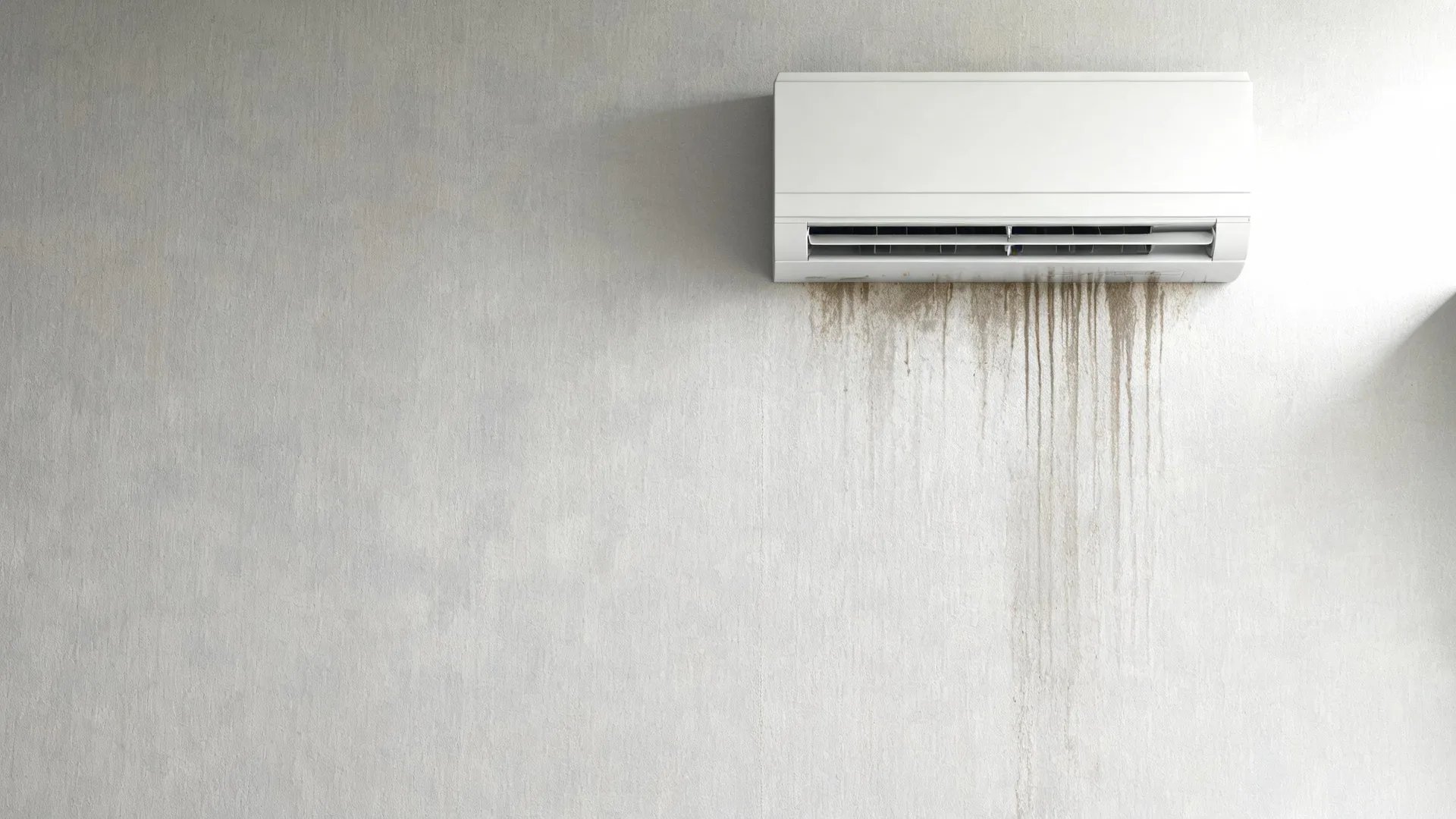
Gas heats most homes here
Utility gas heats 56.1% of occupied homes in Goodhue County, and another 22.1% run on bottled or LP gas. A mini split isn't replacing that furnace. It's taking on jobs a furnace and a window unit don't do well.
Takes about a minute. No obligation.
Utility gas heats 56.1% of occupied homes in Goodhue County, and another 22.1% run on bottled or LP gas. A mini split isn't replacing that furnace. It's taking on jobs a furnace and a window unit don't do well.
In a home with a gas furnace already in place, a mini split usually goes in for a room the ducts don't reach well, or to add cooling to a house that never had central air. The furnace keeps handling the rest of the house.
NOAA nClimDiv, 1991–2020 normals
Half the homes in Goodhue County were built in 1973 or earlier.
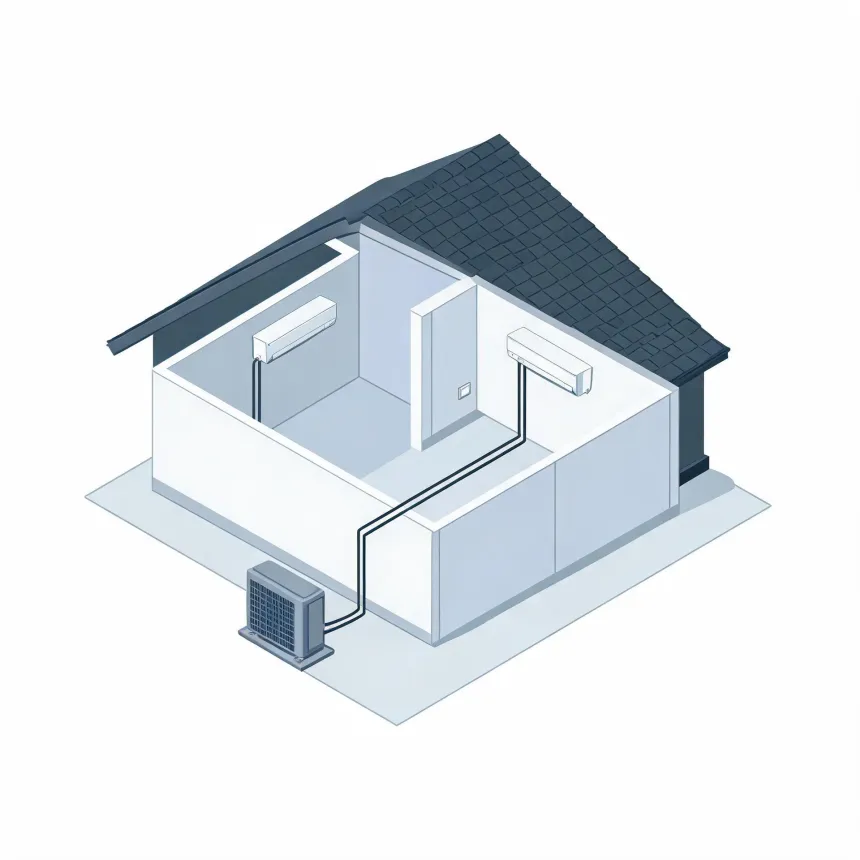
A mini split hangs on a wall or stands on a mount pad, so the crew isn't tied to whatever ductwork your house does or doesn't have.



Summer here is short. Cooling runs about three months, June through August, and afternoons average 79 degrees. That's not the kind of heat that pushes a system hard day after day. A mini split doing cooling duty in Red Wing spends most of the year idle or off entirely, so you don't need to chase the highest efficiency rating on the shelf. A unit sized right for the room and installed well will handle what this climate asks of it. Where the money matters more is the install itself, and how long the equipment holds up once it's on the wall.
Electricity here runs 15.45 cents a kilowatt-hour, close to the national average. Nothing about that rate or this climate calls for a bigger unit or a premium efficiency line. A mini split sized to the room, installed well, is the right call.
Find a contractor
Three months of light cooling duty, June through August, with afternoons around 79 degrees, is not much for a compressor to deal with. Outside that stretch the unit is either off or running heat at whatever the room needs, which doesn't wear on it the way a run of 79 degree afternoons would. So the install is where the money should go. The line set run, the mount, the charge being right, those decide how this holds up over the years, not a higher tier of equipment.
A mini split is worked out by figuring the heat gain and loss of the specific room it's serving. That means the square footage, the windows, the exterior walls, what's above and below it. A furnace is sized to cover a whole house through ductwork. A mini split head is matched to the one room it serves.
An oversized unit cools the room fast and shuts off before it pulls the moisture out of the air. The room ends up cold and clammy instead of just comfortable. It also cycles on and off more often, which is harder on the compressor than a longer, steadier run. Bigger isn't the safe choice here. Matched is.
That efficiency number on the label is a ratio. It's how much heating or cooling you get out for the energy you put in, measured under set lab conditions. It's useful for comparing one unit against another, but it doesn't tell you what the unit will actually do on your wall. A high rating on a system that's oversized for the room or poorly charged will run worse than a modest rating on one that's sized and installed right. The rating also assumes the indoor and outdoor parts are matched as a set. Pair a different head with a different outdoor unit than what it was tested with, and the number on the label stops meaning much.
Comparing systems on paper, the specs that matter most are the ones tied to the room, not the brochure. Ask how the installer is sizing the unit, and expect an answer about the room's square footage and windows, not just a number pulled from a chart. Ask whether the indoor head and outdoor unit are being sold and tested as a matched pair, since mixing parts from different lines can leave the performance rating meaning nothing. Ask what happens to the line set, whether it runs through a clean wall penetration and gets covered, or just gets left exposed. Ask how the crew handles the vacuum process before charging the system, since that step is invisible once the cover panel goes on but decides whether the compressor runs easy or strains for years. A contractor who answers these without hesitation has done the job right before.