Gas and propane heat most homes here
Utility gas heats 42.3% of occupied homes in Mille Lacs County, and propane heats another 35.5%. Together that covers most houses in the area, with electric heat well behind at 11.4%.
Takes about a minute. No obligation.
Utility gas heats 42.3% of occupied homes in Mille Lacs County, and propane heats another 35.5%. Together that covers most houses in the area, with electric heat well behind at 11.4%.
In a home with a gas or propane furnace, a mini split usually goes in to handle cooling, or to heat a room the furnace doesn't reach well. The furnace keeps doing the rest of the house.
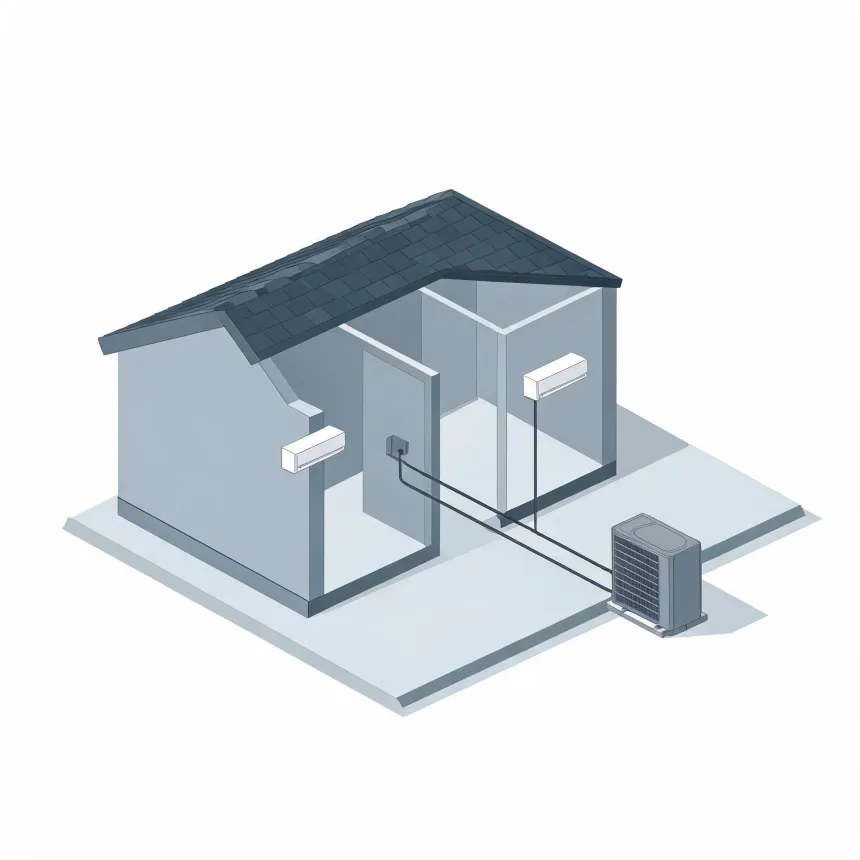
NOAA nClimDiv, 1991–2020 normals
Cooling only runs about two months here, July and August, with afternoon highs averaging 78°F.
A mini split in Princeton doesn't need to be the top-tier model to hold up, since it's not working hard most of the year.



Minnesota homes paid 15.45 cents per kilowatthour in 2024. A mini split sized right for the room it's heating or cooling won't run up a bill chasing space it was never meant to cover. An oversized unit cycles on and off more often, and that short cycling wastes power rather than saving it. For a room that just needs help on hot afternoons, and maybe a boost on the coldest days, a standard-size, standard-efficiency unit keeps the running cost fair.
Mille Lacs County falls in climate zone 6A, and the federal standard treats a ductless mini split as a split-system heat pump. Units made from January 2023 on have to hit 14.3 SEER2 for cooling and 7.5 HSPF2 for heating, no matter where they go in. A qualifying system may also count toward the federal tax credit for heat pumps. That narrows the field before you even start comparing brands.
Find a contractorSEER2 and HSPF2 tell you how much heat a unit moves for the power it uses, one rating for cooling and one for heating. A higher number costs more up front and pays that back slowly, over years of running. That math only works out if the unit actually runs enough hours to earn it back. A unit sitting idle most of the year through can't make up the difference no matter how good the rating looks on the sheet. Reliability doesn't show up on that label at all. A unit that starts every time and holds its charge for years is worth more than a fraction of a point on the efficiency rating, especially on a machine that spends most of its life barely working.
If the furnace is what's heating most of the house, it isn't going anywhere. A mini split installation doesn't touch the existing ductwork or the furnace itself. The crew runs a small line set through an exterior wall for the new unit and leaves the rest of the heating system alone.
If a room is cooled by a window unit or a portable AC right now, that's what the mini split replaces. Once the indoor head is mounted and running, the old unit comes out. There's no ductwork to patch and no furnace work involved, just one cooling source swapped for another in that room.
When you're comparing systems, ask what the manufacturer rates the unit down to, not just its headline heating number. Every heat pump loses capacity as the outdoor temperature drops, and a spec sheet will show that falloff point if you look for it. Ask too about the indoor head itself, not just the outdoor unit. The sound rating at low fan speed matters if it's going in a bedroom. Ask how many indoor heads the outdoor unit can run and whether this install is using all of that capacity or leaving room to add another head later. And ask what the warranty actually covers, parts versus labor, and who has to register it and when. A contractor who answers these plainly, with real numbers from the spec sheet, is telling you something. One who steers you straight to efficiency ratings and away from the rest is leaving things out.
Installation day starts with the outdoor unit placement, since the line set run between indoor and outdoor units determines a lot of what happens after. A tech mounts the outdoor unit on a pad or bracket, then runs refrigerant lines, a drain line, and wiring through a hole drilled in the exterior wall, usually behind where the indoor head will hang. The indoor head goes up on a mounting plate, leveled carefully since drainage depends on the right pitch. Once both ends are connected, the lines get vacuum-sealed to pull out moisture and air before refrigerant is released into the system. That vacuum test matters more than almost anything else that happens that day. A line that isn't properly evacuated can lose charge slowly over the following months, and by the time it's noticeably low, finding the leak means redoing work that should have been caught upfront. After charging, a tech checks temperatures at the vents and confirms the system responds to the thermostat or remote before calling the job done.