






A row of illuminated two-story brick houses with front porches and mature trees photographed at twilight.

Mini Split Installation in Otsego, MN

Tell us about the job

Takes about a minute. No obligation.

New system or replacementMini-splitWright County, MN
Step 1 of 2

What ZIP code is the job in?

Most homes in Wright County heat with utility gas, close to seven in ten. A mini split works differently. It doesn't tie into a gas line or ductwork at all. Instead it heats and cools through a unit mounted on the wall, run on electricity, so it fits alongside a gas furnace as a way to handle one room or an addition without extending the ductwork. For the smaller share of homes already heating with electricity or LP gas, a mini split can take over more of the job year round.

9 months
September through May, your system heats
3 months
June through August, it cools
8°F
the average winter night it heats against
80°F
the average summer afternoon it cools against
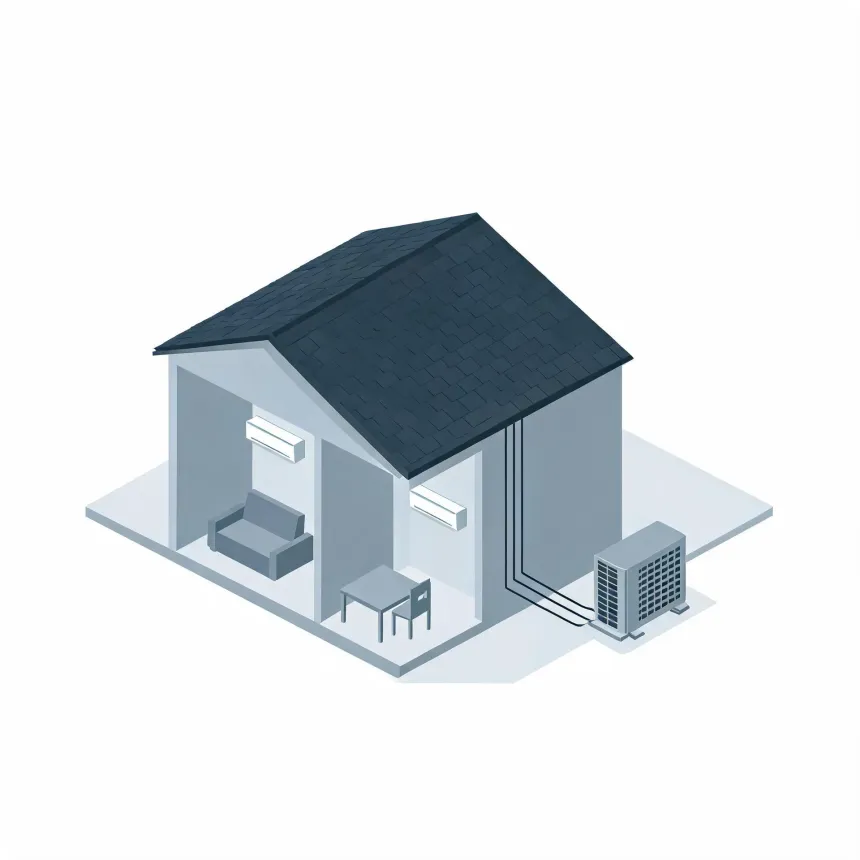
Isometric illustration of a cutaway house with a dark shingled gable roof, showing two wall-mounted indoor air handlers, a sofa, table and chair inside, and refrigerant lines running to an outdoor condenser unit beside the building.
Your system heats September through May and cools June through August.

NOAA nClimDiv, 1991–2020 normals

A higher efficiency rating means the unit moves heat using less electricity.

For a mini split running most of the day, that rating decides what it costs you to keep it on.

May is the month to get a mini split in before Wright County cooling starts

Cooling runs June through August
Summer afternoons average 80°F
65 damaging wind events from 2015 to 2024
A mini split sized right for one roomMinnesota electricity runs 15.45 cents per kilowatt hour, and a standard size keeps that cost in check

Wright County falls in climate zone 6A, cold with winters that run long. Any mini split installed here still counts as a split-system heat pump under the federal standard, since there's no separate category for ductless units. That means a model sold today has to hit at least 14.3 SEER2 for cooling and 7.5 HSPF2 for heating. Those numbers set the floor. A homeowner can choose a more efficient unit above that line, but nothing below it is allowed in.

A standard mini split is sized right for Otsego's summers

Cooling here only has to carry June through August, with afternoon highs averaging around 80. A mini split sized for one room or one addition handles that load without trouble. There's no case for oversizing it or paying for a higher tier than the job needs.

Find a contractor
A man in a cap, gray long-sleeve shirt and tan pants climbs concrete steps toward a dark green front door, carrying a worn canvas tool bag.
A beige split-system air conditioner outdoor condenser unit mounted on metal wall brackets atop a stucco wall.

Ask how it holds up over a full year of running, not just one season

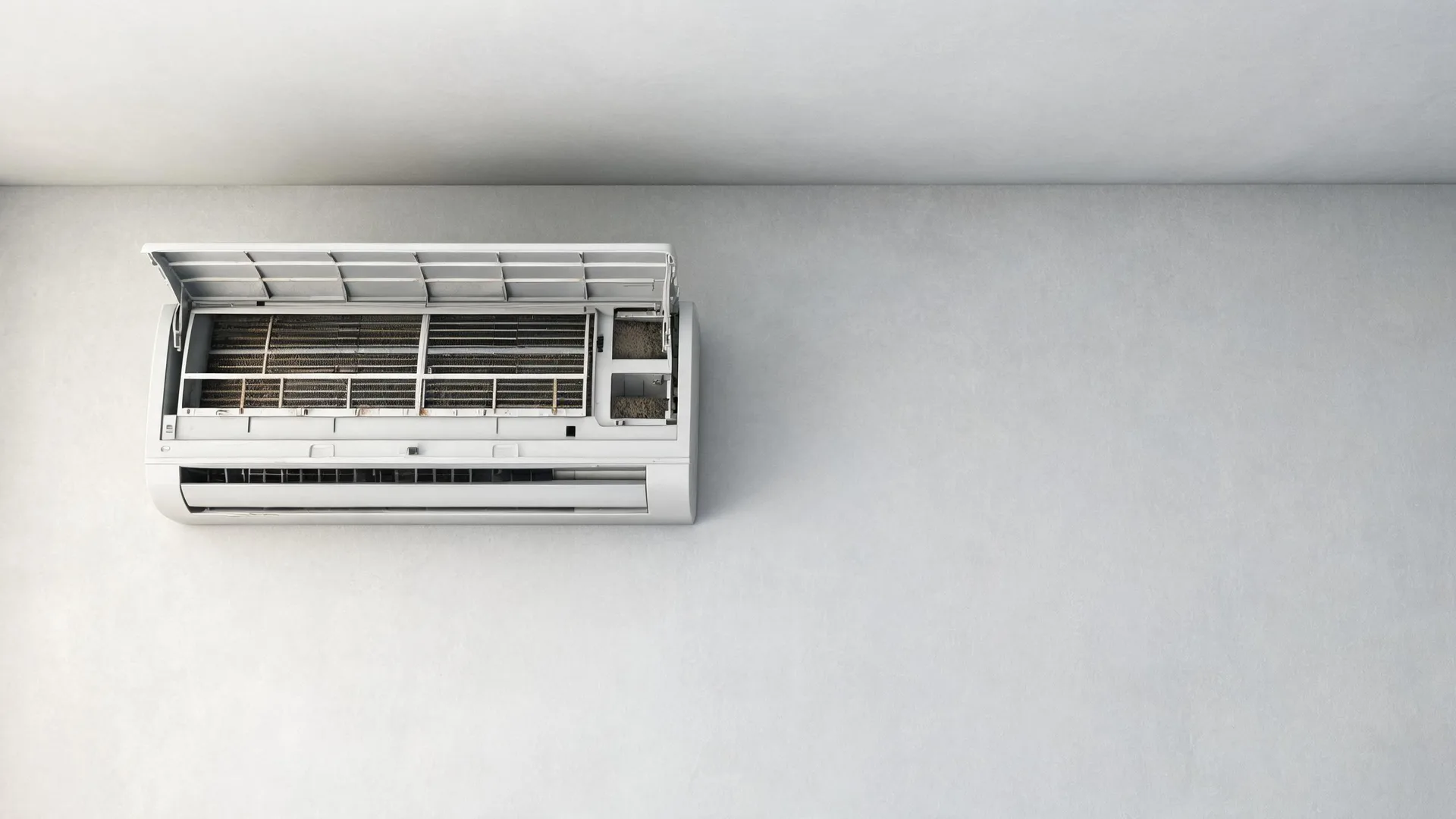
A mini split that handles both heating and cooling runs far more hours a year than a furnace that shuts off once spring comes. That changes what to ask when comparing units. Find out how the compressor is rated to perform in cold weather, not just at mild temperatures, since a unit that struggles below freezing will lean on backup heat and the electric bill will show it. Ask what the warranty covers on the compressor versus the indoor head, because those often carry different terms. Ask how the outdoor unit handles ice and whether it has a defrost cycle built in. A unit running most of the year also needs its filter checked more often than one that only works a few months, so ask how easy the filter is to reach and clean. The answers tell you more about what you're buying than the efficiency number alone.

Sizing comes from a load calculation, not the square footage

A contractor works out how much heat a room gains in summer and loses in winter, using the window area, the insulation, and how the walls and ceiling are built. Square footage alone leaves out too much. Rooms the same size can need different sized units depending on which way the windows face and what's on the other side of the wall.
An oversized unit cycles instead of running steady

A mini split that's too big cools the room down fast, shuts off, and starts again a short time later. Short cycles like that don't run long enough to pull moisture out of the air, so the room ends up cool but damp. A unit sized to the actual load runs longer, steadier stretches and keeps the air drier along with it.

If the room you're adding the mini split to is already heated by a furnace through a duct run or a register, that register usually stays in place. Nobody rips out ductwork just because one room now has its own unit. The furnace keeps serving the rest of the house the same as before, and the new mini split just takes that one room off its load. Some homeowners close the register in that room once the mini split is in, others leave it open as a backup for the coldest stretches. Either way works. The old equipment isn't replaced by a mini split so much as it's relieved of one job it used to do.

Installation cost comes down to what the crew has to do beyond hanging the indoor head and the outdoor unit. Running the line set between them is the main driver. A short, straight shot through an exterior wall costs less than a run that has to go up through a attic, across a long wall, or around framing to reach the outdoor unit's final spot. Every extra foot of line set and every bend adds labor, and if the wall is thick or finished on both sides, that opening takes more care to cut and seal. The electrical side matters too. A mini split needs its own circuit, and whether the panel already has room for one changes the job. If it doesn't, adding capacity is its own piece of work before the unit ever goes in. Where the outdoor unit sits counts as well. It needs a clear, level pad or mount, drainage that goes somewhere sensible, and enough clearance to pull air through the coil. A spot that's easy to reach and already graded right costs less to prep than one that needs a new pad poured or a mount built up off the ground.