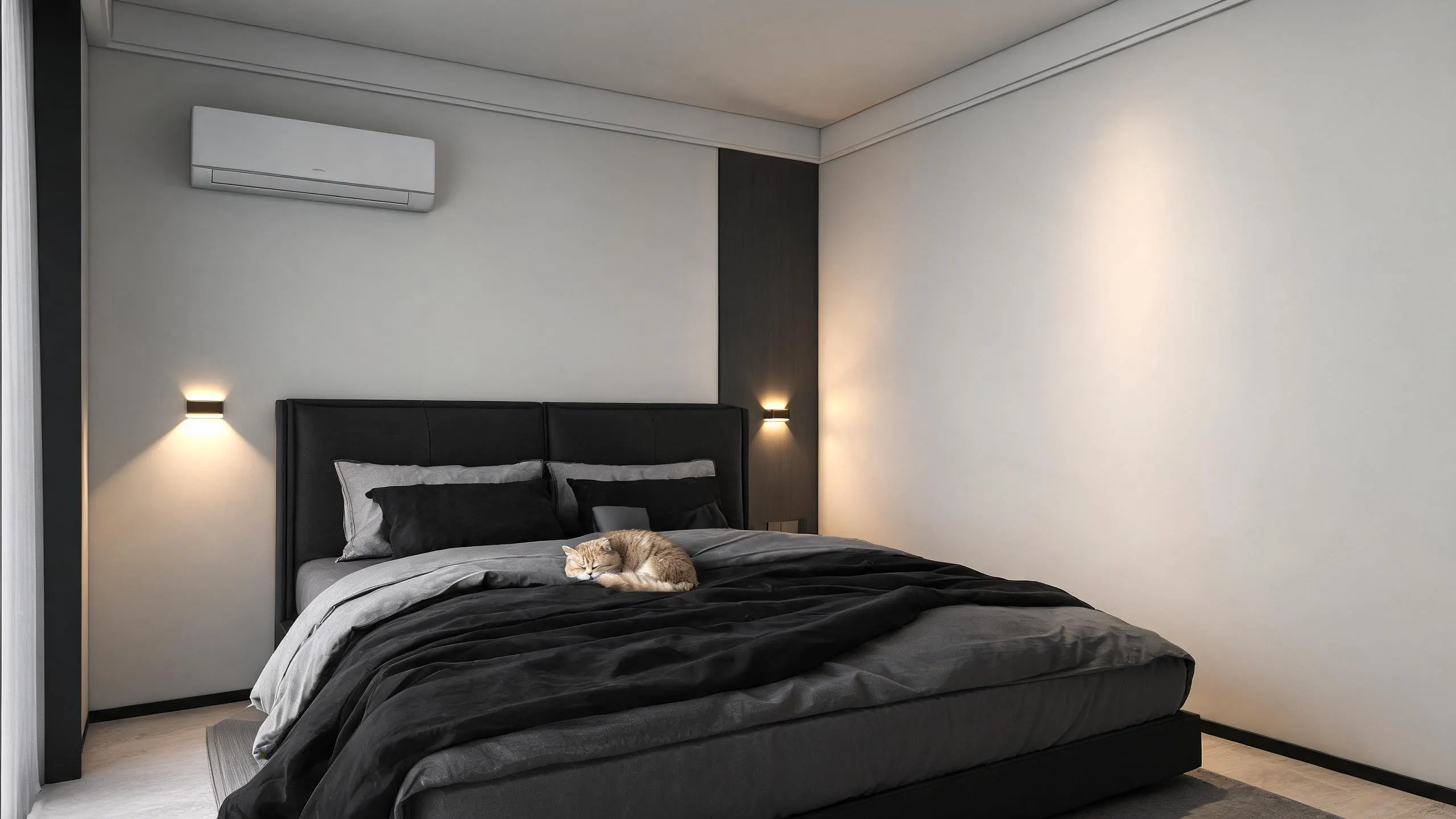




An orange cat sleeps on a neatly made bed with dark grey bedding in a minimalist bedroom with wall sconces and a mounted air conditioner.

Mini Split Installation in North Mankato, MN

Tell us about the job

Takes about a minute. No obligation.

New system or replacementMini-splitNicollet County, MN
Step 1 of 2

What ZIP code is the job in?

Gas heats 67.3% of homes in Nicollet County, and most of those run on a central furnace. A mini split works differently. It's electric, and it handles both heating and cooling from the same unit, so it usually goes in as a second system rather than a replacement for the furnace. That makes it a good fit for a room the ductwork never reached well, or a space like a garage or addition that needs its own heat and air. If gas is what your home already runs on, the furnace can keep doing the main work while a mini split covers the rest.

8 months
October through May, your system heats
3 months
June through August, it cools
10°F
the average winter night it heats against
80°F
the average summer afternoon it cools against
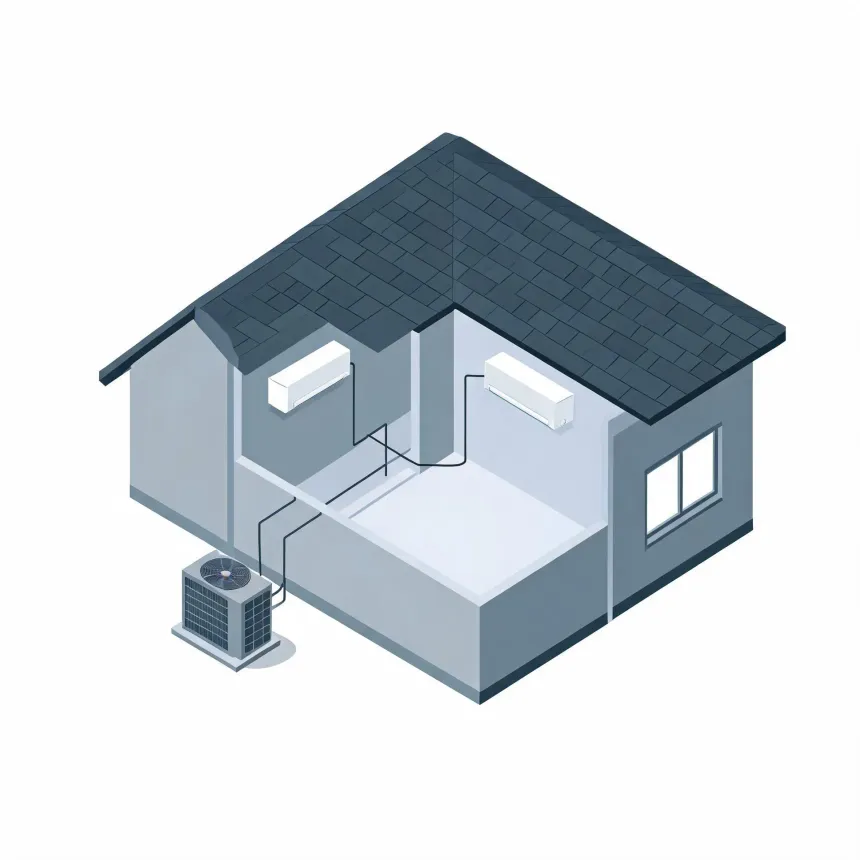
Isometric illustration of a cutaway gray house with a dark shingled roof, showing two wall-mounted indoor air conditioning units connected by lines to an outdoor condenser unit on the ground outside.
Your system heats October through May and cools June through August.

NOAA nClimDiv, 1991–2020 normals

A standard mini split, sized right, works fine in North Mankato.

At 15.45 cents per kilowatthour, there's no reason to pay more for capacity this room doesn't need.

May gives you time to get it installed before June's first hot day

Cooling runs June through August
Summer afternoons average 80°F
17 hail events from 2015 to 2024

North Mankato sits in zone 6A, a cold climate with winters that run long. Any mini split installed here falls under the same federal rule as other split-system heat pumps. It has to hit at least 14.3 SEER2 for cooling and 7.5 HSPF2 for heating. There's no separate, lower bar for ductless units. That floor is about efficiency, not size, so it won't push you toward a bigger unit than the room needs. A mini split that clears those numbers and gets installed correctly for this climate matters more than chasing a higher rating than the standard asks for. If you're comparing units, check the SEER2 and HSPF2 numbers on the spec sheet rather than taking a seller's word for it.

Three mild months of cooling means a standard mini split is enough

Cooling only runs about three months a year here, June through August, with afternoon highs averaging 80°F. A mini split in North Mankato isn't working against much. That's a case for a standard unit sized to the room, not the largest one on the lot.

Find a contractor
A white mini-split air conditioner outdoor condenser unit mounted on metal brackets against a beige stucco exterior wall, with a blue sky and scattered clouds in the background.

Three months of work a year

Three months of cooling, and the unit never has to chase anything past 80. That's a light enough load that a reliable standard model will hold up fine here. Put the money into getting the size and the installation right for the room instead of stepping up to a unit built for harder climates than this one.

Sizing comes from a room by room heat loss and heat gain calculation

A contractor measures the room, checks the windows and how they face, looks at the insulation, and runs a calculation to find out how much heat the space loses in winter and gains in summer. That number, not the square footage alone, tells you what size unit the room actually needs.
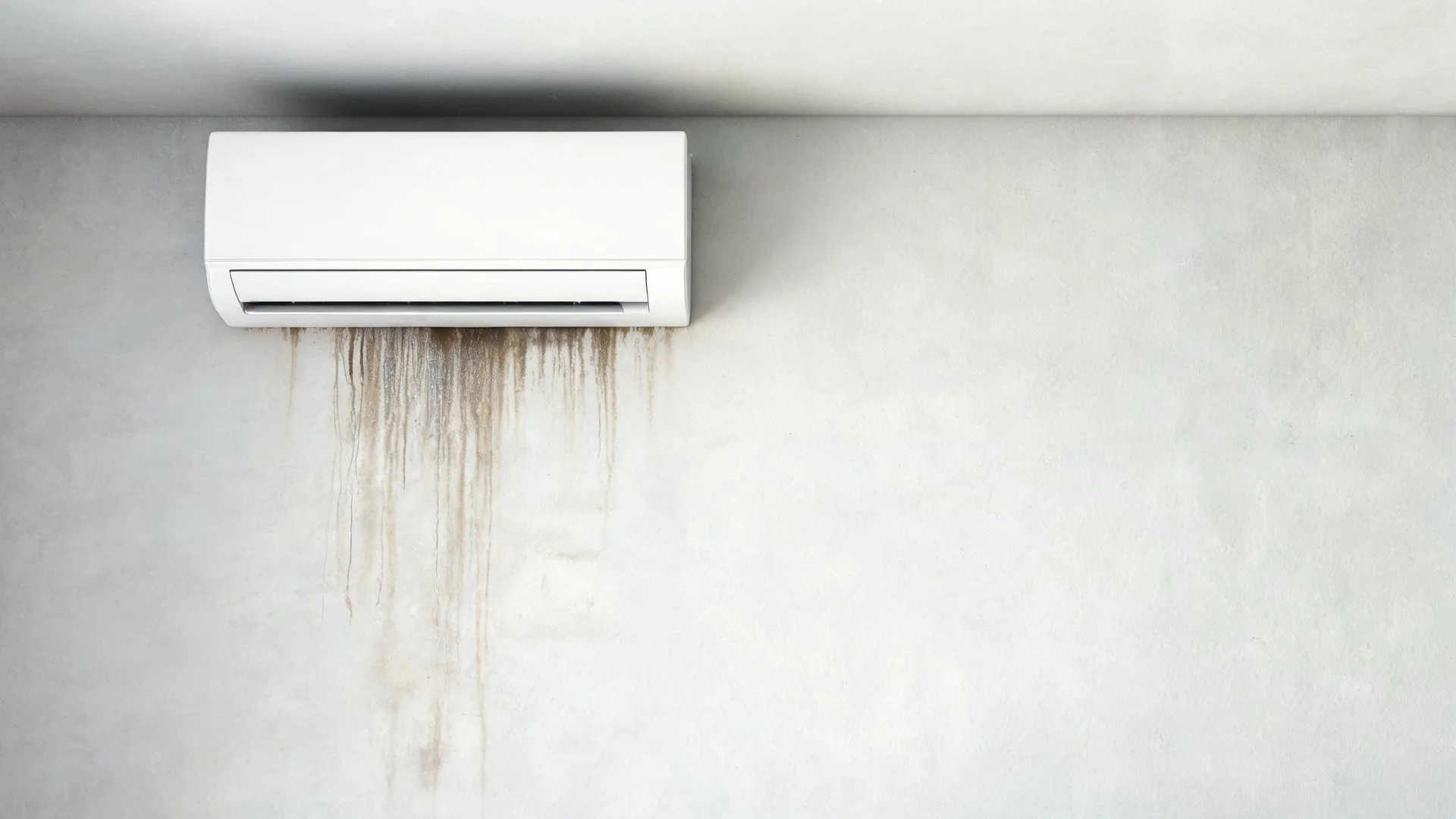
A unit sized wrong won't heat or cool the room properly either way

Too big and the unit cools the room fast, shuts off, and starts again before it ever pulls the moisture out of the air, leaving the space feeling clammy. Too small and it runs constantly, straining to reach the temperature you set and never quite getting there on the hottest or coldest days.

SEER2 and HSPF2 are tested numbers, not marketing names. SEER2 covers cooling efficiency, HSPF2 covers heating efficiency, and a mini split carries both ratings because it does both jobs. A higher number means the unit moves more heat for the electricity it uses, which matters most on the days it runs hardest. It doesn't tell you whether the unit is the right size for the room, and a unit that's too big will clear the rating on paper and still run short cycles that leave the air feeling damp. The rating is one piece of the decision. The heat loss and heat gain calculation for the room is the other, and you need both before the number on the label means anything.

The old system usually stays right where it is. A mini split doesn't ask you to tear out the furnace or the ductwork to make room, since it runs on its own line set and doesn't touch what's already heating the rest of the house. If what you're replacing is an older window unit or a space heater in that same room, that's what comes out, and the new indoor head goes on the wall or up near the ceiling in roughly the same spot. If there's an old ductless system being swapped for a new one, a contractor can check the line set and outdoor pad and sometimes reuse them rather than running new ones. Either way, nothing about adding a mini split forces a change to the heating system already running the rest of the house.