





A row of dark-sided single-story houses among large deciduous trees, with a trimmed hedge in the foreground and a mown lawn crossed by a paved path.

Mini Split Installation in New Ulm, MN

Tell us about the job

Takes about a minute. No obligation.

New system or replacementMini-splitBrown County, MN
Step 1 of 2

What ZIP code is the job in?

Gas heats 62.3% of homes in Brown County, and most of the rest run on LP gas or electricity. A mini split doesn't compete with a furnace, it takes over the jobs a furnace does poorly. Spring and fall it can run the whole house on its own. Through a New Ulm winter it works alongside the furnace, covering the rooms that run cold while the furnace carries the hardest days. The same system cools in summer, which is the part a furnace was never built to do.

8 months
October through May, your system heats
3 months
June through August, it cools
10°F
the average winter night it heats against
81°F
the average summer afternoon it cools against
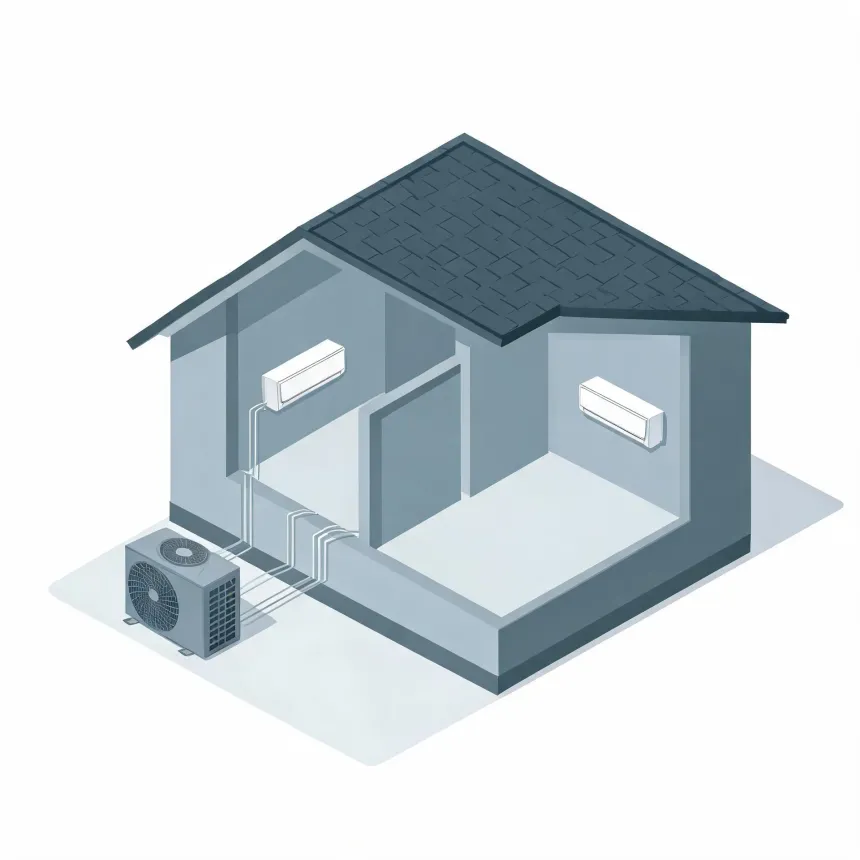
Isometric cutaway illustration of a small house showing two wall-mounted indoor air conditioning units connected by refrigerant lines to an outdoor condenser unit on the ground outside.
Your system heats October through May and cools June through August.

NOAA nClimDiv, 1991–2020 normals

Cooling here runs June through August.

May is the month to get a mini split installed, before the first warm week puts every install crew behind.

Half the homes in Brown County were built in 1963 or earlier, and a mini split has to work with the house that's already there

Half the homes here were built by 1963
Cooling runs June through August
Summer afternoons average 81°F
Sized right, not oversizedMinnesota homes paid 15.45 cents per kilowatthour in 2024. A standard size keeps that bill in check.

Summer here is short. New Ulm gets about three months of real cooling load, June through August, with afternoons averaging around 81 degrees. That's mild work for a mini split, nothing like what the same unit would face further south. Winters are long and cold here, but the mini split isn't carrying that load by itself, it's working alongside the furnace. A system that isn't worked hard tends to hold up, and when something does go wrong it's usually simpler to fix. You don't need to chase the highest efficiency rating to get good service out of it here.

A new mini split here has to clear a set efficiency bar

New Ulm falls in climate zone 6A. Any mini split installed here has to meet the federal minimum. That's 14.3 SEER2 for cooling and 7.5 HSPF2 for heating. It's a floor, not a suggestion. A system that clears it may also qualify for the federal tax credit, worth asking a contractor about when you compare quotes.

Find a contractor
A beige split-system air conditioner outdoor condenser unit mounted on metal wall brackets atop a stucco wall.

What changes the price of the install

What you pay for comes down to how many rooms you're conditioning and how hard the install itself is. Each indoor head is its own zone, so a system with more heads costs more before anyone talks labor. Labor is where installs really split apart. Running line set through an open basement or attic is straightforward. Running it through finished walls, up through multiple floors, or out to an outdoor unit set far from the house takes more time and more skill, and that shows up in the price. The outdoor unit's location matters too. If it needs a special mount, or a longer electrical run back to the panel, that's added work. A single-zone system ties one indoor head to one outdoor unit, the simplest version of this job. A multi-zone system puts several indoor heads on one outdoor condenser, which costs more up front but lets you heat and cool separate rooms on their own terms, the reason to pick a mini split over a window unit or a furnace addition in the first place.

The furnace usually stays

A mini split taking on heating and cooling doesn't mean the furnace comes out. Most installs leave the furnace and ductwork alone and add the mini split alongside it. The furnace keeps its job on the coldest days and as backup if the mini split ever needs service.
If something is being replaced

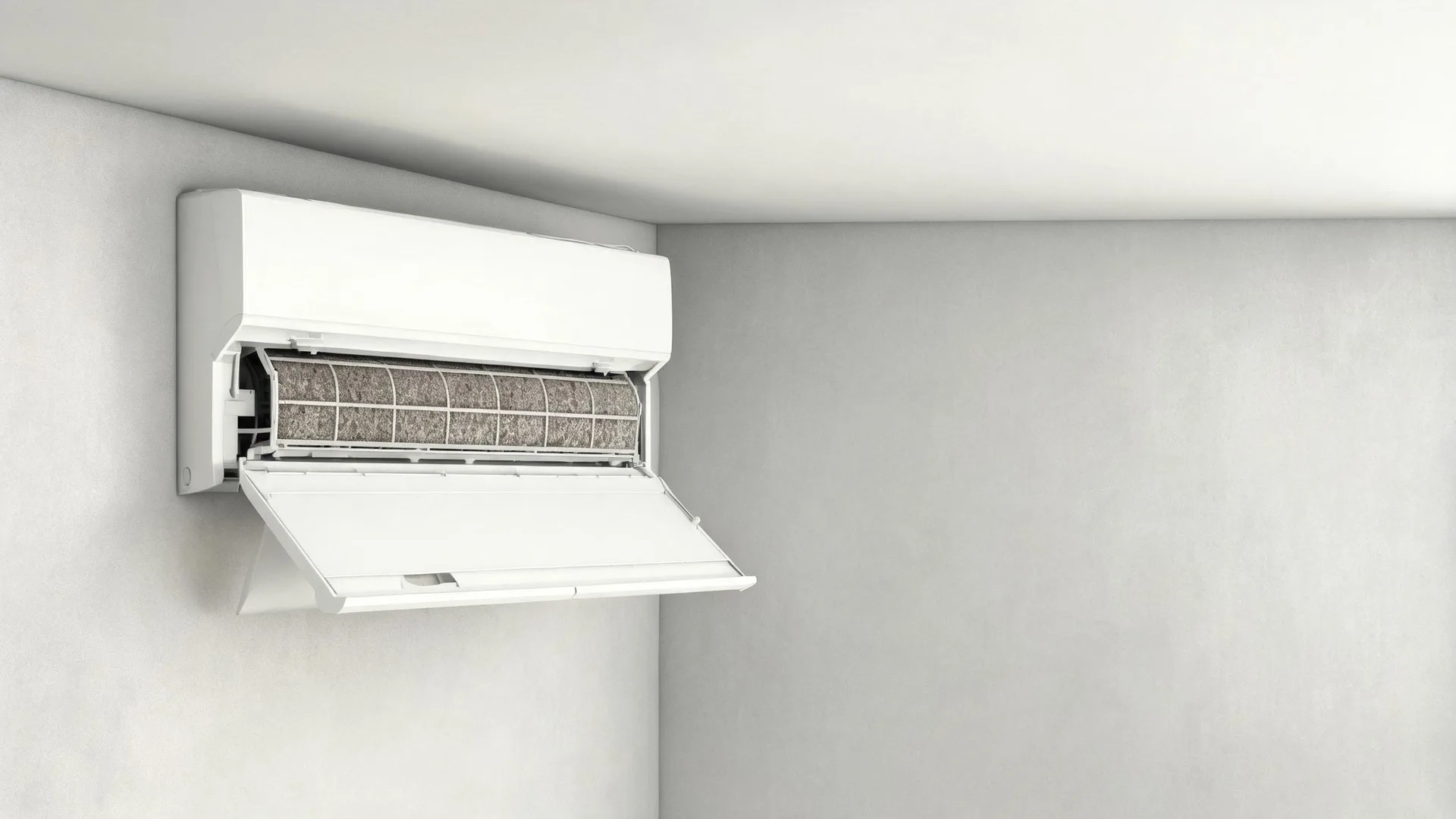
A window unit or a space heater being phased out doesn't need special handling, it just gets disconnected and hauled off. If an older central system is coming out instead, that's a separate removal job, worth asking the contractor to quote alongside the install so there's no surprise line item after the fact.

Sizing a mini split is about matching output to the room, not the house as a whole. A contractor works out heat loss and heat gain for each space. They look at square footage, ceiling height, window count, which way the room faces, how much insulation is behind the walls. That work decides which indoor head goes where and how much capacity the outdoor unit needs to carry. Skip it and guess instead, and the system gets punished either way. Oversized, it cools the room fast and shuts off before it pulls the moisture out of the air, so the room feels cold and clammy at the same time. It also cycles on and off more often, and that start-stop pattern wears on the compressor faster than steady running does. Undersized, it runs constantly and still never catches up on the hottest afternoons or the coldest nights. Get the size right and the system runs long, steady cycles and holds the room exactly where you set it.

Install day starts with the outdoor unit and the line set path, not the indoor head on the wall. A technician runs refrigerant line, a condensate drain, and a power line between the indoor and outdoor units, usually through a small hole drilled where the wall backs up closest to the outdoor pad. Once the lines are connected, the system gets evacuated with a vacuum pump to pull out air and moisture before any refrigerant moves through it. Skip that step and the system can develop a leak or a compressor problem down the road, so a tech who does it right will spend real time watching the gauge hold steady before moving on. After that it's a pressure test, a charge check against the line length, and a run cycle in both heating and cooling to confirm the head is reading the room correctly. Most of the day is that quiet, careful work, not the mounting bracket going up on the wall.