





A two-story dark-painted wood-sided farmhouse with a gray shingled roof stands beside tall deciduous trees, behind a wire fence, with a mowed green lawn in the foreground under an overcast sky.

Mini Split Installation in Moorhead, MN

Tell us about the job

Takes about a minute. No obligation.

New system or replacementMini-splitClay County, MN
Step 1 of 2

What ZIP code is the job in?

Gas heats just over half the homes in Clay County, and electricity heats about a third. A mini split doesn't replace either one outright. It runs on electricity and handles both heating and cooling from the same unit, which makes it a good fit alongside a gas furnace for a room that needs its own zone, or as the main system in a space that doesn't have ductwork to begin with. If your home is one of the roughly 10% on LP gas, a mini split in the right rooms can cut down on how often that furnace has to run. Worth asking any contractor how they size it for the space, since that decides how well it keeps up on the coldest days.

9 months
September through May, your system heats
3 months
June through August, it cools
3°F
the average winter night it heats against
80°F
the average summer afternoon it cools against
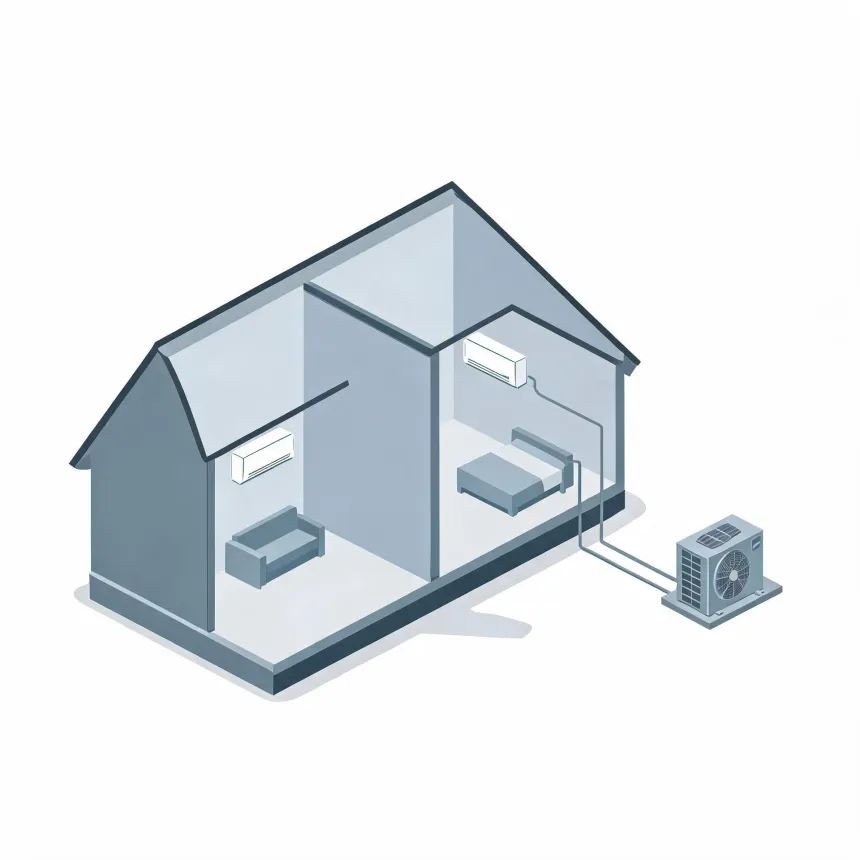
Isometric grey illustration of a cutaway house showing two rooms with wall-mounted indoor air conditioning units connected by lines to an outdoor condenser unit beside the building.
Your system heats September through May and cools June through August.

NOAA nClimDiv, 1991–2020 normals

Cooling runs June through August here.

May is the month to get a mini split installed, before the first hot stretch hits.

A normal size handles summer here, nothing extra needed

Power costs 15.45 cents a kWh statewide
Cooling runs June through August
Summer afternoons average 80°F

The efficiency number on a mini split is a ratio, not a size. It tells you how much heating or cooling you get out of the electricity it uses, so a higher number means lower running cost, not a stronger unit. Mini splits with the same rating can still perform differently room to room, because the rating comes from a lab test, not your walls and windows. It also says nothing about whether the unit is sized right for the room it's going into. An oversized unit with a high rating still short cycles, switching on and off too fast to pull moisture out of the air or hold a steady temperature. That's why the rating matters less on its own than it does alongside a contractor's load calculation for the space.

Replace it before the season

Replace it before the season starts, so it happens on your schedule, not in a hurry.

Find a contractor
A man seen from behind in a dark work shirt and tan pants carries a worn canvas tool bag up concrete steps toward a dark green paneled front door, with a potted shrub at left.
A beige split-system air conditioner outdoor condenser unit mounted on metal wall brackets atop a stucco wall.

Three months of heat, then it rests

Summer here runs three months, June through August, afternoons averaging around 80. That's the whole cooling load for the year. A mini split sized for that room isn't working hard to keep up. Winter is the long season in Clay County, and that's what puts the hours on a heating system here, not summer. Sized right for the space, the compressor gets an easy run through those three months.

Ask for a room by room load calculation, not a guess

Square footage alone doesn't size a mini split. A contractor should walk the room, check window area, insulation and ceiling height, and run an actual calculation. A unit sized off a quick glance at square feet is guessing, and guessing runs either short cycling or never quite catching up.
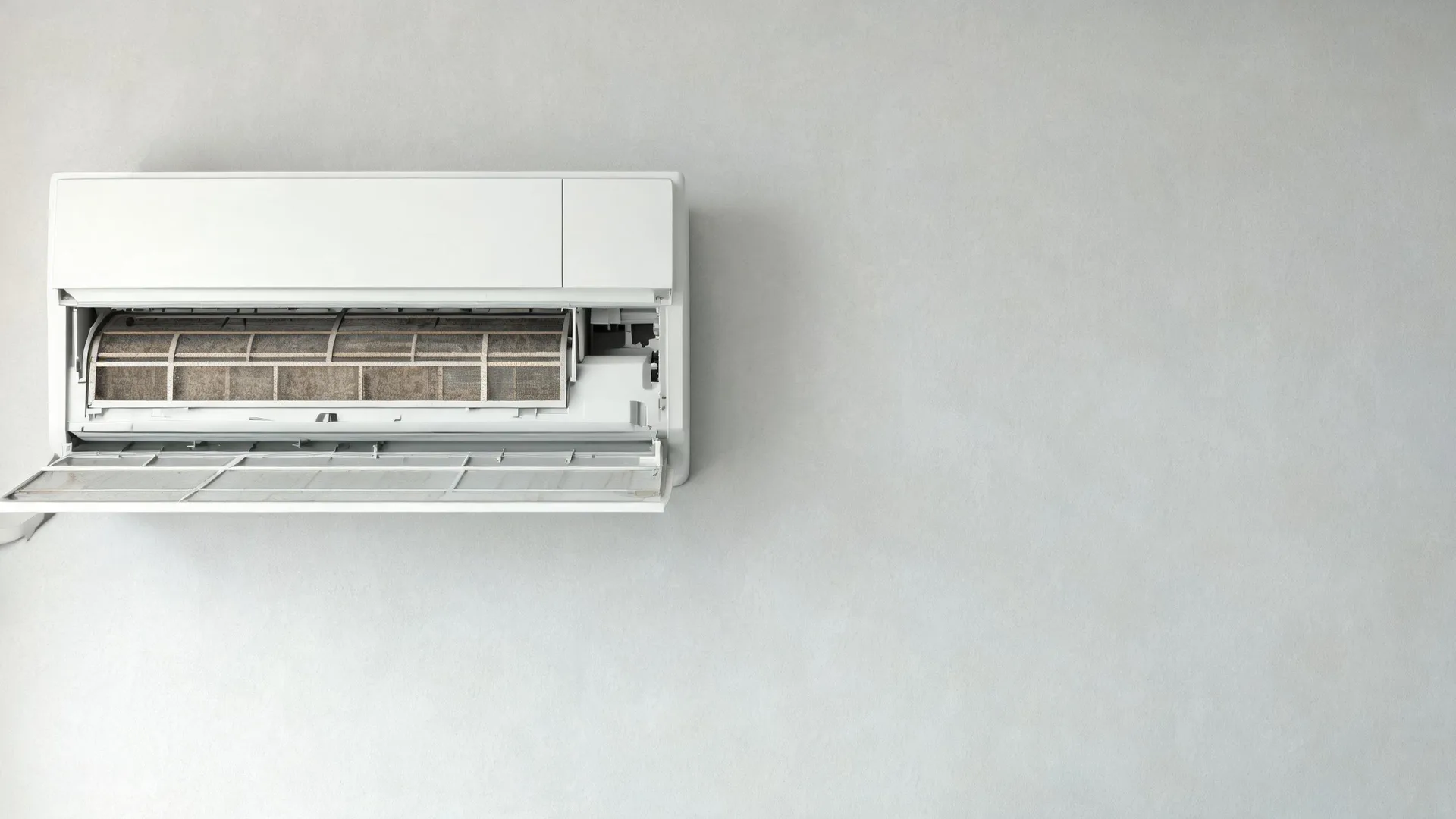
Ask how many indoor heads the outdoor unit can carry

Some outdoor condensers are built to run a single indoor head. Others are built to split their capacity across multiple rooms. Adding a room later to a system built for just one head can mean the outdoor unit gets replaced, not added onto. Worth knowing up front whether this install leaves room to expand.

Sizing a mini split comes down to how much heat the room gains or loses, not how big the room is on paper. A room with west-facing windows or a vaulted ceiling needs more capacity than an identical room without them. Oversize it and the compressor short cycles, hitting the temperature fast and shutting off before it's pulled the moisture out of the air, so the room feels cool but damp. Undersize it and it runs flat out without ever catching up on the hardest days of the year. Either mistake shows up as a comfort problem first. The load calculation is what separates a unit that matches the room from one that's just close enough.

Installation starts outside, with the contractor picking a spot for the outdoor condenser that gives it clear airflow on all sides and keeps it off the ground on a mount or pad. Inside, the indoor head gets mounted high on a wall, away from direct sun and clear of furniture or curtains that would block its airflow. A small hole goes through the wall to run the line set, the pair of refrigerant lines that connect indoor to outdoor, along with a drain line for condensation and the electrical whip. Once everything's connected, the line set gets evacuated with a vacuum pump to pull out moisture and air before the refrigerant is released into the system. That step matters more than people expect, since trapped air or moisture in the lines can wear on the compressor over time. The contractor checks the charge, confirms the drain line runs downhill the whole way, and runs the unit through both heating and cooling before calling it done.