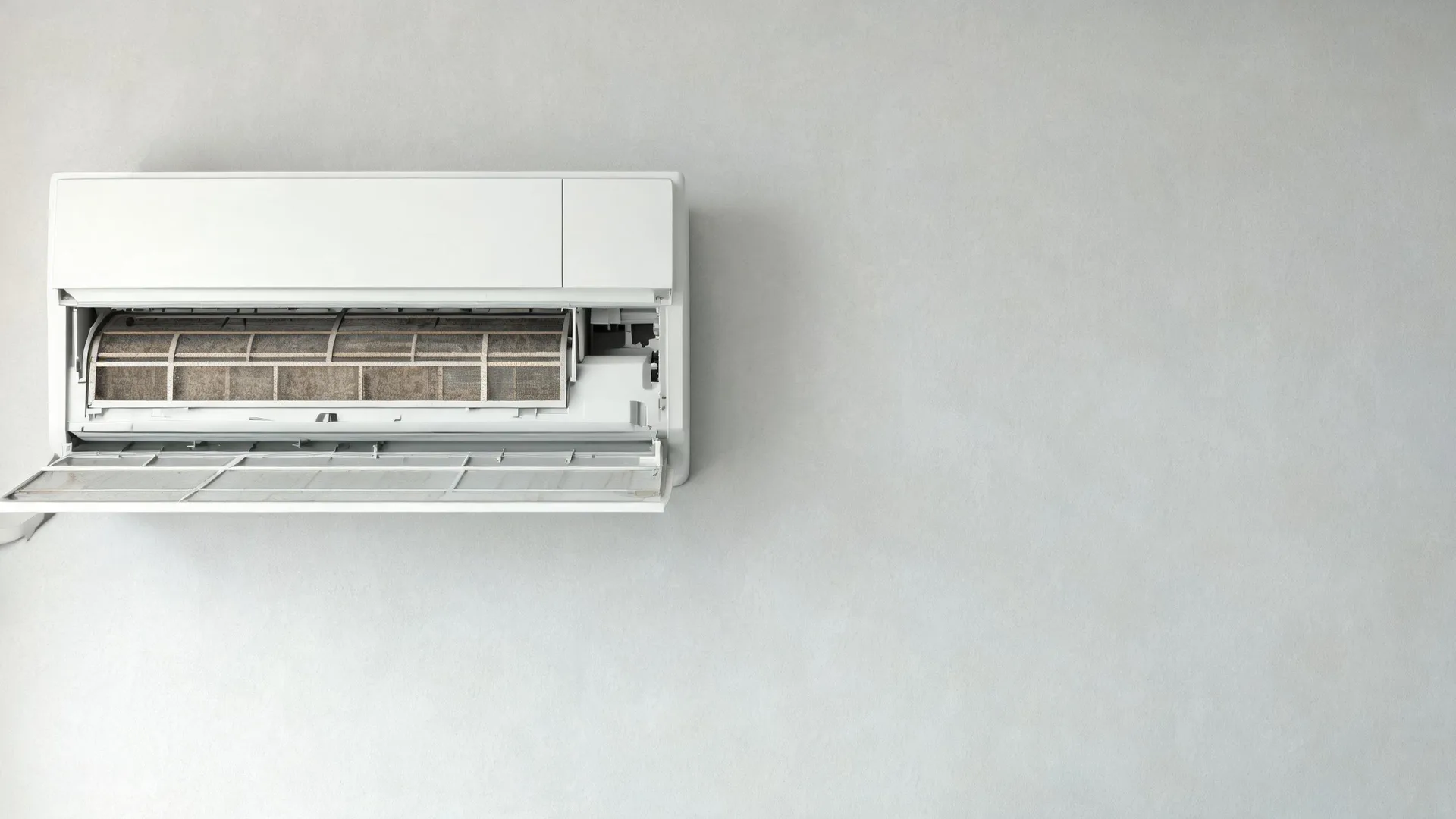
The old furnace usually stays
A mini split handling one room or an addition doesn't replace the furnace. The furnace keeps heating the rest of the house the way it always has. The mini split just takes over the space the ductwork never served well.

Takes about a minute. No obligation.
Utility gas heats more homes in Morrison County than anything else, at 38.7 percent, with LP gas covering another 27.9 percent. That means most homes here were built around a furnace and ducts, not a heat pump. A mini split works differently. It doesn't need ductwork at all, which is why people look at one for a room an existing furnace doesn't reach well, or a garage or addition that was never tied into the main system. If your home runs on LP gas, a mini split can also take over the cooling side and handle shoulder season heating, so the furnace runs less during the months it isn't really needed.
NOAA nClimDiv, 1991–2020 normals
Half the homes in Morrison County were built in 1977 or earlier.
A mini split sized for the room it serves fits either an old house or a new one.




Cooling here only runs about two months, July and August, and the afternoon high averages 78°F across the whole summer stretch. That's a light load for a mini split to carry. You don't need the top-tier efficiency model to handle weather that mild. A mid-range unit sized right for the room will keep up fine on the hottest afternoons. What matters more is picking equipment built to hold up, since Morrison County gets its share of damaging wind and hail most years. Reliable fits this place better than top-of-the-line.
A standard size and efficiency fit fine here. There's no local reason to go bigger or pricier.
Find a contractor
Installed cost comes down to how much equipment and labor the job actually needs. The indoor and outdoor units are only part of it. A straight run between them, a clean spot to mount the outdoor unit, and a wall that lets the line set pass through without routing around obstacles all keep labor down. A longer line set, a wall that needs extra work to get through, or a condensing unit that has to sit further from the house all add time on site. Multi-zone systems, where one outdoor unit feeds several indoor heads, cost more than a single zone because there's more line set, more wiring, and more time spent balancing refrigerant charge across each run. Electrical matters too. If the circuit the outdoor unit needs already exists, that's one less thing to install. If it doesn't, running new wire and adding a breaker is part of the job. None of this changes how long the system lasts or how well it runs once it's in. It changes what it takes to get it there.
A mini split handling one room or an addition doesn't replace the furnace. The furnace keeps heating the rest of the house the way it always has. The mini split just takes over the space the ductwork never served well.
When a mini split is replacing an old central system rather than adding to it, the old equipment gets disconnected and hauled off as part of the install. The refrigerant in the old outdoor unit has to be recovered properly, not vented, so factor that removal into the job, not just the new unit going in.
The efficiency number on a mini split's label tells you how much heat it moves per unit of power it uses, measured over a full season rather than at one moment. A higher-rated unit uses less power to deliver the same heating or cooling as a lower-rated one. That matters most when a system is running constantly, carrying a heavy load day after day. It matters less when the system only has to work hard for short stretches. The rating also assumes the unit is sized correctly for the space and installed well, with good line set runs and the right refrigerant charge. A high-efficiency unit installed poorly won't outperform a mid-range one installed right. The label is a starting point for comparison, not a guarantee of what you'll see in daily use.
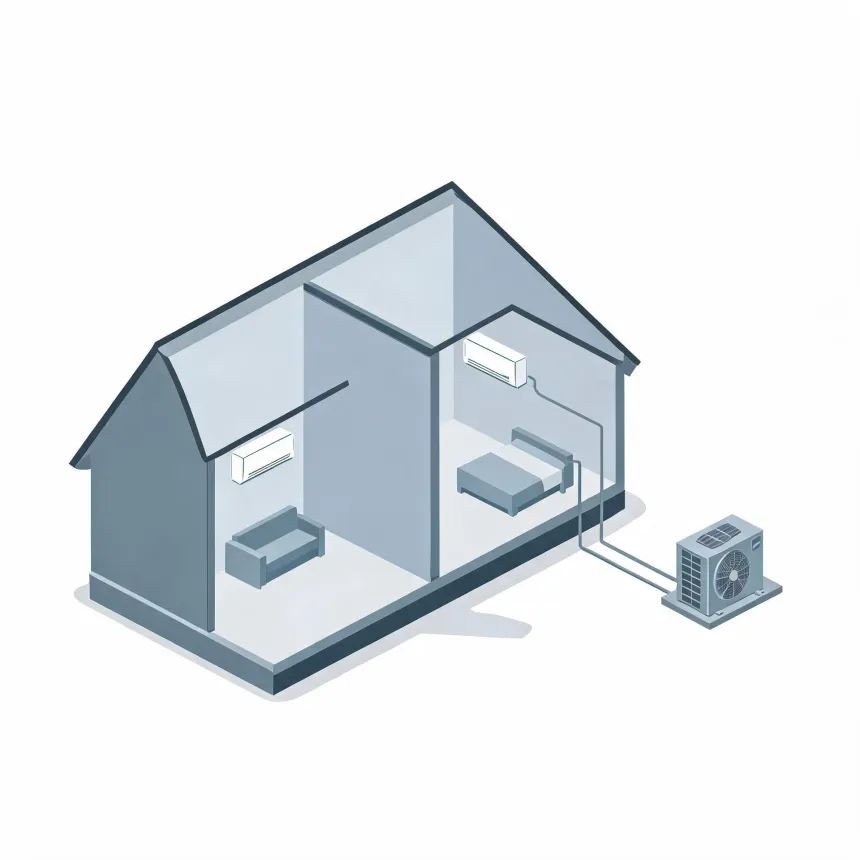
Installation day starts with the walkthrough, confirming where the indoor head goes and where the outdoor unit will sit before anyone touches a wall. The installer drills a single small hole through the wall for the line set, the refrigerant lines, power wire and condensate drain that all run together in one bundle. That line set connects the indoor head to the outdoor unit, gets charged with refrigerant, and the connections are checked for leaks before the system runs. The indoor head mounts high on the wall on a bracket, and the outdoor unit sits on a pad or bracket outside with enough clearance around it to pull air through. Once everything is connected, the installer pulls a vacuum on the line set to clear out moisture and air before releasing the refrigerant charge, because trapped moisture is what causes problems down the road. The whole job finishes with a test run, checking that the head is heating and cooling and that the drain is clearing condensate the way it should.