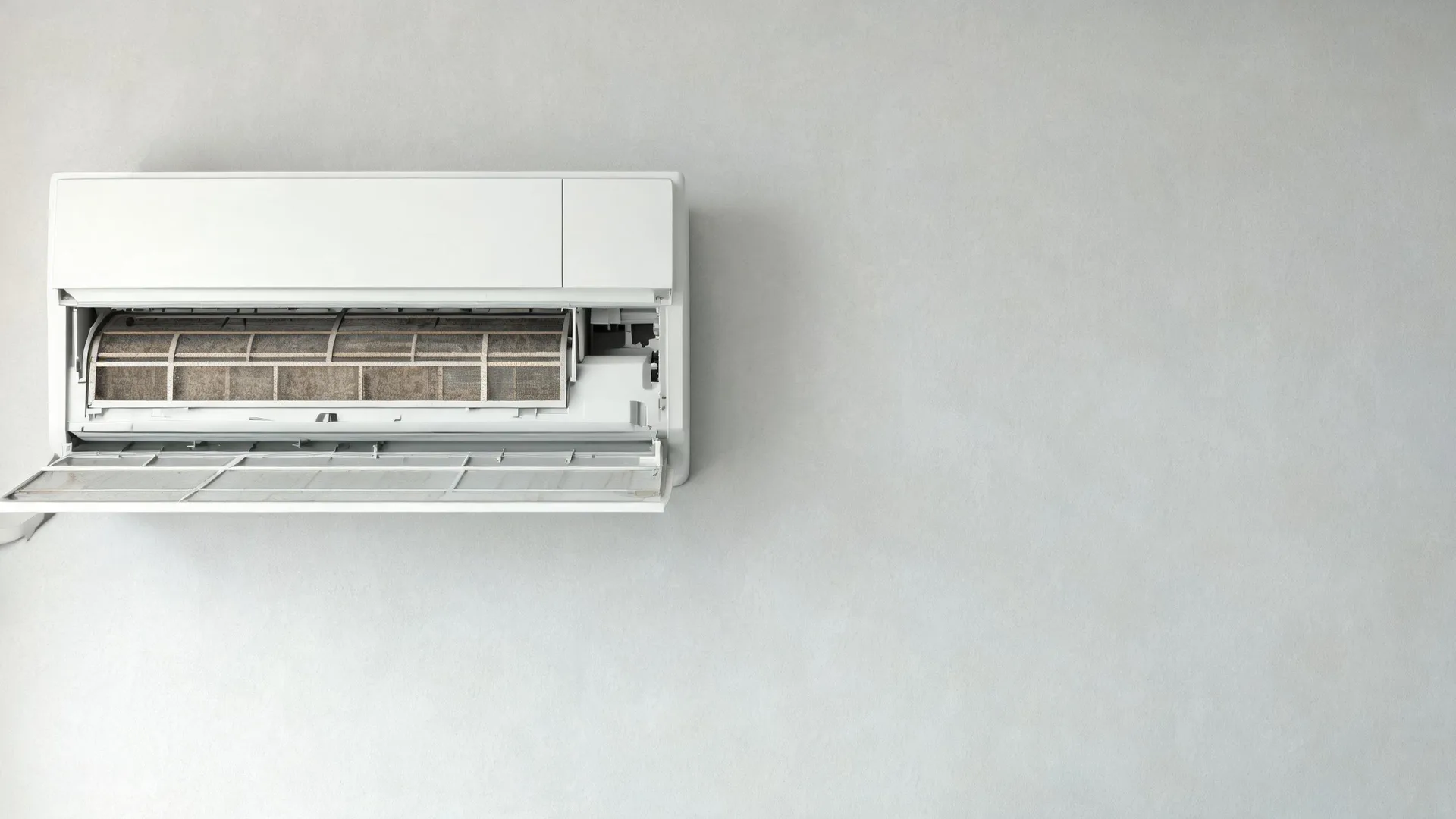
Gas heats most homes here
Utility gas heats 65.4% of occupied homes in Le Sueur County. Another 17.7% run on propane. A mini split installed here is almost always going in alongside a furnace, not replacing the only source of heat in the house.
Takes about a minute. No obligation.
Utility gas heats 65.4% of occupied homes in Le Sueur County. Another 17.7% run on propane. A mini split installed here is almost always going in alongside a furnace, not replacing the only source of heat in the house.
If the furnace already covers the cold months, the mini split's job is cooling and shoulder-season comfort in the rooms it serves. That's a different sizing question than a system meant to carry a house through a Minnesota winter on its own.
NOAA nClimDiv, 1991–2020 normals
Half the homes in Le Sueur County were built in 1974 or earlier, half in 1974 or later.
A mini split sized for the room it serves works in either one.




Le Sueur County sits in climate zone 6A, a cold zone with winters that run long. Any mini split sold here has to clear the federal minimum for a split-system heat pump. That means 14.3 SEER2 for cooling and 7.5 HSPF2 for heating. The rule applies by equipment type, not by climate, so the floor here is the same as it is further south. It still narrows the field some. A unit that can't hit those numbers isn't on the table, whatever else it offers. What's left still covers a wide range of sizes and output, enough to match a single room or a few rooms without pushing toward something larger than the space calls for.
Cooling here runs June through August, with afternoon highs averaging around 80°F. That's the load a mini split has to answer to. The rest of the year it's working light, with the furnace carrying the cold months. A system that only sees three mild summer months doesn't need to be the highest-output or highest-efficiency unit on the list. It needs to be sized right and installed well.
Find a contractorJune through August is the only real work this system does here, and the afternoon high over those months averages around 80°F. That kind of load does not wear equipment down. What's worth putting into the install is the sizing and the setup, not the spec sheet. A correctly sized unit, mounted and charged right, will hold up fine on a load this light. The outdoor unit's placement matters more over time than its efficiency rating, since Le Sueur County sees its share of hail and wind each year.
Every mini split has a published sound rating for its indoor head, usually lowest on the low fan setting. Ask for that number and ask where the indoor head will go. A bedroom wall a few feet from the bed will make a quiet unit noticeable and a loud one hard to live with.
Sizing should come from a room by room heat loss and heat gain calculation, not a rule of thumb based on square footage alone. Ask whether that calculation gets done before the quote or after. A contractor who sizes it before naming equipment is doing the job in the right order.
A mini split that's too big for the room cycles on, satisfies the thermostat fast, and shuts off again before it's pulled the moisture out of the air. That leaves a room that feels cool but clammy. One that's too small runs constantly during the hottest afternoons and still can't keep up. The right size comes from a heat loss and heat gain calculation done room by room. That means the square footage, but also the windows, how many walls face outside, what's above and below the room, and what's already generating heat inside it. Rooms that look the same on paper can need different output once all of that gets weighed. Done right, the unit cycles the way it's supposed to, long enough to dehumidify, short enough not to overshoot.
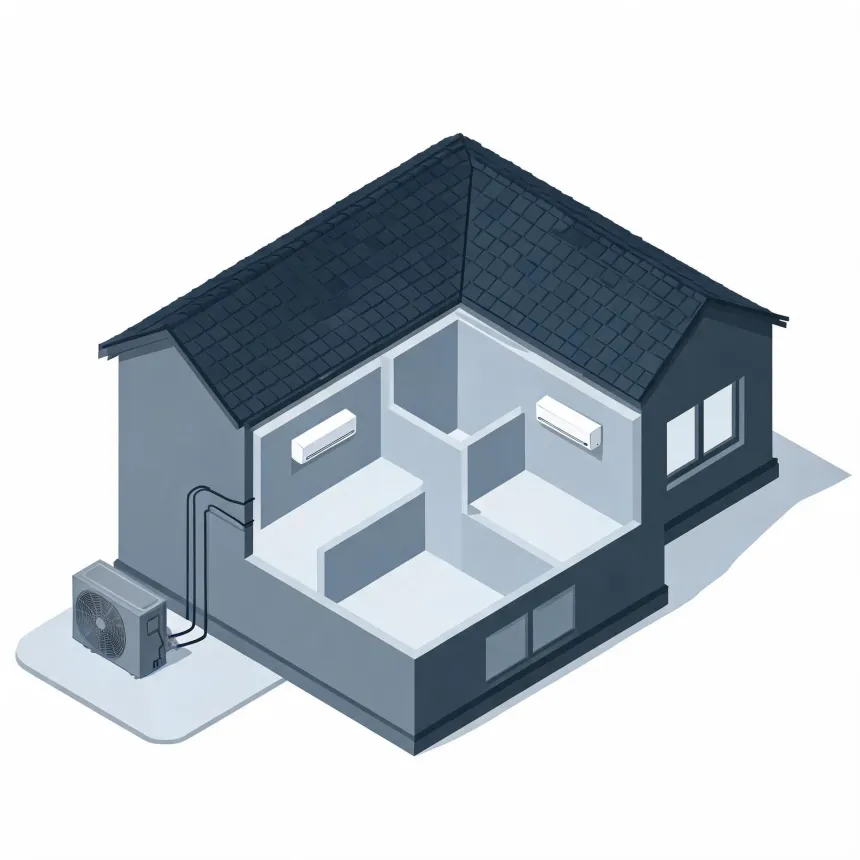
Installation day starts outside, with the outdoor unit. That gets mounted on a bracket or a pad, set away from the wall enough for air to move through the coil, and away from where snow sheds off the roof. Then comes the line set, the copper tubing that carries refrigerant between the outdoor unit and the indoor head. A hole gets drilled through the wall, usually a few inches across, and the lines run through it along with a drain line and electrical wiring. The indoor head mounts to the wall or ceiling, the lines get connected, and the whole run gets insulated and sealed where it passes through the wall. After that the system gets evacuated with a vacuum pump to pull out air and moisture, then charged with refrigerant to the weight the manufacturer specifies. Once it's running, a tech checks static pressure, temperature split, and that the head is level and draining the way it should.