No single fuel dominates here
Gas heats 32.1% of homes in Otter Tail County, LP gas another 29.4%, and electricity 27.0%. A mini split works alongside any of those, since it doesn't touch the gas line or furnace at all.
Takes about a minute. No obligation.
Gas heats 32.1% of homes in Otter Tail County, LP gas another 29.4%, and electricity 27.0%. A mini split works alongside any of those, since it doesn't touch the gas line or furnace at all.
A mini split installer here is used to tying into homes with very different setups, from LP tanks to electric baseboard. Whatever heats your home now, adding a mini split means running refrigerant lines and power to the unit, not changing what's already there.
NOAA nClimDiv, 1991–2020 normals
Cooling here runs about two months a year, July and August.
A mini split sized for an average 78°F afternoon is sized right for Fergus Falls.



Otter Tail County saw 386 severe weather events between 2015 and 2024, counting wind, hail, tornadoes and winter storms. None of that changes what size or efficiency mini split fits here. A standard unit sized for this climate holds up the same as it would anywhere else in the region. What the weather does affect is power. A mini split needs electricity to run, same as a furnace blower or the AC it might replace, and outages happen here like they do across the state.
Otter Tail County falls under zone 6A, and the federal standard treats a ductless mini split as a split-system heat pump. Units made from 2023 on have to hit 14.3 SEER2 for cooling and 7.5 HSPF2 for heating, no matter the brand or size. That's the floor a contractor is installing to here, and a federal tax credit is available on top of it.
Find a contractorThe rating on the box comes from a lab test, where the compressor steps through a set range of conditions. It tells you something real. It tells you how much heat the unit moves for the power it draws, measured against another unit under that same test. It doesn't tell you how the unit gets set up in the house. A mini split sized wrong for the room won't hit the number on its label. Neither will one with a line set that runs too long, or a refrigerant charge that's off even slightly. The rating describes the equipment. The install is a separate thing, and it depends on whoever is running the lines and charging the system.
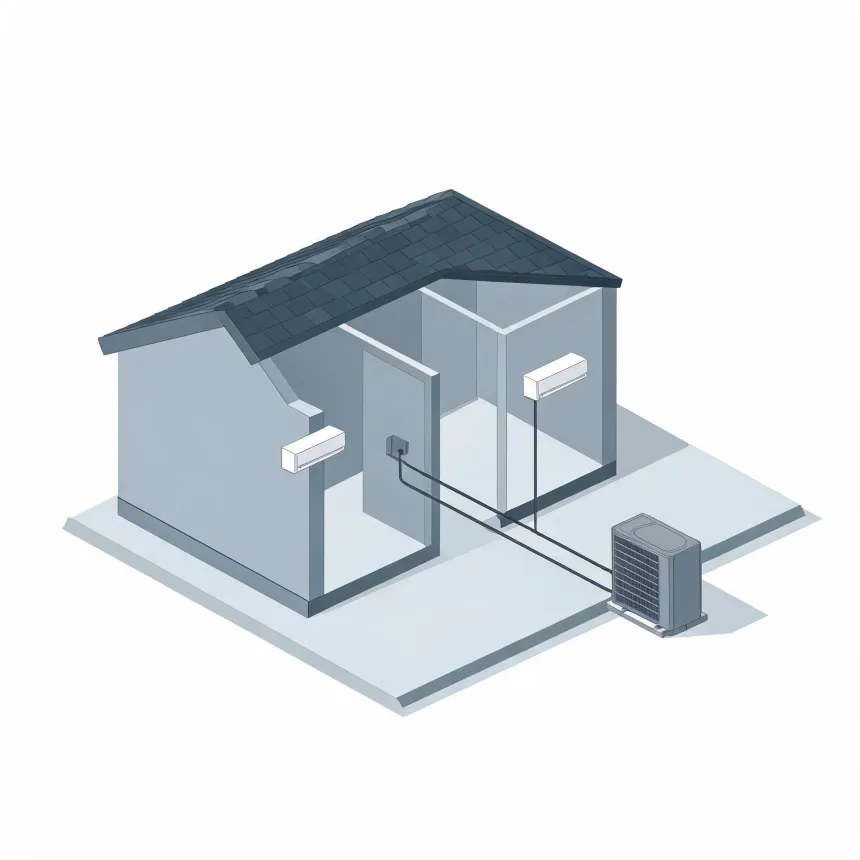
Where the outdoor unit sits against the house, how far it is from the indoor head, and whether the line set can run straight through a wall or has to snake around framing all change how long the install takes. A short, direct run between indoor and outdoor units is less work than one that has to clear obstacles or travel between floors.
A single indoor head tied to one outdoor unit is a simpler job than a multi-zone setup feeding several rooms. Each added head means another line set, another spot to mount it level and secure, and another connection to pressure test. The outdoor unit also has to be sized to carry every zone running at once, which changes what equipment the job calls for.
If this is a replacement, the old system still has to come out before the new one goes in. A central air condenser gets disconnected, the refrigerant recovered rather than vented, and the unit hauled off. Window units or old ductless heads come off their mounts and out the wall sleeve gets dealt with too, patched or reused depending on what the new layout needs. Any electric baseboard being replaced has its wiring capped off properly, not just unplugged. None of that old equipment can just sit tied into the system, since a mini split runs on its own refrigerant lines and its own power feed. What's left behind, old line sets, abandoned thermostats, disconnected ductwork, usually comes out too, so the new system isn't sharing space with dead parts.
Install day starts with the walk-through, confirming where the indoor heads go and where the outdoor unit will sit before anyone touches a wall. Then comes the hole for the line set, usually a single penetration drilled at a slight slope so any condensation runs back outside instead of in. The refrigerant lines, power cable and condensate drain all pass through that one opening and get run to the outdoor unit. Once the indoor head is mounted level and the lines are connected, the system gets pressure tested with nitrogen to check for leaks before any refrigerant goes in. After that it's pulled into a vacuum to clear out moisture and air, since either one left in the lines can damage the compressor down the road. Only then does the system get charged and powered on for the first time.