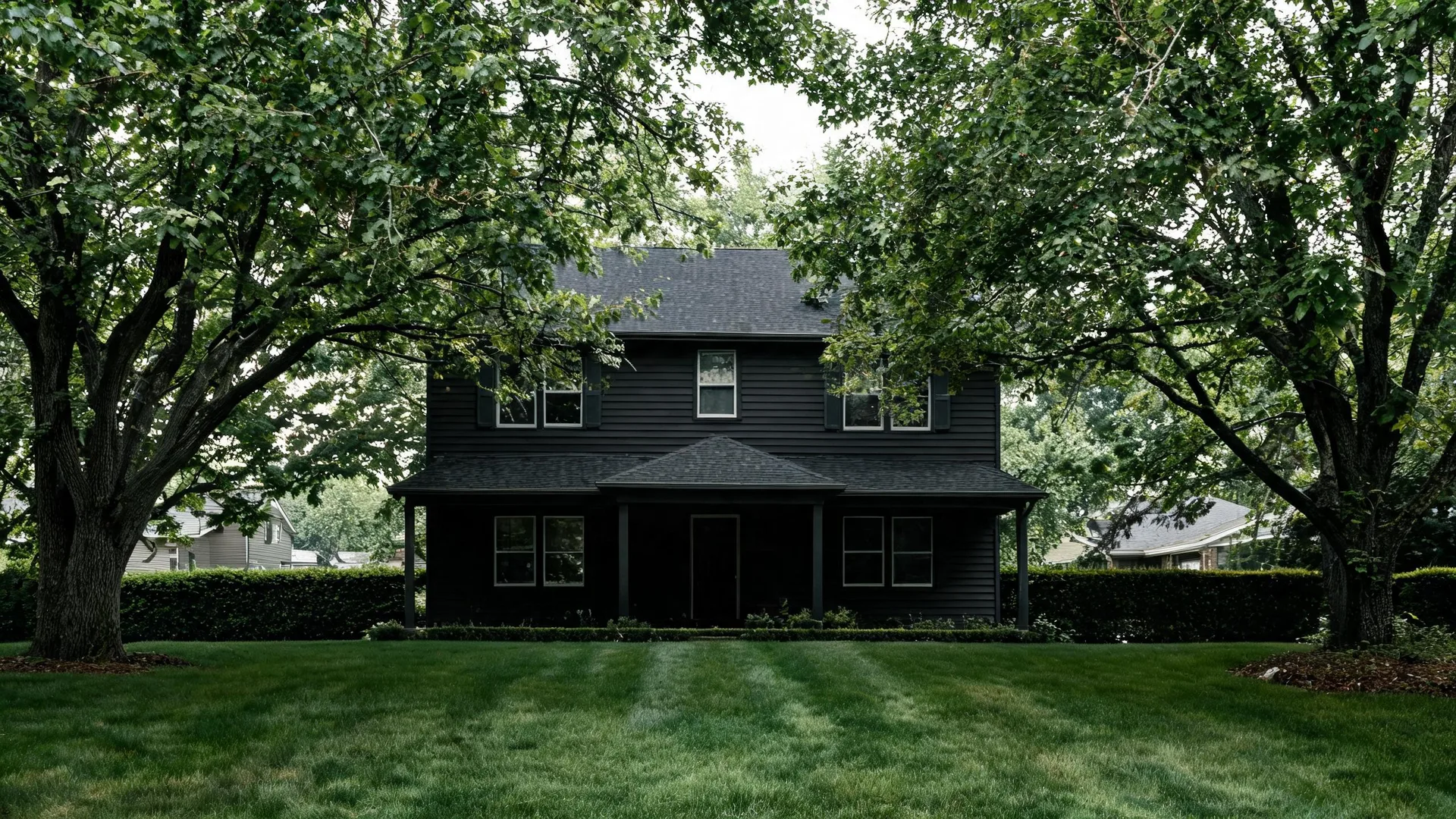






A two-story black-painted house with a covered front porch and gray shingled roof, framed by large deciduous trees and fronted by a mowed lawn and trimmed hedge.

Mini Split Installation in Elk River, MN

Tell us about the job

Takes about a minute. No obligation.

New system or replacementMini-splitSherburne County, MN
Step 1 of 2

What ZIP code is the job in?

Gas heats 71.7% of homes in Sherburne County, the furnace in most basements here. A mini split doesn't compete with that setup. It adds to it. People bring one in for a room the furnace and ducts never handle well, a bonus room over the garage, a finished basement, a sunroom that gets too hot in summer and too cold in winter. It also covers the cooling side on its own, so there's no separate AC running alongside the furnace. For homes on LP gas or electric heat, the same logic holds. It's a targeted fix for one space, not a replacement for the system already in place.

9 months
September through May, your system heats
3 months
June through August, it cools
8°F
the average winter night it heats against
79°F
the average summer afternoon it cools against
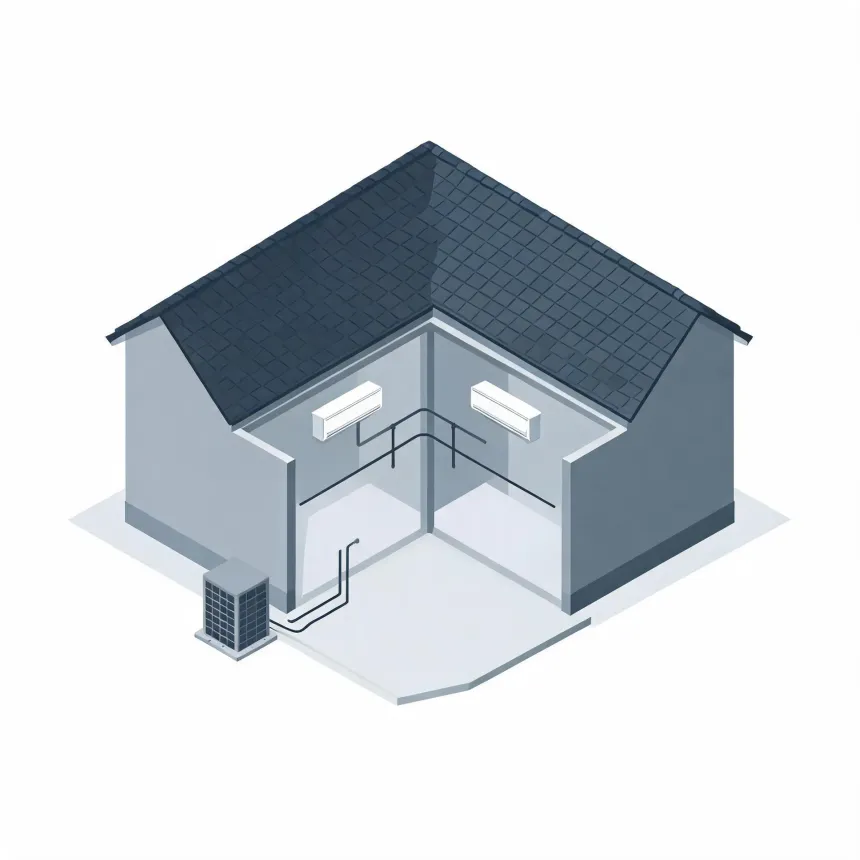
Isometric illustration of a cutaway gray house with a dark shingled roof, showing two wall-mounted indoor air conditioning units connected by piping to an outdoor condenser unit on the ground outside.
Your system heats September through May and cools June through August.

NOAA nClimDiv, 1991–2020 normals

Summer here runs about three months, June through August, with afternoons near 79°F.

A mini split in Elk River sits idle most of the year, so a solid mid-range unit handles the job fine.

A standard mini split, sized normally, handles Elk River summers

Power costs 15.45 cents a kWh statewide
Cooling runs June through August
Summer afternoons average 79°F
Get it in before JuneCooling starts in June here, so May is the month to have it installed.

Ask how many zones the system needs to cover and whether that means one outdoor unit or more than one. A single outdoor unit can run multiple indoor heads, but each zone draws on the same total capacity, so loading too many rooms onto one outdoor unit leaves all of them short. Ask where the outdoor unit will sit and how far the line set has to run to reach it, since longer runs and extra elevation change can affect performance. Ask about the indoor head style too. Wall-mounted units are common, but ceiling cassettes and floor units exist for rooms where a wall unit does not fit well. Get clear on what the warranty covers and whether it requires the line set to be installed and vacuum-tested by a licensed contractor, because a bad installation voids coverage even on a good unit.

A mid-range mini split covers what Elk River summers ask of it

A mid-range mini split is built for exactly this. Three months of real cooling load a year won't wear down a reliable system, so there's no need to pay for the top-tier unit to get solid performance here.

Find a contractor
A man in a cap, navy T-shirt and brown work pants, seen from behind, climbs porch steps toward a dark green paneled front door while carrying a canvas tool bag.
A white outdoor air conditioner condenser unit mounted on metal wall brackets against gray horizontal siding, with a blue sky and white clouds behind it.

The install work costs more than the unit does

What drives the price on a mini split job is mostly hidden from view. The unit itself is a smaller piece of it than people expect. Running the line set is where the labor goes, carrying refrigerant lines, wiring and a condensate drain from the outdoor unit to each indoor head, usually through an exterior wall. A straight run through an easy wall costs less than one that has to snake through finished space or climb between floors. Every indoor head is its own zone, so adding a second or third head means more line set, more wall penetrations and more time on the vacuum test that checks the system for leaks before it's charged. The brand and tier of the equipment matter less than how much work it takes to get it in and sealed right.

Sizing is matched to the room, not guessed from a chart

Getting the size right means working out how much heat the room gains in summer and loses in winter, based on things like window area, insulation and what's on the other side of each wall. A contractor measures the space and runs that math rather than picking a unit based on floor area alone, because rooms that look alike on paper can carry very different loads.
Too big is its own problem, not a safety margin

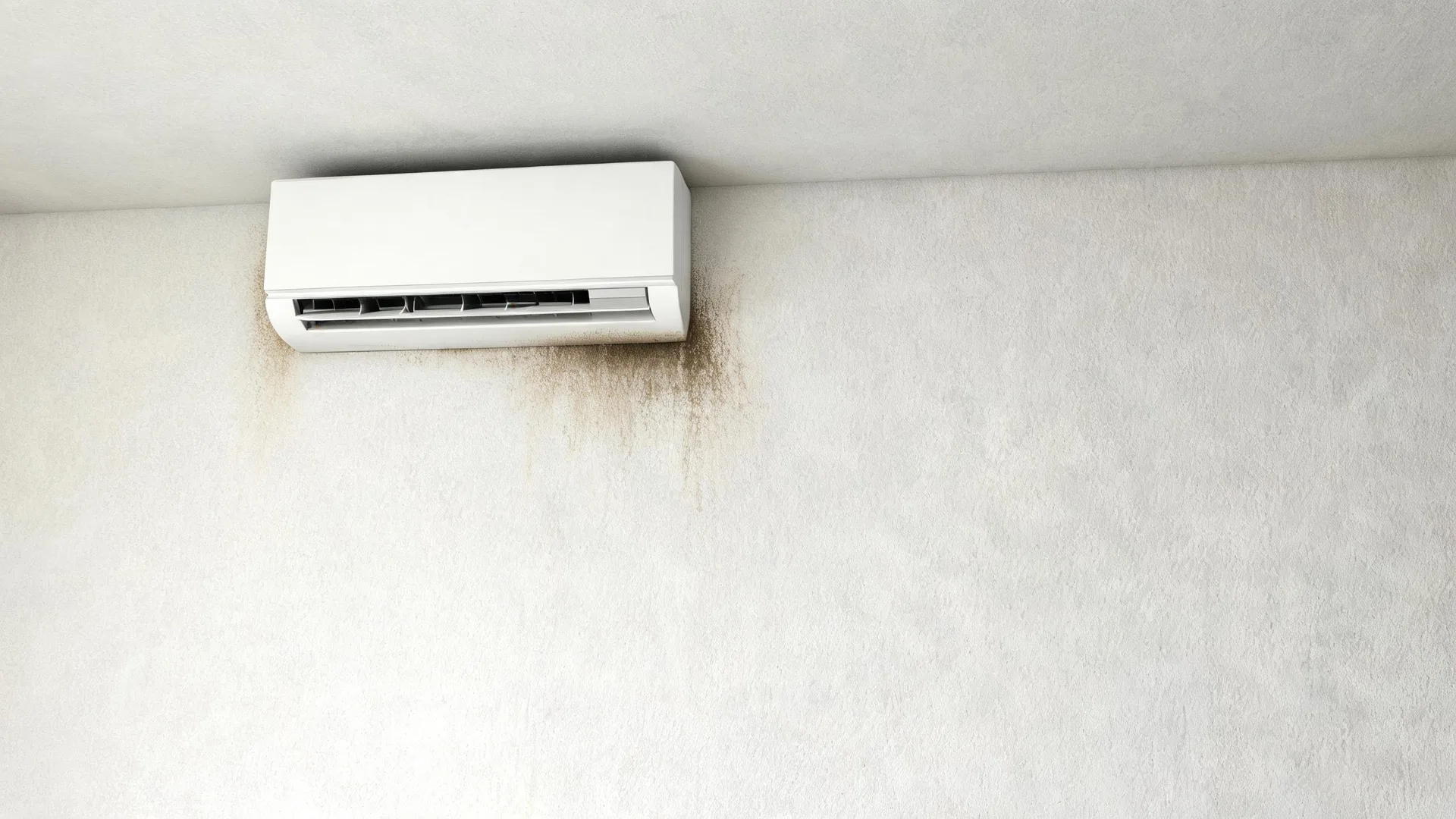
An oversized unit cools the room fast, then shuts off before it's pulled the moisture out of the air, so the room feels cold and damp instead of comfortable. It also cycles on and off more often, which puts more wear on the compressor than running steadily would. Bigger isn't a cushion here, it's a different kind of wrong fit.

The old system doesn't have to go anywhere for a mini split to go in. If the furnace and ducts stay in place, this is just an added zone, not a swap, so there's nothing to remove and nothing to haul away. The only case where something comes out is a window AC unit cooling that same room now. That can be pulled once the mini split is running, and the window opening goes back to normal instead of holding a unit for part of the year. If the room was getting by on a space heater in winter, that can go too, though it's worth keeping on hand for the coldest stretches depending on how the mini split is sized. Nothing about adding one changes how the furnace runs for the rest of the house.

Install day starts with the line set, not the equipment. The outdoor unit gets set on a pad or mounted bracket first, then the contractor runs refrigerant lines, wiring and the condensate drain from there to each indoor head, usually drilling one clean hole through an exterior wall per zone. Once everything's connected, the system gets pulled down to a vacuum and held there, which draws out moisture and air so only refrigerant is left in the lines. That test has to hold steady for a set period before the unit gets charged and switched on. A tech will run it through heating and cooling modes, check the temperature split at each head, and confirm the drain is actually moving condensate before calling it done. Most of the day is that vacuum test and the line set work, not bolting the indoor head to the wall.