





A snow-covered residential street at twilight with illuminated houses, bare trees, and an orange horizon glow beneath a deep blue sky.

Mini Split Installation in Detroit Lakes, MN

Tell us about the job

Takes about a minute. No obligation.

New system or replacementMini-splitBecker County, MN
Step 1 of 2

What ZIP code is the job in?

Gas heats 31.0 percent of homes in Becker County, with propane and electric close behind. No single fuel runs most houses here. A mini split doesn't care which one you have. It runs on electricity and works alongside whatever heating system is already in place, whether that's a propane furnace, a gas furnace or electric baseboard. For a house heated by propane or fuel oil, adding a mini split means a second way to heat or cool a room without touching the furnace at all.

9 months
September through May, your system heats
2 months
July through August, it cools
2°F
the average winter night it heats against
77°F
the average summer afternoon it cools against
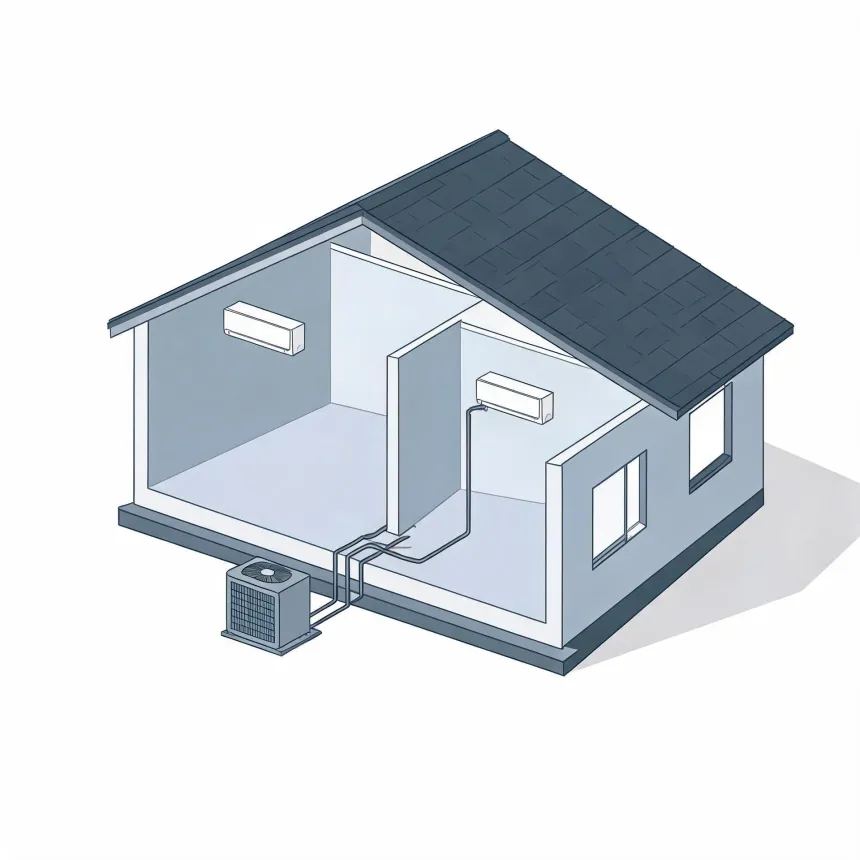
Isometric cutaway illustration of a small house with a dark shingled roof, showing two wall-mounted indoor units connected by lines running to an outdoor condenser unit beside the building.
Your system heats September through May and cools July through August.

NOAA nClimDiv, 1991–2020 normals

Becker County logged 80 winter storms and 72 damaging wind events in the last ten years.

A mini split here needs to hold up to that, nothing more.

Summer here is short and mild, so a standard mini split is all this job calls for

Power costs 15.45 cents a kWh statewide
Cooling runs July through August
Summer afternoons average 77°F

Cooling here only runs from July through August, and the afternoon high over those months averages 77°F. A mini split doing that job isn't working hard. It sits idle most of the year and sees two mild months of real use, which means less wear than the same unit would see further south. That's good news if you're weighing a repair down the road, since a compressor that hasn't been run hard tends to be a compressor worth fixing rather than replacing. None of this calls for the highest-efficiency unit on the shelf. A reliable mid-range system sized right for the room will do this job for years.

Go with the standard fit

A standard size and efficiency fit fine here. There's no local reason to go bigger or pricier.

Find a contractor
A man in a cap, dark long-sleeve shirt and brown work pants, seen from behind, steps up onto a porch toward a dark green door while carrying a canvas tool bag.
A white outdoor air conditioner condenser unit mounted on metal wall brackets against gray horizontal siding, with a blue sky and white clouds behind it.

Put it in before July, not during it

Cooling runs two months here, July and August. That leaves June to get a mini split in before it has any work to do. Installed in June, it's tested and running before the first warm day instead of getting set up while a room is already hot. There's no rush in that schedule and no reason to create one.

The old unit doesn't have to come out

If the existing heat source is a furnace or baseboard, a mini split gets added alongside it. There's no reason to pull out a working furnace to make room for one. The mini split handles its zone, the furnace keeps handling the rest of the house, and each one runs independent of the other.
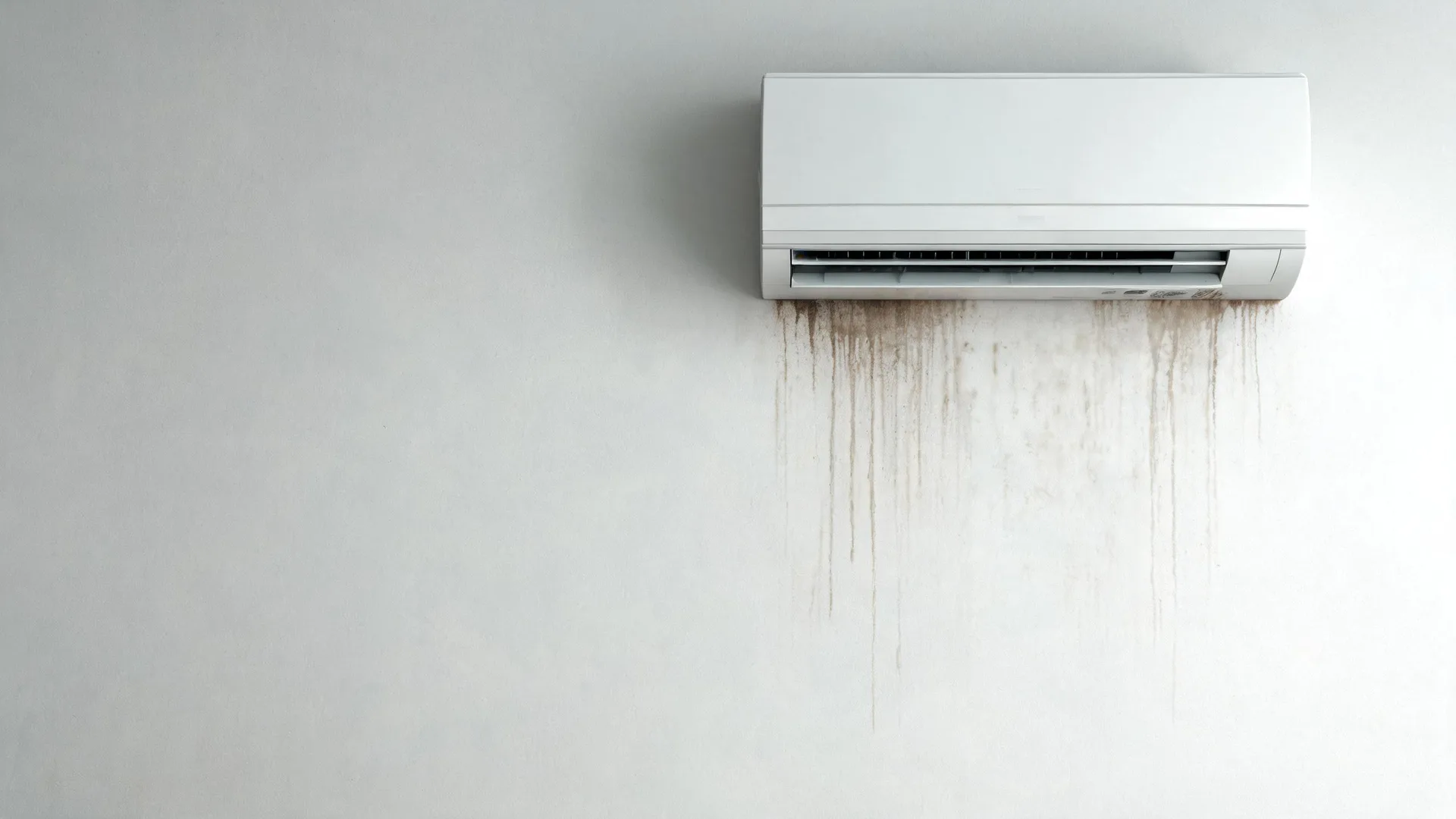
A failing system is a different case

If what's being replaced is an old window unit or a mini split that's already on its way out, the indoor and outdoor units both come down and the line set and wiring get disconnected. A contractor can tell during the install whether the old equipment is worth leaving in place as backup or whether it's not worth keeping around.

What drives the cost on a job like this comes down to how far the indoor and outdoor units sit from each other and how hard it is to run the line set between them. A short, straight run through an exterior wall costs less than one that has to snake through an attic or down multiple floors. The number of zones matters too, since each indoor head needs its own line set and its own spot on the outdoor unit's circuit board. Electrical work adds to it if the panel doesn't already have the capacity or the right breaker for a new outdoor unit. Where the outdoor unit goes plays a part as well, since it needs clearance on all sides and a mounting pad or bracket that can hold it steady through wind and snow load.

Sizing a mini split isn't about matching the room's square footage to a number on a brochure. A contractor works out how much heat the room gains in summer and loses in winter, looking at the windows, the insulation, the ceiling height, what's on the other side of each wall. Too big and the unit short cycles, cooling the room fast and shutting off before it pulls the moisture out of the air, so the room feels cold and clammy at once. Too small and it runs flat out on the hottest days and still can't keep up. Either mistake shows up as wasted power and a system that wears out its compressor faster than it should. The load calculation is what keeps the unit sized to the room instead of to a guess.