Gas and propane split the county
Utility gas heats 37.2% of homes in Carlton County and propane heats another 31.7%. Between them, most homes here run on a fuel-fired furnace or boiler.
Takes about a minute. No obligation.
Utility gas heats 37.2% of homes in Carlton County and propane heats another 31.7%. Between them, most homes here run on a fuel-fired furnace or boiler.
Adding a mini split doesn't mean ripping out the furnace. It usually works as a second system, cooling and heating rooms the ductwork doesn't reach well, while the furnace or boiler keeps handling the rest of the house.
NOAA nClimDiv, 1991–2020 normals
Cooling in Carlton County only runs in July.
Get a mini split installed by June and it's ready before the first hot day, not during one.




Carlton County is in climate zone 7, one of the coldest zones in the energy code. Heating runs most of the year here, and the standard a new system has to meet is built around that. A ductless mini-split falls under the same federal rule as any other split-system heat pump, not a category of its own. New units have to hit 14.3 SEER2 for cooling and 7.5 HSPF2 for heating. That floor narrows what a contractor can install, but most mini splits sold today clear it without trouble.
Replace it before the season starts, so it happens on your schedule, not in a hurry.
Find a contractor
Half the homes in Carlton County were built in 1975 or earlier, and half in 1975 or later. That split doesn't change how a mini split gets sized. Sizing follows the room, the windows, how it's used day to night. A house from either side of that line can take the same unit if the room calls for it. What wears on the equipment is the hours it runs, the stretch the time-lapse above shows, not the age of the house around it. There's nothing about building stock here that calls for going bigger or stepping up to a pricier unit. Standard sizing, matched to the room, is the right call.
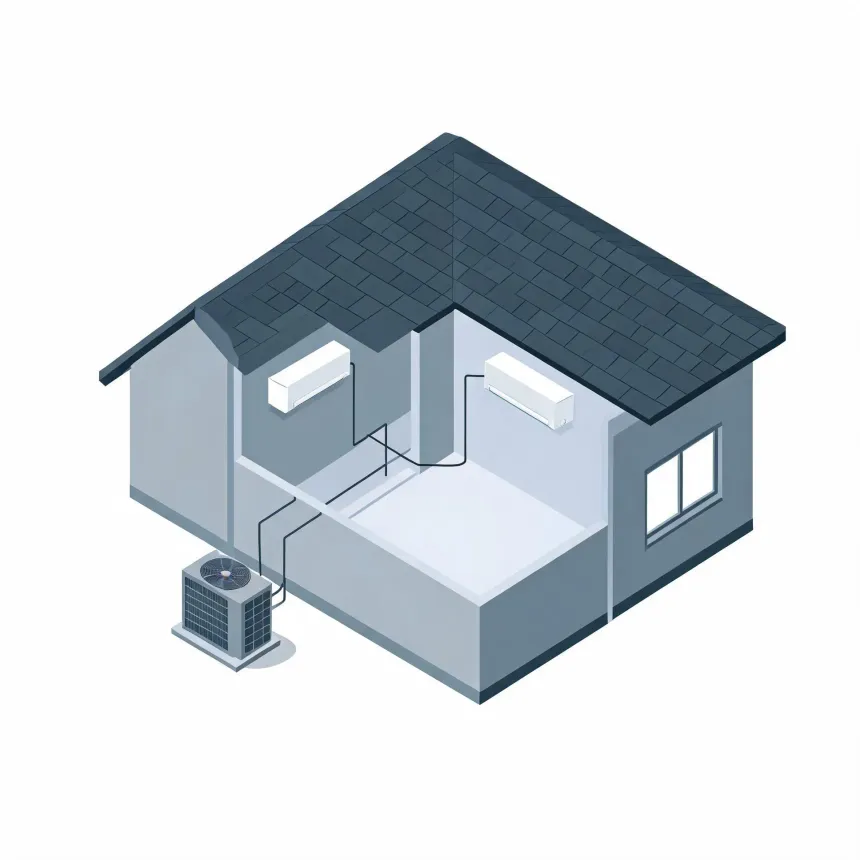
When it's going in alongside an existing system, there's nothing to remove. The furnace or boiler stays put. The ductwork stays put. The mini split gets its own thermostat and its own refrigerant line run to an outdoor unit. No old equipment to haul away, no flue to deal with, no gas line to cap.
Pulling a dead furnace or boiler means disconnecting gas or oil lines, capping a flue, maybe dealing with a condensate line that fed the old unit. A contractor installing a mini split isn't automatically doing that removal too. If both need to happen, say so up front. Sizing the mini split and decommissioning the old system get quoted and scheduled separately.
The SEER2 and HSPF2 numbers on the label are a ceiling test, not a promise of what the unit will do in your room. They're measured under set lab conditions, one rating for cooling, one for heating, so you can compare one model against another on equal footing. A higher number means the compressor and coil do more with less electricity, but only when the unit is sized right and the installer gets the refrigerant charge and airflow correct. An oversized unit with a great rating will still short cycle and struggle to hold humidity. An undersized one will run flat out and never catch up on the coldest or hottest days. The rating tells you about the equipment. Everything else about how it performs in your house comes down to the install.
Specs on a sheet don't tell you how a system was chosen. Ask the contractor to walk the room with you, the windows, which way it faces, what else is nearby throwing heat or cold at it. Ask how many indoor heads this outdoor unit will run and whether it's sized for all of them at once or just the one going in now. If more rooms get added later, find out whether the outdoor unit has room to take on another head or whether that means a second outdoor unit next to the first. Ask where the line set runs and how far the indoor head sits from the outdoor unit. A longer run can change what size compressor is needed to push refrigerant through it. Ask what happens to the wall or siding where the line passes through, and who patches it. Get the warranty terms in writing. Equipment and labor are often covered separately, and it's worth knowing whether the warranty stays with the house if it's ever sold.