




A nighttime street view of several illuminated two-story red brick homes with front porches, flanked by a large tree.

Mini Split Installation in Cambridge, MN

Tell us about the job

Takes about a minute. No obligation.

New system or replacementMini-splitIsanti County, MN
Step 1 of 2

What ZIP code is the job in?

About a third of homes in Isanti County run on bottled or LP gas, and just over half use utility gas, so most heating systems here are built around a furnace and ductwork already in place. A mini split doesn't need any of that. It runs on its own electric line, with no gas connection and no ducts to tie into, which makes it a straightforward add to a home that already has a furnace doing the heavy lifting in winter. For a room the furnace doesn't reach well, or a space you're adding onto the house, that independence is the whole appeal. It cools and it heats that one space without touching the gas system at all.

9 months
September through May, your system heats
3 months
June through August, it cools
8°F
the average winter night it heats against
79°F
the average summer afternoon it cools against
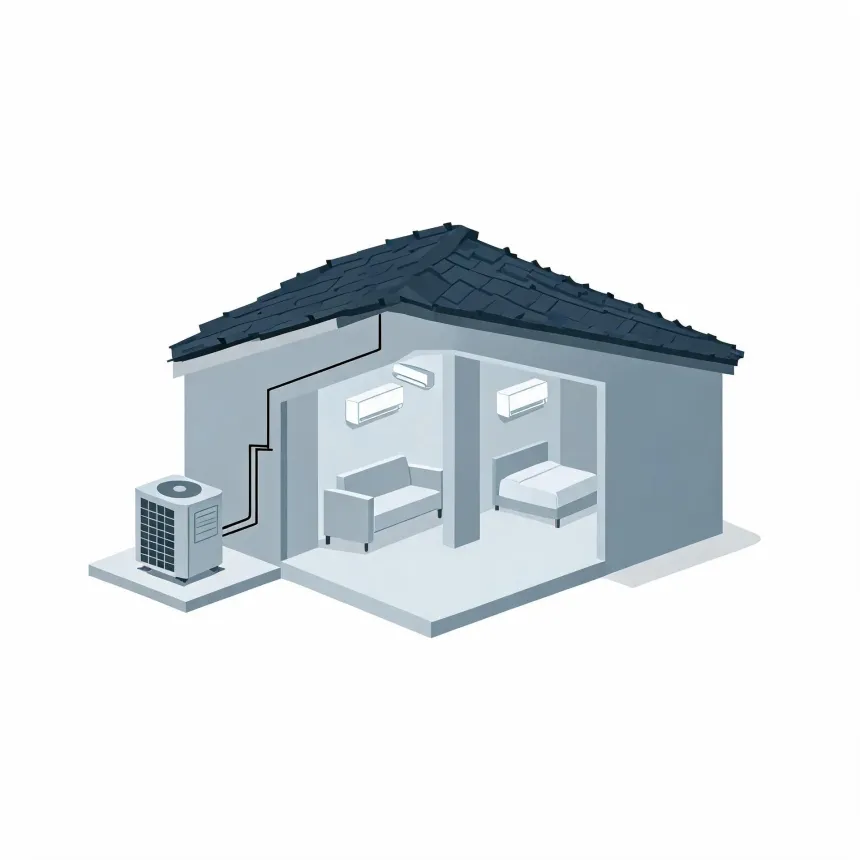
Isometric illustration of a cutaway single-story house with a dark shingled roof, showing three wall-mounted indoor air conditioning units in two rooms connected by lines to an outdoor condenser unit on a pad outside.
Your system heats September through May and cools June through August.

NOAA nClimDiv, 1991–2020 normals

Cooling only has to run here from June through August, with afternoon highs averaging around 79°F.

A mini split here isn't fighting long stretches of heat, so a dependable mid-range unit holds up fine.

A standard size and efficiency holds up fine here

Power costs 15.45 cents a kWh statewide
Cooling runs June through August
Summer afternoons average 79°F

Cooling starts in June here, so May is the month to get a mini split in. That gap gives a contractor room to size the unit right and schedule the install without rushing either one. Wait until the first warm week and you're booking around everyone else who waited too. A unit put in during May is also just sitting there ready, tested and running, before you need it for anything.

Any mini split going into a Cambridge home has to clear this region's efficiency minimum

Isanti County falls in climate zone 6A, and any split-system heat pump installed here, ductless units included, has to meet 14.3 SEER2 for cooling and 7.5 HSPF2 for heating. That's the federal floor for units built from 2023 on, so it narrows the field before you even start comparing brands. A federal tax credit is available for qualifying heat pump installations, which is worth factoring in while you weigh options.

Find a contractor
A white mini-split air conditioner outdoor condenser unit mounted on metal brackets against a beige stucco exterior wall, with a blue sky and scattered clouds in the background.

The old unit comes out on its own, nothing else gets touched

If the old system being replaced is a window unit or a baseboard heater, there's nothing to plan around. It comes out, the new line set and condenser go in, and the old equipment gets hauled off. If what's being replaced is an existing ductless system, the outdoor unit and indoor head both come down, and whoever installs the new one will check whether the old mounting bracket and electrical whip can be reused or need to be swapped out to match the new equipment. Either way, the old refrigerant has to be recovered properly rather than vented, since it's against the law to release it into the air. None of this touches the furnace or the ductwork elsewhere in the house. The mini split being replaced was never part of that system, so pulling it out doesn't affect how the rest of the home heats.

Ask what the unit is rated to heat down to

Every heat pump has a point where its heating output starts dropping off in cold weather. Some hold most of their capacity well below freezing, others fall off much sooner. If this mini split is your main heat for that room rather than a backup to the furnace, that number matters more than the SEER rating most people focus on.
Ask how the sizing was worked out

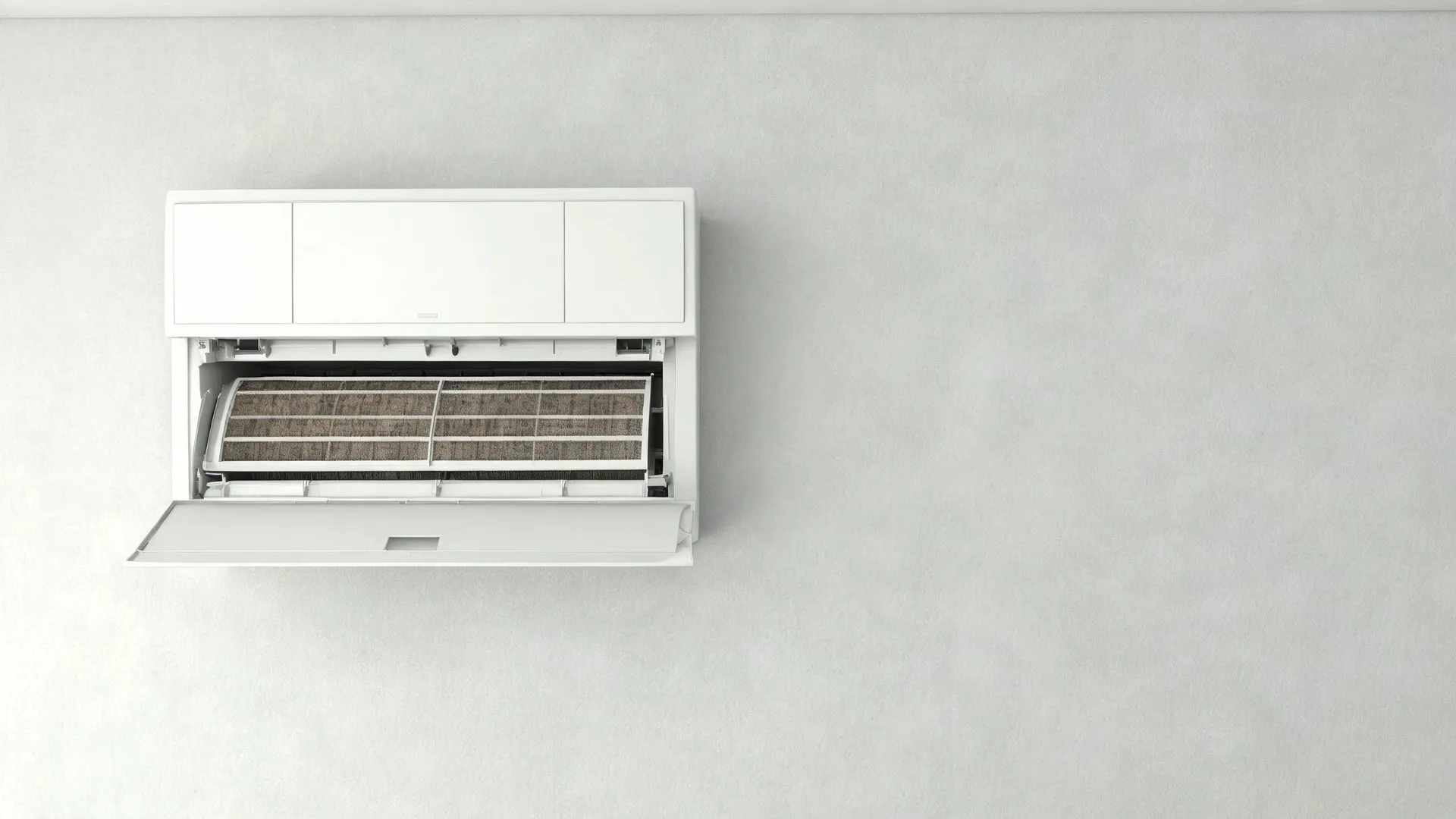
A mini split sized by square footage alone can end up wrong in either direction. One that's too big cools the room fast then shuts off, so it never runs long enough to pull moisture out of the air. One that's too small runs constantly and still doesn't keep up on the hottest days. Ask whether the contractor did a load calculation on the actual room, not just a quick estimate.

SEER2 tells you how much cooling a unit produces for the electricity it uses, averaged over a whole season rather than any single day. HSPF2 is the same idea for heating. Neither number tells you how big the unit is or how much space it can handle, since a small efficient unit and a large efficient unit can carry the same rating. What the rating tells you is how the unit compares to others built in the same size range, which only means something once you're comparing units sized for the same room. A unit with a strong rating can still run inefficiently if it's the wrong size for the space, cycling on and off instead of settling into a steady run. The rating describes the equipment. Whether it actually saves you anything depends on whether it was sized to the room in the first place.

A room gets measured, not guessed. Square footage alone misses too much. The windows facing that room, how many walls touch the outside instead of another room, how high the ceiling runs, what's above and below it. All of that changes how much heating and cooling the space actually needs. Rooms the same size on paper can call for different unit sizes once you account for that. Sizing too big is the more common mistake, since it feels safer to oversize, but a mini split that's too big for the room cools it fast and shuts off before it's run long enough to pull the moisture out of the air. The room ends up cold and clammy instead of just comfortable. A unit sized to the room runs longer, steadier cycles, and that's what actually keeps the space even.