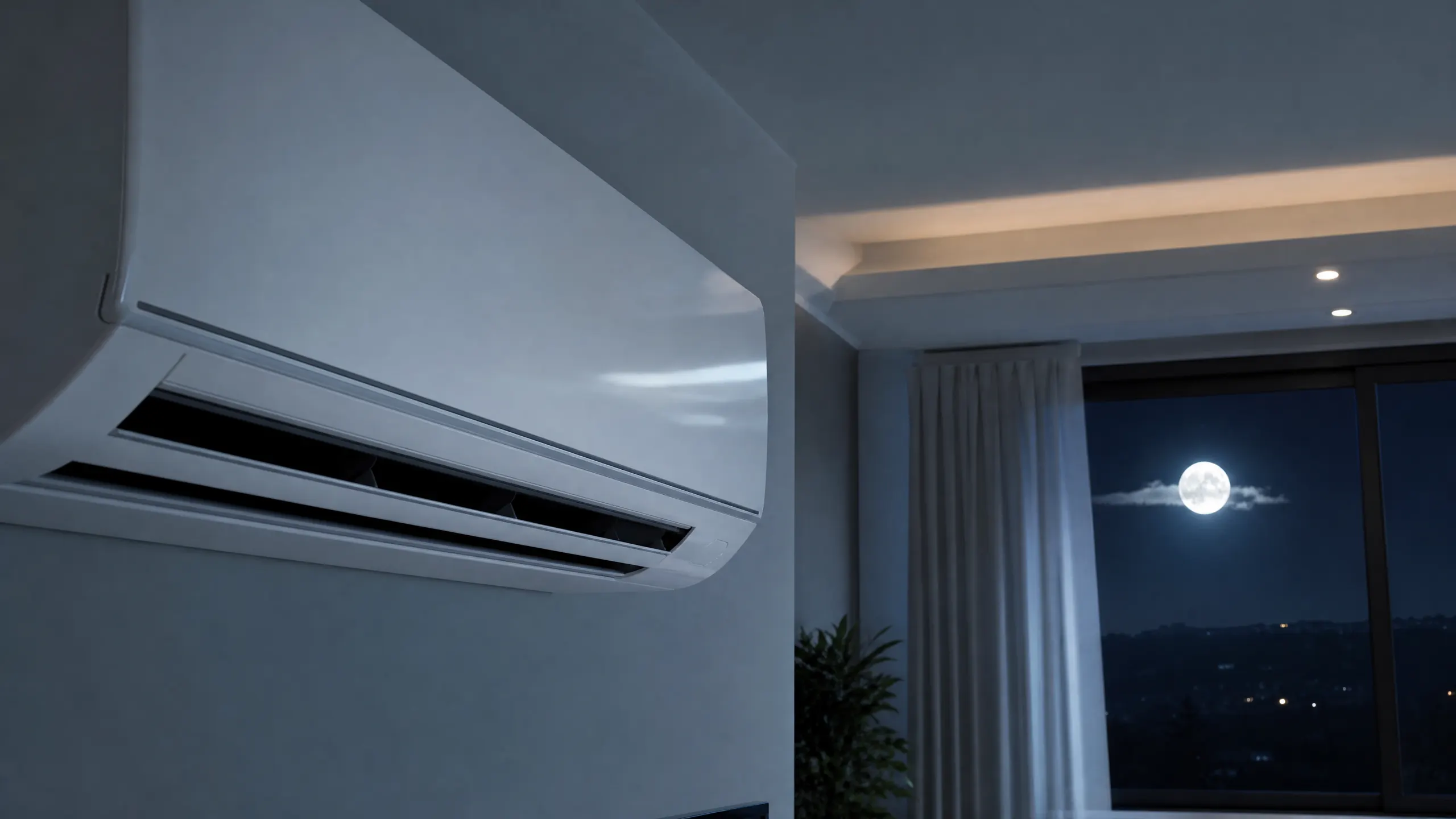
Gas heats most homes here
Utility gas heats 61.2% of occupied homes in Mower County. Another 17.6% run on bottled or LP gas. A mini split here is almost always added alongside that system, not a replacement for it.
Takes about a minute. No obligation.
Utility gas heats 61.2% of occupied homes in Mower County. Another 17.6% run on bottled or LP gas. A mini split here is almost always added alongside that system, not a replacement for it.
If your house already has gas heat, a mini split's job is usually cooling and shoulder-season heat for one room or zone, while the furnace keeps handling the cold months. That changes where the contractor places the indoor unit and how they size it.
NOAA nClimDiv, 1991–2020 normals
Minnesota homes paid 15.45 cents per kilowatthour for electricity in 2024.
A standard size unit sized correctly for the room keeps that cost in check. There's no reason to pay for more capacity than the space needs.




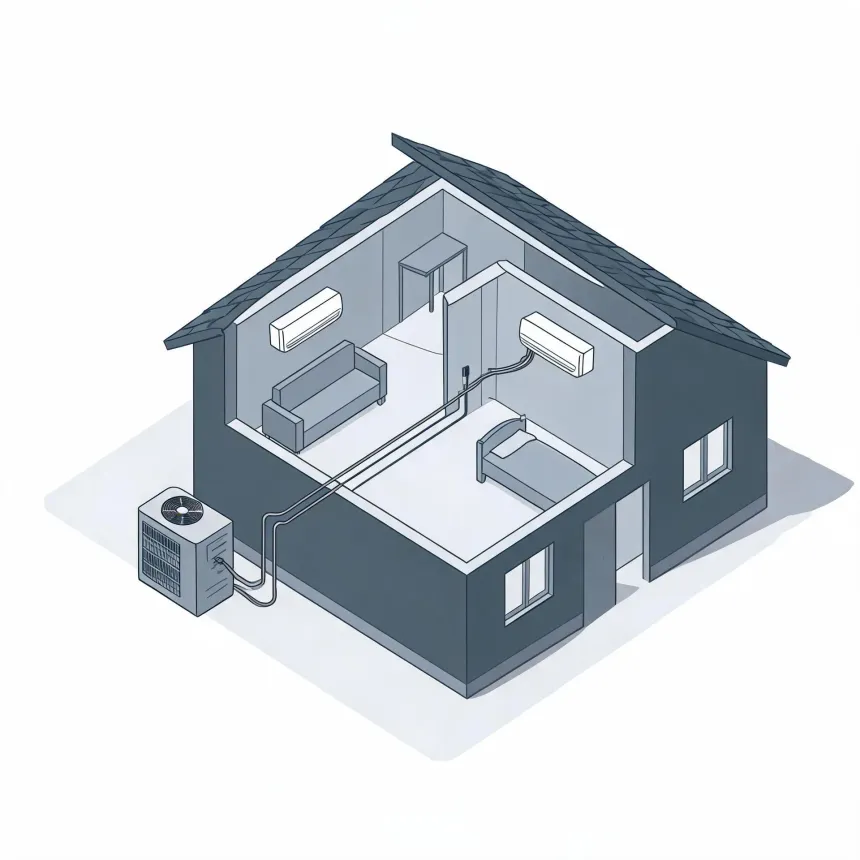
Ask every contractor who bids the job how many indoor heads the system needs and why. A single zone covers one room well. A multi-zone system splits one outdoor unit across several rooms, and each indoor head needs its own line set run through the wall. Ask where the outdoor unit will sit and how far that is from the indoor head, since a longer line set can affect performance. Ask what SEER2 rating the system carries, since that's an efficiency rating, not a measure of how much heating or cooling it can produce. Ask how they arrived at the size for each zone. A unit sized for the room it serves will cycle on and off the way it should. One that's oversized will cool or heat the space fast and shut off before it pulls the moisture out of the air, which leaves a room feeling clammy even when the thermostat says it's satisfied.
Summer here runs about three months, June through August, with afternoon highs averaging 79°F. A mini split in this county isn't fighting long stretches of extreme heat. It's covering a mild season and maybe taking some load off the furnace in spring and fall. That lighter duty means a correctly sized standard unit holds up well. There's no need to pay for the highest-efficiency model on the lot.
Find a contractor
Sizing a mini split is a room by room calculation, not a guess based on square footage alone. A contractor has to account for how many windows the room has, which direction they face, how much insulation is behind the walls, and what else is generating heat in that space, because all of that changes how much the unit has to work to hold a temperature. Get it wrong one way and the unit runs long stretches trying to catch up, pushing the compressor harder than it should have to. Get it wrong the other way, oversized for the room, and it blasts the space to temperature and shuts off before it's had time to pull humidity out of the air. That short cycling is hard on the compressor too, since starting up draws more strain than running steady. A unit sized to the room cycles on, runs long enough to actually condition the air, and shuts off. That's the pattern that keeps a compressor working the way it's built to work for the long haul.
SEER2 is a ratio of cooling output to the electricity a unit uses over a season, tested under set conditions. It doesn't tell you how much heating or cooling capacity a unit has. A higher number on one unit doesn't mean it will handle a bigger room than a lower rated one, and units with the same capacity can carry different SEER2 numbers depending on the compressor and coil design inside them.
A high SEER2 unit sized too big for the room still cycles on and off fast, and that's where the efficiency gets lost no matter what the label says. The rating reflects performance over a season of normal runtime, not short bursts. A correctly sized unit run the way it's meant to run gets you closer to the number on the label than an oversized one ever will.
If a mini split is going in alongside an existing furnace, that furnace isn't going anywhere, so there's no old system to haul away on this job. The question is usually what happens to the space where ductwork or a wall unit used to do the work the mini split is about to take over. A contractor doesn't need to touch existing duct runs to add a mini split zone, since the indoor head doesn't tie into them at all. If an old window unit or through-wall air conditioner is getting retired in favor of the new system, that's a straightforward removal, and the wall sleeve or window frame it leaves behind will need to be sealed up properly so it isn't just a gap to the outside. None of that affects the furnace or its duct system, which keeps running the winter heating load exactly as it did before.
Cost on a mini split job comes down to what the crew has to do beyond mounting the indoor head and the outdoor unit. Running the line set is a big piece of that. A short, straight shot from the outdoor unit to the indoor head takes less time and material than a run that has to go up a wall cavity, through framing, or around the house to reach the right room. The electrical hookup matters too. If there's a circuit already sized for the unit nearby, that's a quick tie-in. If the panel needs a new breaker and a fresh run of wire from a panel that's far from the install point, that's more labor. A multi-zone job costs more than a single-zone job for the plain reason that each additional indoor head needs its own line set and its own mounting, even though they all share one outdoor unit. Wall and ceiling type, how the house is framed, and where the contractor can route a line set without tearing into finished surfaces all shape how straightforward or involved the job turns out to be.