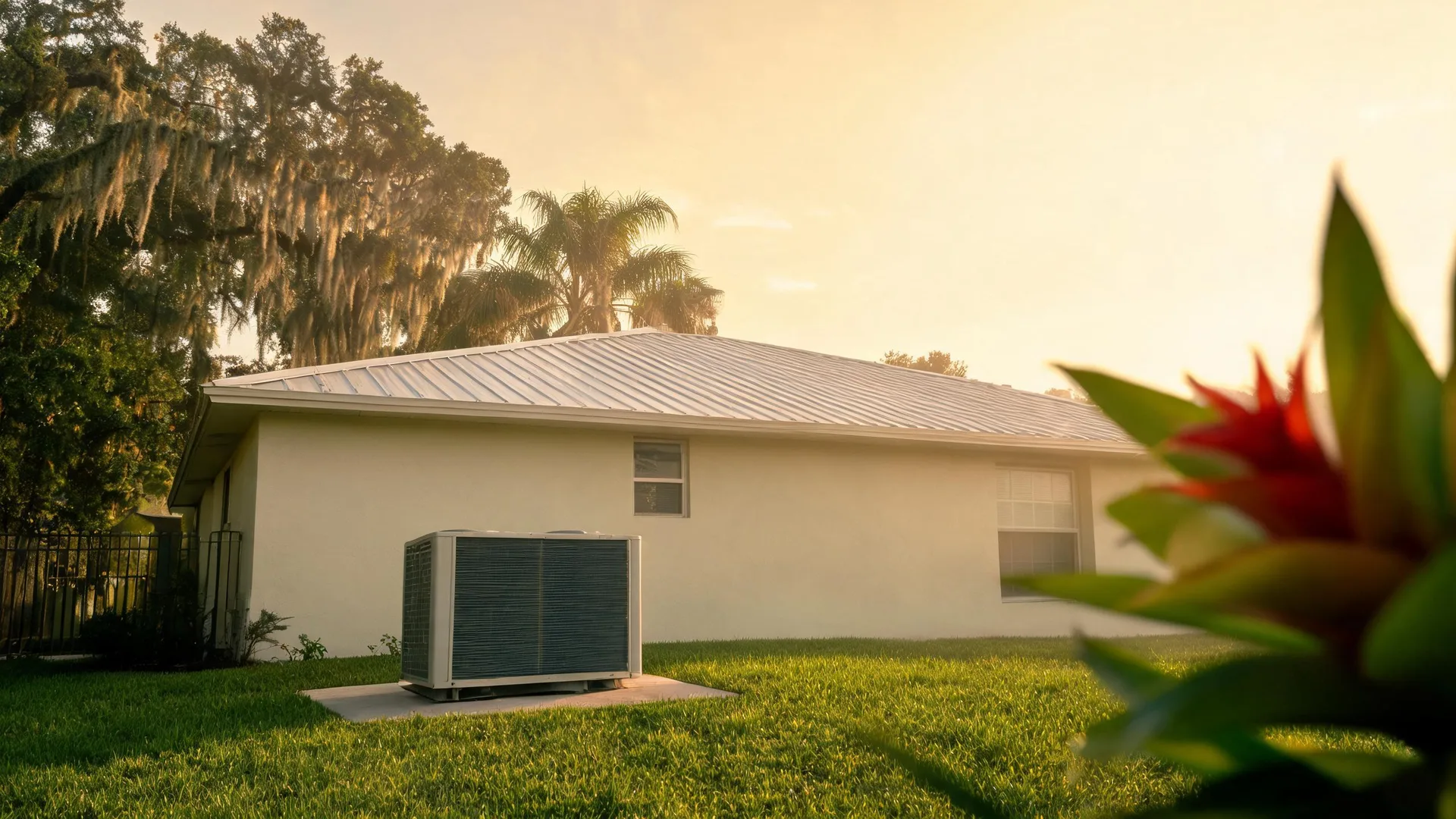
June is when it gets tested
Cooling in Washington County runs June through August. The unit sits unused all spring and then gets asked to run hard in the first hot week. Whatever was already weak tends to show up fast once that happens.
Takes about a minute. No obligation.
Cooling in Washington County runs June through August. The unit sits unused all spring and then gets asked to run hard in the first hot week. Whatever was already weak tends to show up fast once that happens.
A capacitor or contactor that is already marginal can still get a system through mild weather. It is the jump in load that it may not survive. Having it looked at in May, before the season starts, catches that kind of problem while it is still a repair and not a breakdown.

NOAA nClimDiv, 1991–2020 normals
Summer here only runs three months, June through August, and the afternoon high averages around 80°F.
Your AC isn't fighting extreme heat, so if it's struggling, something in it is already worn.




If your house was built around 1992 or later, the system in it is probably not old enough to be failing from age alone. That points to a specific cause. A capacitor gone bad, a contactor with pitted contacts, a dirty coil or a low refrigerant charge will all stop a unit cold regardless of how many summers it has behind it. A technician can check which one it is and fix that part rather than talk you into a new system. Repair makes sense here more often than not.
Problems tend to show up in the first weeks of the season, when the load hits a part that was already weak.
Find a contractor
A system that's struggling doesn't fail all at once. It fails a little more every hour it keeps running in that state. A refrigerant leak gets worse under load, since the pressure change pushes more out through the same crack. A weak capacitor forces the compressor motor to draw more current trying to start, and that heat breaks it down further each cycle. A dirty coil makes the compressor work against higher pressure than it was built for, and compressors are not built to be rebuilt. Run any of these long enough and the part that would have been a simple swap takes the compressor down with it, and the compressor is most of what you're paying for in that unit. Shutting it off and calling someone the day it starts acting up costs you a few warm hours. Letting it run costs you the part that was still fine.
People assume a warm house means the charge is low, but refrigerant doesn't just disappear on its own. If it's low, there's a leak somewhere in the coil or the line set, and topping it off without finding the leak just means doing it again later. The more common culprits sit in the electrical side: a capacitor that's lost its charge, a contactor with burnt contacts, or a fan motor that's seized or running slow.
Since the real cause is usually electrical or mechanical rather than a leak, a good diagnosis starts with a multimeter, not a refrigerant gauge. A technician checking capacitance, testing the contactor, and watching how the fan motor starts up will find the actual failure faster than chasing pressure readings. Fix the part that failed and the system runs the way it did before, no guessing involved.
Estimates for a typical Washington County home, compared with an older unit built to the previous federal minimum, from EIA household energy data, Minnesota fuel prices and NOAA climate normals. Your home will differ.
Repair makes sense when a part like a capacitor or contactor has failed.
Replacement makes sense when the compressor has failed or the system uses R-22 refrigerant, which is no longer made.
Repair versus replacement comes down to what actually broke, not how old the thermostat guess is in your head. A single failed part, a capacitor, a contactor, a fan motor, is a repair no matter what. Those parts fail on their own schedule and swapping one doesn't mean the rest are close behind. The compressor is a different question, because a system usually doesn't get a new one. If the compressor itself has failed, or a refrigerant leak has formed inside the coil where it can't be patched, the repair bill starts competing with the cost of a new unit instead of fixing the old one. Age matters here only because older systems use refrigerant that's harder to get, which can make that one repair expensive even when the rest of the unit is fine. Ask what failed before you ask what it costs. That answer tells you which conversation you're actually having.