





Aerial view of a square outdoor air conditioning condenser unit on a concrete pad beside a house wall with a sliding glass door.

AC Repair in Winona, MN

Tell us about the job

Takes about a minute. No obligation.

RepairCentral ACWinona County, MN
Step 1 of 2

What ZIP code is the job in?

May is a good time to get your AC looked at, before cooling starts up in June. A system that sat idle all fall and winter gets asked for full output the first hot day, and whatever was already marginal, a weak capacitor, a low charge, a dirty coil, tends to show up right then. Cooling only runs about three months here, June through August, so a repair put off in week one is a repair you live with most of the season. Catching it before that first stretch of heat means a contractor can look at it before the house is already uncomfortable.

3 months
June through August, your air conditioner is on duty
80°F
the average summer afternoon it cools against
83 hail events
in ten years, and hail bends the fins on outdoor coils
63 wind events
in ten years, and wind drives debris into outdoor units
Isometric line illustration of a cutaway single-story building showing interior rooms, ceiling ductwork and an air handler, connected by lines to an outdoor condenser unit beside the exterior wall.
Your air conditioner works hardest from June through August.

NOAA nClimDiv, 1991–2020 normals

A breaker that keeps tripping means the system stays off until someone finds out why.

Check the thermostat batteries and the outdoor unit for blocked airflow before you call anyone.

80°F afternoons are normal heat, nothing your AC shouldn't handle

Power costs 15.45 cents a kWh statewide
Cooling runs June through August
Summer afternoons average 80°F

Half the homes in Winona County were built in 1969 or earlier. If your AC came with a house that old, it's probably not the first system that house has had. An AC nearing the end of its life still runs, but it runs longer to do the same job, and a small problem is more likely to be the one that finally ends it. Before putting money into a repair, it's worth asking a contractor how much life is actually left in the unit. That answer can change what's worth fixing.

Your AC problem is probably the ordinary kind

Winona County sees its share of wind, hail and winter storms, like most places around here do. None of that is what wears on an AC system. A unit acting up is almost always a part worn from ordinary use, not weather. Worth getting a contractor out to find which part it is.

Find a contractor
An outdoor air conditioning condenser unit mounted on a concrete pad beside a house, with electrical conduit running to a wall-mounted disconnect box.

What the system is telling you before it quits

Warm air that never gets down to the set temperature usually means the system is low on refrigerant or the compressor is struggling to keep up. Short cycling, where the unit shuts off soon after it starts, often points to a dirty filter, a clogged coil, or a thermostat sensor that's gone bad. Ice on the refrigerant lines or the coil means airflow is restricted somewhere, and a filter that should have been changed is the usual cause. A fan that runs but moves no air, or runs loud and rough, points to a motor or a bearing giving out. Water pooling near the indoor unit means the condensate drain is clogged and needs clearing before it backs up further. Left alone, any of these tends to make the next part work harder, and that's how a small problem turns into a bigger one.

The compressor pays for the rest of it

When airflow is restricted or the charge is low, the compressor still tries to hit the set temperature. It runs longer and works harder to move the same heat, and it's the part every other failure eventually lands on. A problem that starts as a dirty coil or a weak capacitor can end as a failed compressor if the system keeps running through it.

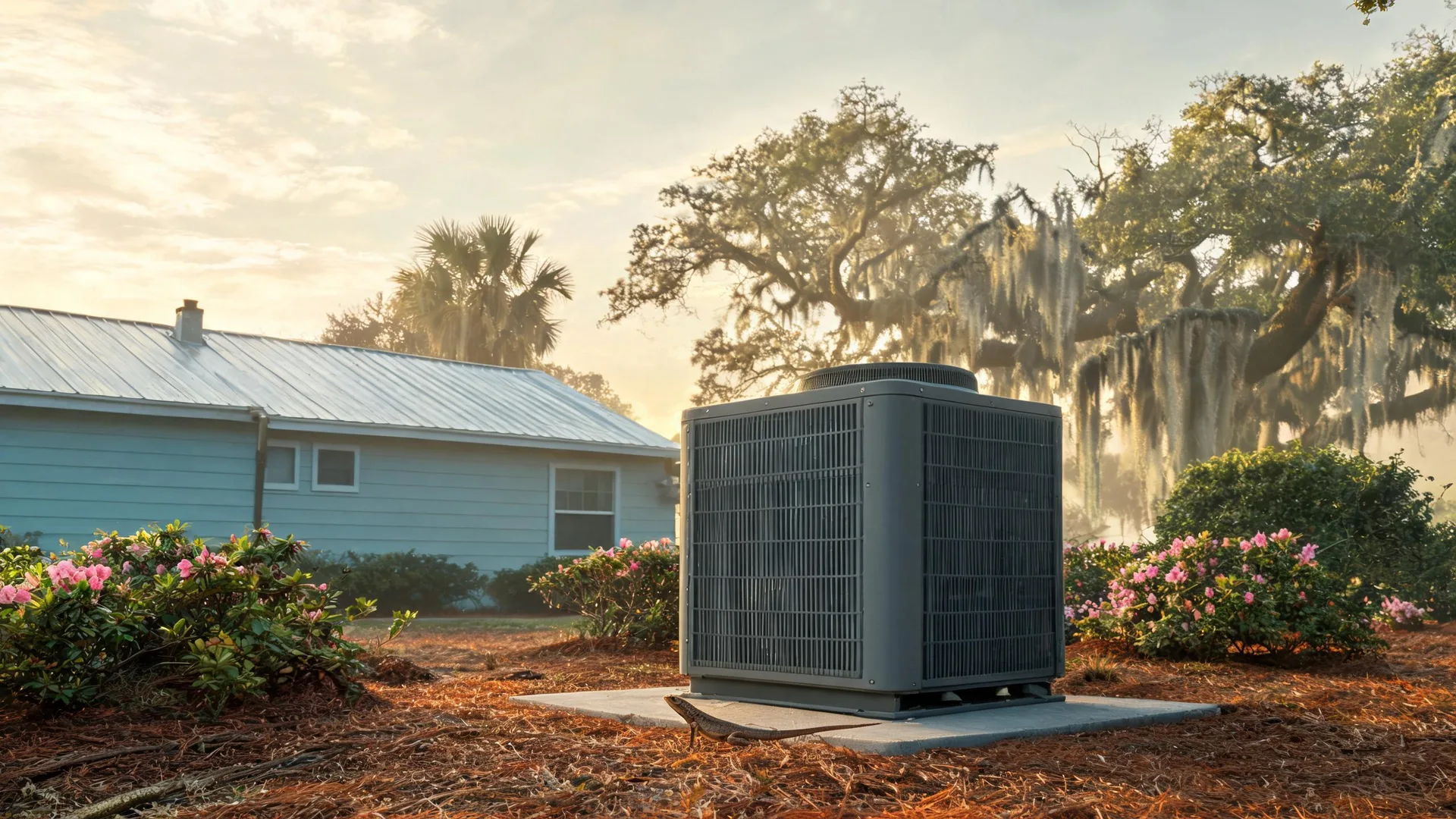
A refrigerant leak only gets smaller to find, never to fix

A system low on charge will keep running, just worse, and every day it runs low puts more strain on the compressor. The leak itself doesn't heal or slow down because the unit kept going. It just means less refrigerant left by the time someone gets a gauge on it.

An overhead view of a residential air conditioning condenser unit mounted on a concrete pad next to a house with vinyl siding.

A new air conditioner would save little on running costs in Winona County, so the repair decision comes down to the unit's condition.

  • A new one at the federal minimum, 13.4 SEER2$150 a year
  • An older air conditioner$160 a year

Estimates for a typical Winona County home, compared with an older unit built to the previous federal minimum, from EIA household energy data, Minnesota fuel prices and NOAA climate normals. Your home will differ.

Repair makes sense when a part like a capacitor or contactor has failed.

Replacement makes sense when the compressor has failed or the system uses R-22 refrigerant, which is no longer made.

A repair is worth doing when the failed part is an isolated one, a capacitor, a contactor, a fan motor. Those wear out on their own schedule and swapping one out doesn't say anything bad about the rest of the system. Replacement starts to make more sense when the compressor itself is the problem, or when the refrigerant it uses is a type that's being phased out and getting hard to source. It also makes sense when a unit has needed a string of repairs rather than just one, since that pattern usually means more failures are coming. A contractor checking what failed, and what kind of shape the compressor and coil are in, can tell you which situation you're in. That, combined with how many years the unit has likely already put in, is what makes the call.