A tall trimmed hedge in the foreground borders a mown lawn beside a row of dark single-story houses with shingled roofs, surrounded by large leafy trees under an overcast sky.

AC Repair in Shakopee, MN

Tell us about the job

Takes about a minute. No obligation.

RepairCentral ACScott County, MN
Step 1 of 2

What ZIP code is the job in?

Half these homes were built in 1997 or later

Scott County splits down the middle, half its homes built in 1997 or earlier, half in 1997 or later. A house on the newer side likely means the ductwork and wiring the air conditioner connects to were put in fresh, not patched together over decades.


A younger system usually means a fixable one

An air conditioner that came in with a newer house hasn't had the years to wear out on its own. A bad capacitor or a low charge is one part asking for attention, not a sign the machine is finished.

3 months
June through August, your air conditioner is on duty
80°F
the average summer afternoon it cools against
44 hail events
in ten years, and hail bends the fins on outdoor coils
53 wind events
in ten years, and wind drives debris into outdoor units
Isometric illustration of a cutaway house showing interior ductwork, an indoor air handler and furniture, connected by lines to an outdoor condenser unit on a pad.
Your air conditioner works hardest from June through August.

NOAA nClimDiv, 1991–2020 normals

A breaker you can check yourself, a filter you can hold up to the light.

Before anyone drives out, look at what's in front of you. It might be the whole problem.

Three months of work a year, not five or six

Cooling runs June through August
Summer afternoons average 80°F
53 damaging wind events from 2015 to 2024
Three months of work a year, not five or sixCooling here runs June through August, about three months a year.

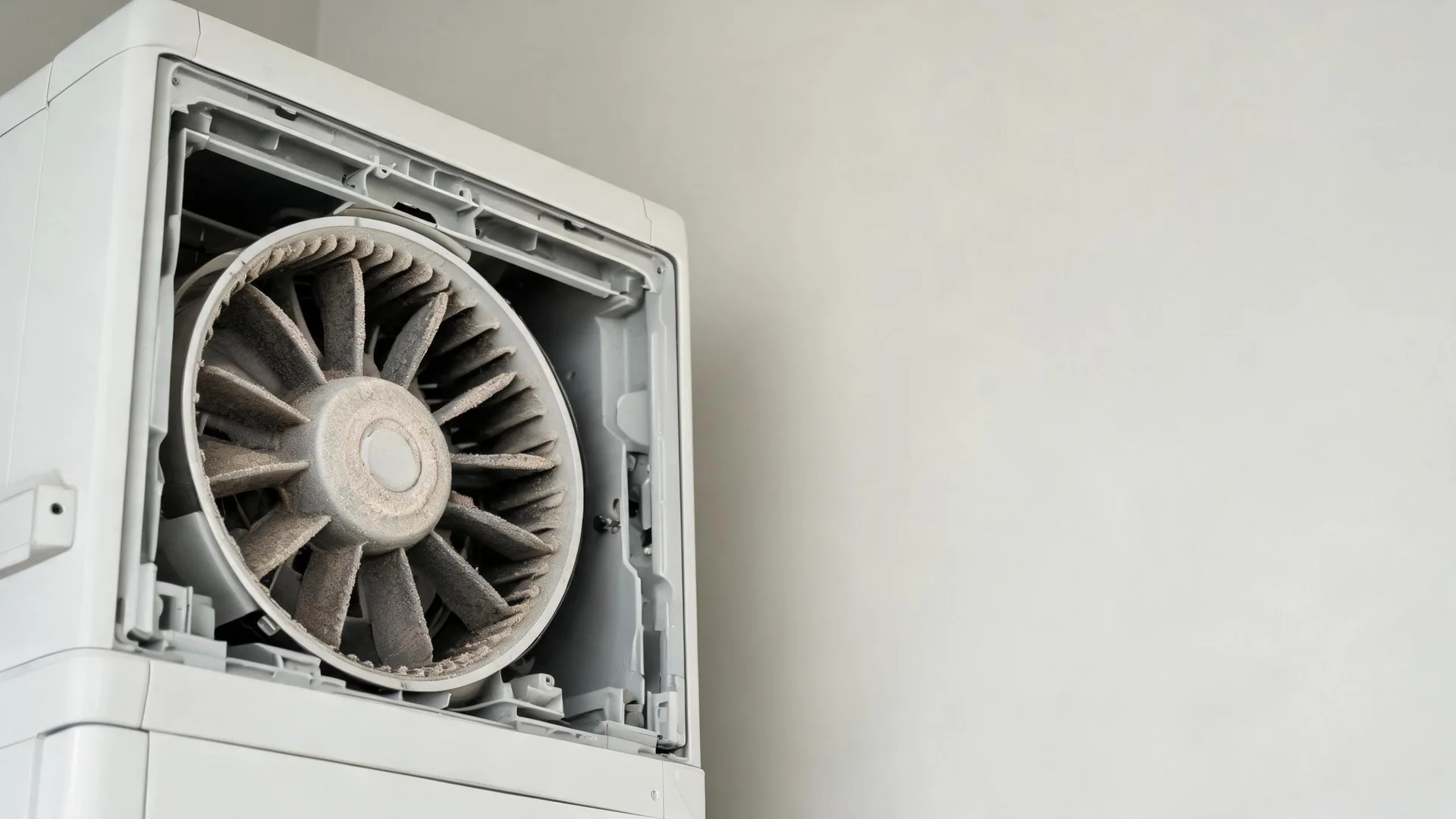
Warm air coming out of the vents is the one most people notice first. Sometimes it means the system is low on refrigerant, sometimes a failing compressor, and those are two very different repairs. Short cycling is another one worth paying attention to: the unit kicks on, runs a few minutes, shuts off, then starts again before the house has cooled at all. That pattern wears on the compressor and it usually traces back to a dirty filter, a blocked coil, or a thermostat sensor gone bad. Ice on the refrigerant line means airflow isn't getting past the coil, and running it that way too long can damage the compressor for good. A unit that's loud in a new way, grinding or squealing, is telling you a motor bearing or a belt is going, not something to wait out. None of these mean the whole system is done. Most of the time they mean one part failed and the rest of the unit is fine.

Three months of work a year. Worth fixing.

An air conditioner that only runs June through August doesn't rack up the hours a unit in a hotter state would. Less running time means less wear on the compressor and the rest of it. So when something breaks here, the machine underneath is usually still good. That's a reason to get it looked at instead of replaced.

Find a contractor
An outdoor residential air conditioning condenser unit mounted on a concrete pad, surrounded by gravel with a blue sky in the background.

Check the age before you decide anything

If your system came with the house and the house is on the newer side, there's a good chance the unit itself hasn't logged the years that a repair would be throwing good money after bad on. Have whoever comes out check the age of the outdoor unit along with whatever's actually wrong with it. A bad capacitor or low charge on a unit with plenty of life left is worth fixing every time.

A low charge pulls the compressor down with it

A system low on refrigerant makes the compressor work harder to move heat it can't fully absorb. Run it like that for days or weeks and the compressor overheats and wears out early. A problem that starts as a simple leak and a top-off turns into a full compressor replacement if it keeps running too long before someone finds the leak.

A frozen coil needs to be shut off, not pushed through

Ice on the coil means airflow isn't getting past it, usually from a dirty filter or a blower losing strength. The system keeps trying to cool anyway, and liquid refrigerant can end up back at the compressor instead of turning to gas first. That's called slugging, and it can wreck a compressor in one bad run. Shutting the unit off and letting the ice melt is the right move, not letting it fight through.

Aerial view of a gray outdoor air conditioning condenser unit mounted on a concrete pad next to a house with vinyl siding.

A new air conditioner would save little on running costs in Scott County, so the repair decision comes down to the unit's condition.

  • A new one at the federal minimum, 13.4 SEER2$170 a year
  • An older air conditioner$190 a year

Estimates for a typical Scott County home, compared with an older unit built to the previous federal minimum, from EIA household energy data, Minnesota fuel prices and NOAA climate normals. Your home will differ.

Repair makes sense when a part like a capacitor or contactor has failed.

Replacement makes sense when the compressor has failed or the system uses R-22 refrigerant, which is no longer made.

A diagnostic starts outside, at the unit itself. The tech checks the capacitor and contactor first, since those fail often and are quick to test. From there it's refrigerant pressure on the gauges, amp draw on the compressor and fan motor, and a look at the coil for ice or dirt buildup. Inside, they'll check the air handler or furnace blower, the filter, and the thermostat's signal to make sure the system is actually being told to run. Static pressure in the ducts matters too, since airflow that's too low or too high strains the equipment even when every part is technically working. Most of this gets done with gauges and a multimeter, not guesswork, and a tech can usually narrow it to one failed part before they ever reach for a tool to fix it.