







A quiet suburban street at twilight featuring two-story brick homes with illuminated windows and large trees lining the sidewalk.

AC Repair in Sauk Rapids, MN

Tell us about the job

Takes about a minute. No obligation.

RepairCentral ACBenton County, MN
Step 1 of 2

What ZIP code is the job in?

Three months of real cooling here, June through August, with afternoon highs averaging 79°F. That's a short stretch compared to most of the country, and it's mild work besides. The air stays light too, with dew points around 58°F on average, so the unit isn't fighting heavy, wet air to pull moisture out all summer. Less runtime and less load both mean less wear on the compressor and coils over the life of the system. When something breaks here, it's more often age or a part worn out on its own schedule, not a unit worked to the bone. That usually makes repair the right call before anyone talks about replacing it.

3 months
June through August, your air conditioner is on duty
79°F
the average summer afternoon it cools against
18 hail events
in ten years, and hail bends the fins on outdoor coils
6 wind events
in ten years, and wind drives debris into outdoor units
Isometric line illustration of a cutaway single-story house showing interior rooms, ducted air handler, ceiling ductwork, and an outdoor condenser unit connected by refrigerant lines.
Your air conditioner works hardest from June through August.

NOAA nClimDiv, 1991–2020 normals

A low refrigerant charge makes the compressor run hotter with every cycle it completes.

Keep running it low on charge and that same compressor is what you'll be replacing, not just recharging.

Half the homes here were built in 1986 or later, and the AC inside is usually just as young

Half the homes here were built by 1986
Cooling runs June through August
Summer afternoons average 79°F
June Is When a Weak Part Gets FoundJune starts the only real work this machine does all year, and a weak part usually shows itself that first week.

A capacitor is behind a lot of the service calls that start with the fan not spinning or the compressor humming but not starting. It weakens with age and heat, and once it's too weak to kick the motor into motion, that motor either stalls or runs hot trying to compensate. The contactor is another common one. It's the switch that sends power to the compressor and fan, and the contacts on it pit and burn a little every time it cycles, until one day it doesn't close all the way. Capacitors and contactors are both wear parts. They're built to a lifespan, not built to last forever, and neither failure means anything is wrong with the compressor itself. The coil is a different story. A dirty condenser coil can't shed heat the way it should, so the system works harder and runs longer to do the same job, and that extra strain shortens the life of everything downstream of it. Keeping the coil clean is one of the few things that actually prevents a failure instead of just reacting to one.

This Climate Is Easy on an AC. That's a Reason to Fix It, Not Replace It

A mild climate and a young unit are a good combination. If this one's broken, the odds favor fixing it over replacing it.

Find a contractor
A man in a cap, gray shirt and brown work pants walks up steps toward a dark green front door, carrying a canvas tool bag beside a potted shrub.
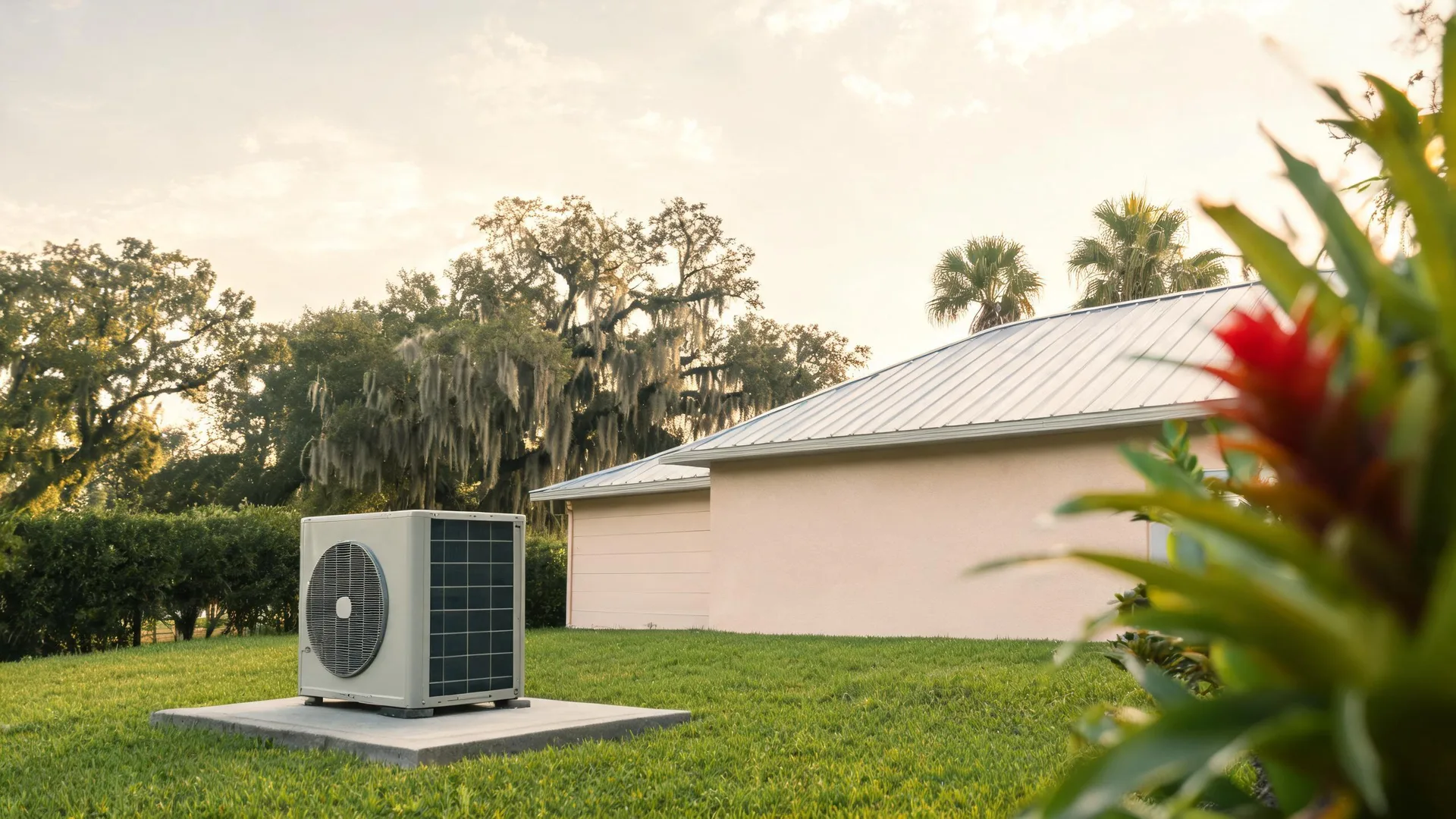
A gray metal air conditioning condenser unit mounted on a concrete pad in a flat grassy field under a partly cloudy sky.

One Broken Part Rarely Means the Whole System Is Done

Age by itself doesn't retire an air conditioner. What retires it is a compressor that's failed, or a repair bill that's chasing a unit already in decline on several fronts at once. A single broken part on a system that's otherwise sound is almost always worth fixing. A capacitor, a contactor, a fan motor, even a coil leak caught early: these get swapped or repaired and the rest of the system keeps going like nothing happened. The harder call comes when the compressor itself is the failure. That part isn't cheap to replace on its own, and when it goes, a tech will usually walk you through what else on that unit is nearing the end of its life before anyone spends money on just the one part. The honest way to think about it is by what's actually failed, not by how long the unit has been running. A system with a bad capacitor is a quick fix. A system with a failed compressor and a coil that's been leaking slowly is a different conversation.

What You Can Check Before Anyone Comes Out

Start at the thermostat. Make sure it's set to cool and set below room temperature, and swap the batteries if it uses them. Outside, look at the breaker box for the AC and see if it's tripped. Check the filter too. A filter packed with dust chokes airflow across the coil, and that alone can make the unit run constantly without cooling the house. If the outdoor unit is dead quiet, make sure nothing is blocking it, and look for a float switch near the indoor coil that shuts the system off when the drain line backs up.

What Tells You to Call Now

A hard click or a hum from outside with no fan turning is not something to leave alone. Ice on the refrigerant lines or the indoor coil means the system needs to come off before it's run any longer. Water pooling near the furnace or air handler points to a clogged drain, and that water damage gets worse the longer it sits. Any burning smell from the vents means power off and a call right away, not a wait and see.

Aerial view of a gray central air conditioning condenser unit on a concrete pad next to a house with vinyl siding.

A new air conditioner would save little on running costs in Benton County, so the repair decision comes down to the unit's condition.

  • A new one at the federal minimum, 13.4 SEER2$130 a year
  • An older air conditioner$140 a year

Estimates for a typical Benton County home, compared with an older unit built to the previous federal minimum, from EIA household energy data, Minnesota fuel prices and NOAA climate normals. Your home will differ.

Repair makes sense when a part like a capacitor or contactor has failed.

Replacement makes sense when the compressor has failed or the system uses R-22 refrigerant, which is no longer made.

A diagnostic visit starts before any panel comes off. A tech will ask what the system is doing, when it started, and whether anything changed right before it did. Then it's gauges on the refrigerant lines, a check of the capacitor and contactor, amp draw on the compressor and fan motors, and a look at the coil and airflow through it. Each reading rules something in or out. Low charge points toward a leak somewhere in the lines or coil, not a bad part up front. A compressor pulling too many amps is working harder than it should, often because something downstream of it, like a dirty coil or weak airflow, is making it strain. By the end, the tech should be able to name the failed part, explain why it failed, and say whether anything else on the system is close behind it.