Overhead view of an air conditioning condenser unit on a concrete pad next to a house with asphalt shingle roofing and vinyl siding.

AC Repair in Red Wing, MN

Tell us about the job

Takes about a minute. No obligation.

RepairCentral ACGoodhue County, MN
Step 1 of 2

What ZIP code is the job in?

How old the compressor is matters more than how old the unit looks

A system that still looks fine on the outside can have a compressor on its way out, and a compressor replacement often costs close to a new system. If a tech tells you the compressor is failing, ask what else on the unit is original before you decide to repair it.


A repeat repair is a different situation than a first one

One broken capacitor or a failed run of refrigerant doesn't say much about the rest of the system. But if this is the same unit back for its second or third repair in a short stretch, that pattern is worth more than any single diagnosis, since it usually means other parts are wearing out at the same rate.

3 months
June through August, your air conditioner is on duty
79°F
the average summer afternoon it cools against
39 hail events
in ten years, and hail bends the fins on outdoor coils
52 wind events
in ten years, and wind drives debris into outdoor units
Isometric line illustration of a cutaway house showing interior rooms, ceiling ductwork connected to an indoor air handler, and an outdoor condenser unit linked by refrigerant lines.
Your air conditioner works hardest from June through August.

NOAA nClimDiv, 1991–2020 normals

Check the thermostat batteries and the breaker before you assume the unit itself is broken.

A system that won't turn on at all is often wiring or power, not the compressor or the coil.

Half the homes in Goodhue County were built in 1973 or earlier

Half the homes here were built by 1973
Cooling runs June through August
Summer afternoons average 79°F

Nothing about Red Wing puts harder strain on an air conditioner than what any unit in Minnesota deals with. The usual causes still apply here. A worn capacitor, a dirty coil, a low charge. There's no local quirk that changes the diagnosis. What does matter is that a system running low on charge or fighting a dirty coil pulls more power to do the same job, and Minnesota homes paid 15.45 cents per kilowatt-hour in 2024. Fixing the real problem costs less over a summer than paying to run a strained unit.

This AC hasn't had to work hard. Repair is usually the right move.

Three months of real cooling load a year is not much to ask of a system. June through August, afternoons averaging 79 degrees, is light work compared to what the rest of the country runs. So if your AC is acting up, the unit itself has usually had an easy life. That makes repair the right first call, not a stall before a replacement you don't need yet.

Find a contractor
A man in a cap, work shirt and tan pants, seen from behind, carries a canvas tool bag up concrete steps toward a dark green front door, with a potted shrub to the right.
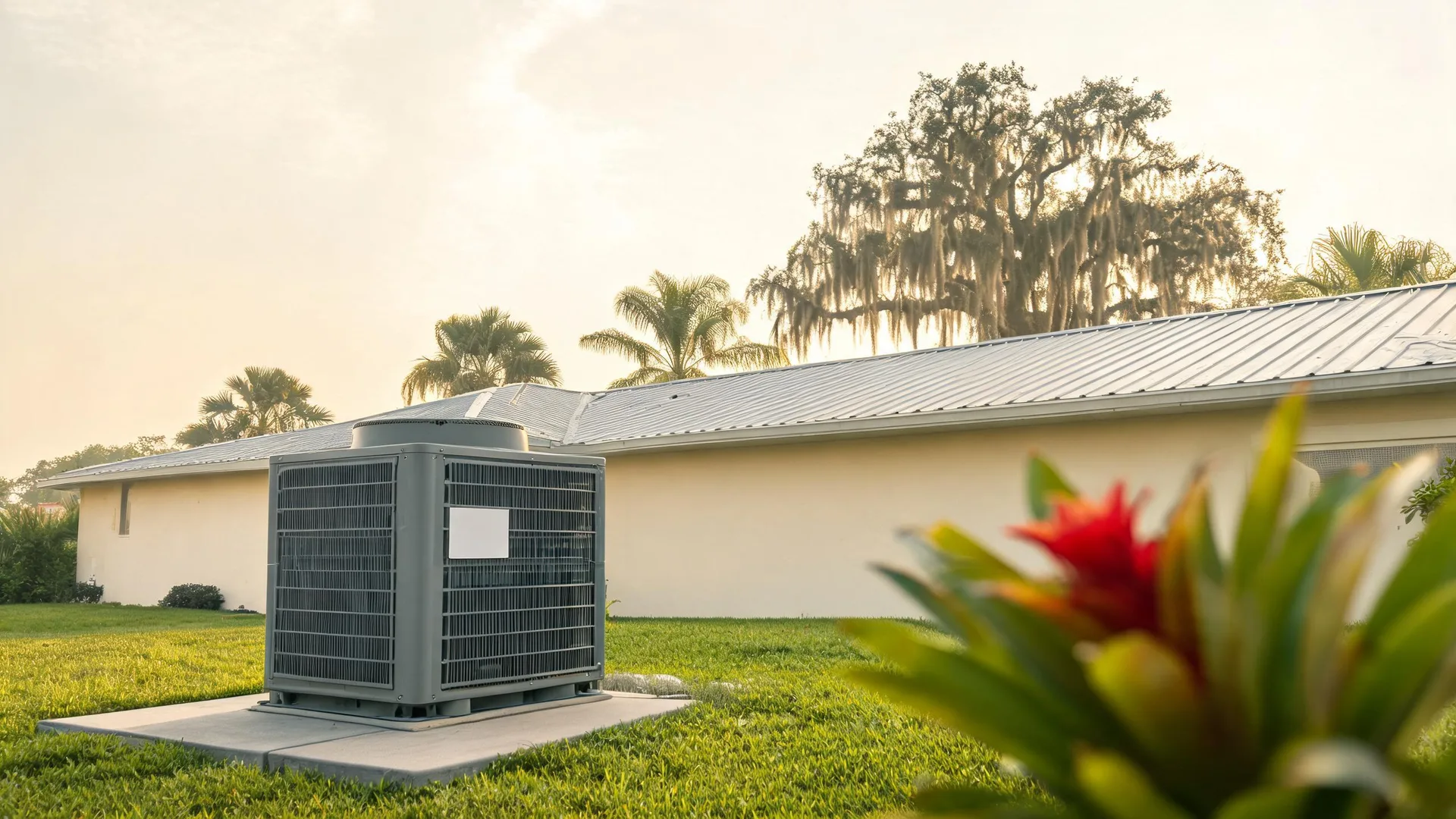
An outdoor residential air conditioning condenser unit mounted on a concrete pad, surrounded by gravel with a blue sky in the background.

How old is the unit you're fixing

If this AC came with the house, ask the tech how old the compressor actually is before you pay for the repair. A system installed new is worth fixing without a second thought. One that traces back to a much older house is a different conversation. Get the straight answer on what's left in it, then decide.

What you'll actually notice first

Warm air out of the vents when the thermostat is set low, or the system running longer than it used to without catching up. Short cycling, where it kicks on and off every few minutes, usually means a electrical problem or a unit that's overcharged or undercharged. A hissing or bubbling sound near the indoor coil points to a refrigerant leak. Ice on the coil or the line outside means airflow or charge is off, not that the system is working harder in a good way.

What's worth a same-day call

A burning smell, a tripped breaker that won't reset, or water pooling near the indoor unit shouldn't wait. Those point to an electrical fault or a clogged condensate line that can back up into the house. A loud new noise, grinding or screeching, usually means a motor bearing is going and running it longer turns a part replacement into a bigger repair. Warm air or weak airflow can wait for a scheduled visit since it won't get worse by the hour.

Overhead view of a gray outdoor AC condenser unit on a concrete pad beside a mulched garden bed and a house with vinyl siding.

A new air conditioner would save little on running costs in Goodhue County, so the repair decision comes down to the unit's condition.

  • A new one at the federal minimum, 13.4 SEER2$150 a year
  • An older air conditioner$160 a year

Estimates for a typical Goodhue County home, compared with an older unit built to the previous federal minimum, from EIA household energy data, Minnesota fuel prices and NOAA climate normals. Your home will differ.

Repair makes sense when a part like a capacitor or contactor has failed.

Replacement makes sense when the compressor has failed or the system uses R-22 refrigerant, which is no longer made.

A diagnostic visit starts outside at the condenser, checking that the fan spins freely and the coil isn't caked with dirt or cottonwood. The tech checks refrigerant pressure on the gauges, since too little or too much both point to a specific cause rather than a guess. Capacitors and contactors get tested under load, not just looked at, because a capacitor can look fine and still be weak. Inside, the evaporator coil and the drain line get checked too, since a clogged line can shut the whole system down on its own. Most of this takes measurements, not assumptions. By the time the tech has a number for the charge and a reading on the capacitor, there's usually one clear answer rather than a list of maybes.