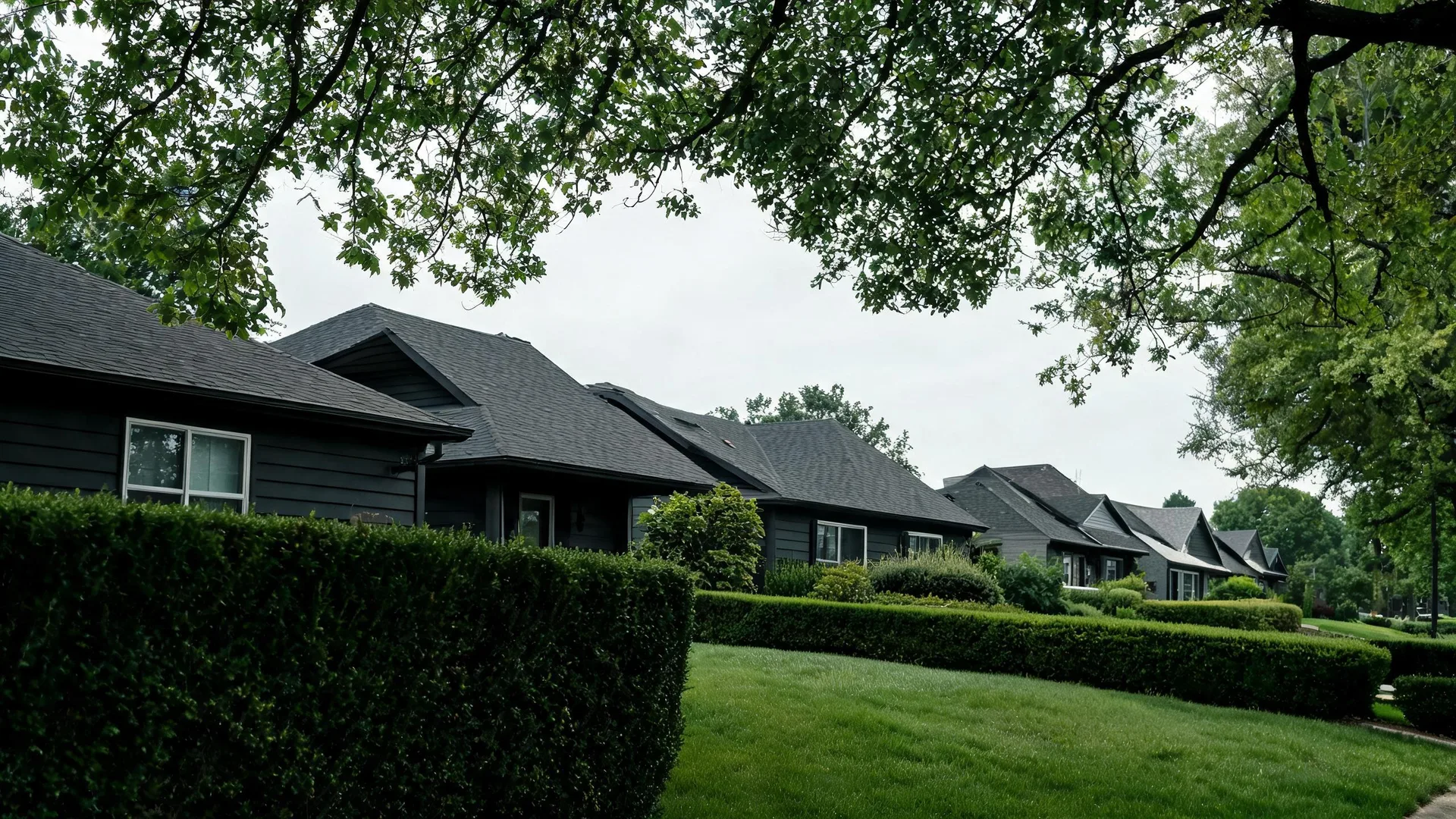






A row of dark-sided single-story houses with gray shingled roofs behind trimmed hedges and a mown lawn, framed by overhanging tree branches under an overcast sky.

AC Repair in Minneapolis, MN

Tell us about the job

Takes about a minute. No obligation.

RepairCentral ACHennepin County, MN
Step 1 of 2

What ZIP code is the job in?

May is a good month to get your AC looked at in Hennepin County. Cooling here runs June through August, and most breakdowns happen in those first hot weeks, not in the middle of summer. A capacitor or contactor that sat idle all winter often fails the moment the system has to run hard. Getting it checked before June means a technician finds that weak part on their schedule, not during a heat wave on yours.

3 months
June through August, your air conditioner is on duty
80°F
the average summer afternoon it cools against
132 hail events
in ten years, and hail bends the fins on outdoor coils
142 wind events
in ten years, and wind drives debris into outdoor units
Isometric cutaway illustration of a single-story house with a dark shingled roof, showing interior rooms with ductwork and an indoor air handler connected to an outdoor condenser unit beside the building.
Your air conditioner works hardest from June through August.

NOAA nClimDiv, 1991–2020 normals

Minneapolis AC gets about three months of real work a year, June through August.

A system that sits idle the rest of the year is the one most likely to show a weak capacitor the first hot week it runs.

Hennepin County sees its share of wind, hail and winter storms, but none of that is what wears out an AC

313 severe weather events from 2015 to 2024
13% of homes statewide lost power a day or more in 2024
142 damaging wind events from 2015 to 2024

Half the homes in Hennepin County were built in 1973 or earlier. If your AC came with a house that old, it's probably not the original unit, but it may still be older than you'd guess, especially if nobody's told you otherwise. An aging system can still cool the house fine right up until the week it doesn't. Before you pay for a repair, it's worth asking the technician how much life is likely left in the unit, not just what's wrong with it today.

It's probably one weak part, not your whole AC

Most AC trouble in Minneapolis comes down to a part that failed, not a house that's hard on the system. A technician who finds the actual cause can usually fix it rather than replace the whole unit. A system that has to work harder than it should also costs more to run. Minnesota homes paid about 15.45 cents per kilowatthour last year, so a weak part left alone shows up on the electric bill too.

Find a contractor
A man in a dark long-sleeve shirt and tan work pants, seen from behind, carries a canvas tool bag up porch steps toward a dark green front door beside a potted shrub.
An outdoor air conditioning condenser unit mounted on a concrete pad surrounded by gravel, photographed against a partly cloudy blue sky.

Ask what the repair buys you, not just what it fixes

A technician can check how many years are likely left in the unit before you commit to a repair. That number should factor into the decision as much as the diagnosis does. Fixing a weak part on a unit with years left makes sense. Fixing the same part on a unit near the end of its life just means the next part fails and you're back here again next season.

A struggling AC doesn't stop, it strains

When a capacitor is weak or a coil is dirty, the compressor still tries to do its job. It pulls harder to get the same cooling. Keep running it in that state and the motor windings heat up more than they should, and that heat is what ends a compressor.

Ice on the coil means shut it off, not wait it out

A coil that starts icing over is usually low on refrigerant or starved for airflow. Letting the system keep running pushes liquid refrigerant back toward the compressor instead of letting it return as a gas. That's one of the fastest ways to take out a compressor that was otherwise fine.

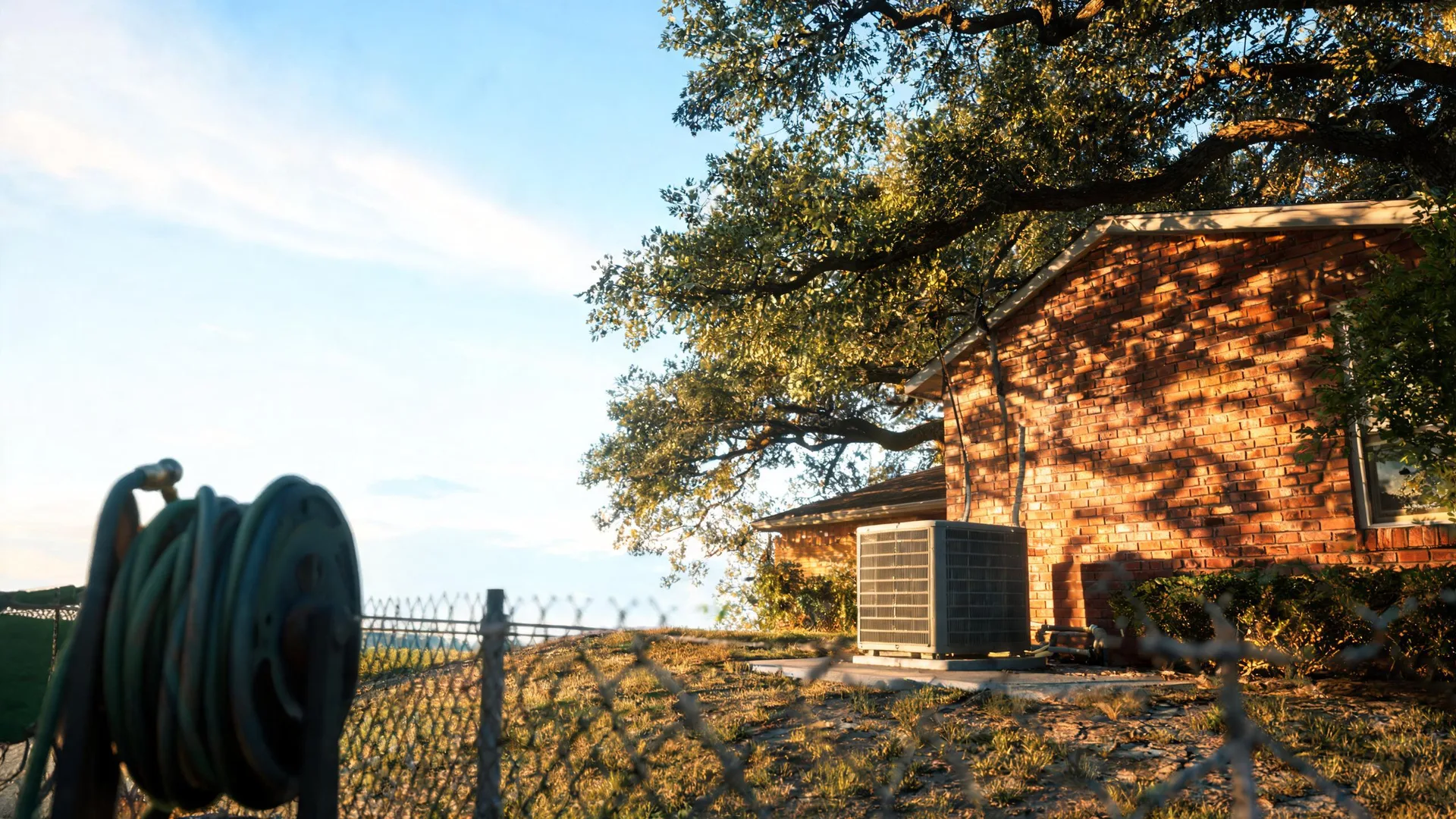
An outdoor air conditioning condenser unit mounted on a concrete pad next to a blue-sided residential house at sunset.

A new air conditioner would save little on running costs in Hennepin County, so the repair decision comes down to the unit's condition.

  • A new one at the federal minimum, 13.4 SEER2$170 a year
  • An older air conditioner$180 a year

Estimates for a typical Hennepin County home, compared with an older unit built to the previous federal minimum, from EIA household energy data, Minnesota fuel prices and NOAA climate normals. Your home will differ.

Repair makes sense when a part like a capacitor or contactor has failed.

Replacement makes sense when the compressor has failed or the system uses R-22 refrigerant, which is no longer made.

A diagnostic visit starts outside at the condenser, not with a part swapped in blind. The technician checks refrigerant pressure, amp draw on the compressor, and whether the capacitor is still holding its charge under load. Inside, they check the air coming off the coil against the air going into the return, because that gap says more about what's wrong than almost anything else. They'll pull the blower access panel and look at the coil itself for ice or dirt, since either one explains weak cooling on its own. Only after that do they say which part failed and why, instead of guessing from the symptom alone.