






A nighttime street view of several illuminated two-story red brick homes with front porches, flanked by a large tree.

AC Repair in Le Sueur, MN

Tell us about the job

Takes about a minute. No obligation.

RepairCentral ACLe Sueur County, MN
Step 1 of 2

What ZIP code is the job in?

May is when it's worth getting a weak system looked at here, before June puts a full load on it. Cooling in Le Sueur County only runs three months, June through August, so a system that hasn't run since last summer gets tested all at once. Whatever was marginal in August is still marginal now. The first real hot stretch is when a tired capacitor or a low charge finally gives out, usually within the first few weeks of running. Catching it in May means a diagnosis without the pressure of a house that's already warm.

3 months
June through August, your air conditioner is on duty
80°F
the average summer afternoon it cools against
26 hail events
in ten years, and hail bends the fins on outdoor coils
32 wind events
in ten years, and wind drives debris into outdoor units
Isometric cutaway illustration of a single-story house showing interior rooms, ductwork and an air handler in the attic space, and an outdoor condenser unit connected by lines at the exterior wall.
Your air conditioner works hardest from June through August.

NOAA nClimDiv, 1991–2020 normals

Three months of cooling a year is a light workload for an AC system.

A compressor with this little wear behind it is almost always worth repairing.

An older home here doesn't mean an older problem under the hood

Half the homes here were built by 1974
Cooling runs June through August
Summer afternoons average 80°F

When a system does fail here, it's almost never because Le Sueur put it under some unusual strain. A capacitor wears out the same way whether the AC ran a light season or a long one. A dirty coil chokes airflow the same way anywhere. The fix that works for this problem works here too, because the problem isn't local. What's worth paying for is someone who checks the capacitor, the charge, and the coil before replacing anything, rather than guessing at the first part that comes to mind. At 15.45 cents per kilowatt-hour, a system that's cooling poorly because of one bad part is worth repairing, not replacing.

Worth fixing, not replacing

Your AC has had a light job here, three months of real work a year. That's why most of what goes wrong is one part, not a system on its last leg. Getting it looked at now settles the question before the next hot stretch puts it to the test.

Find a contractor
A man in a cap, green shirt and tan work pants carries a worn canvas duffel bag as he climbs steps toward a dark green front door, with a potted shrub beside the porch.
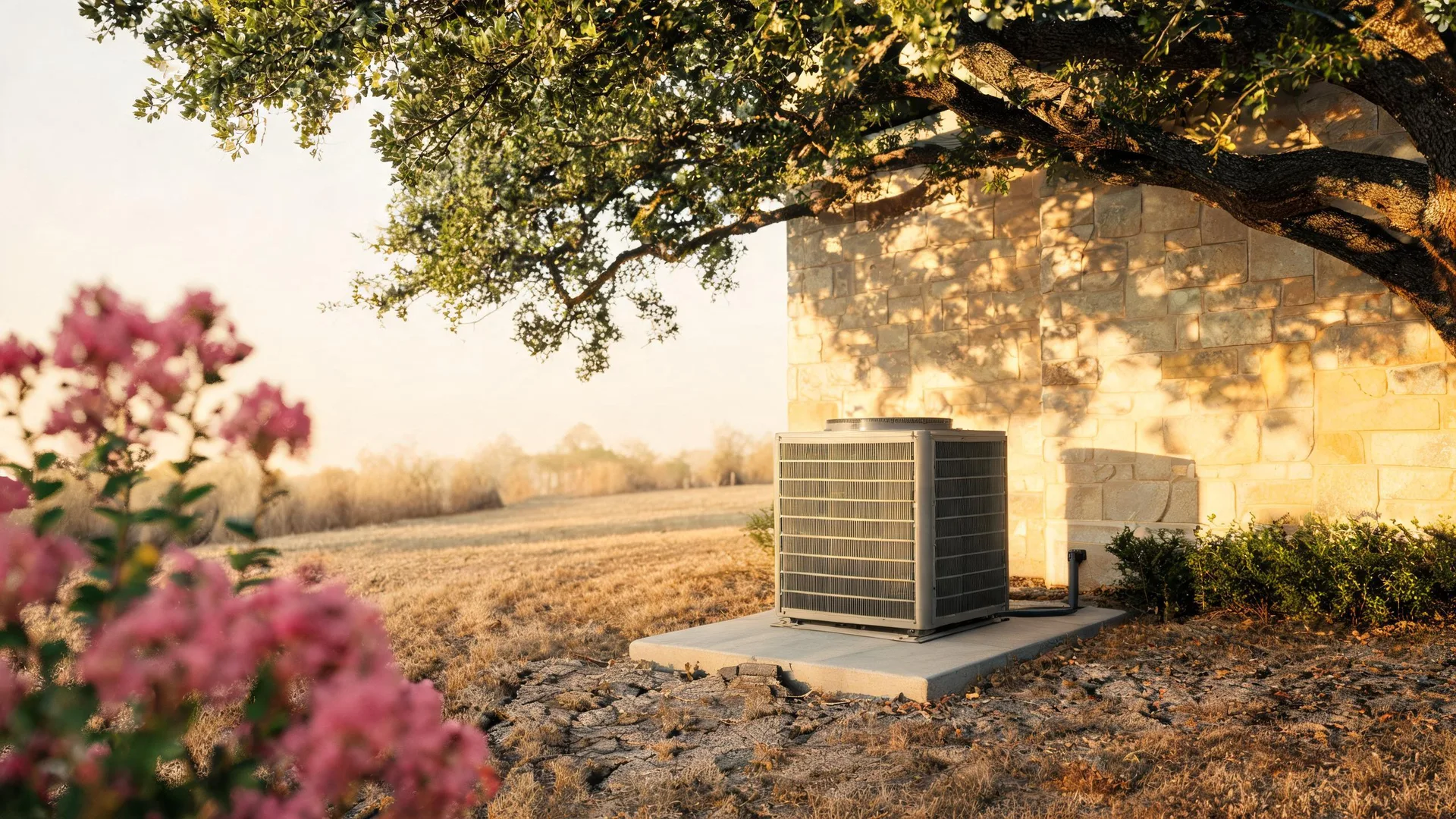
A gray residential air conditioner condenser unit mounted on a concrete pad in an open grass field.

What actually wears out

Most AC failures trace back to the same handful of parts, not the system as a whole. The capacitor gives the compressor and fan motor the jolt they need to start. It weakens with every start and stop, and heat speeds that along, so it's often the first thing to go once the system has been cycling for a while. A dirty coil is the other common culprit. Dust and grime build up on the coil fins and block airflow, which makes the system work harder to move the same amount of heat. Refrigerant doesn't get used up, so a system that's low on charge has a leak somewhere, not normal wear. Run capacitors, contactors and fan motors all have a service life, and time running is what uses it up, whether that time comes in one stretch or spread across many seasons.

What you can check first

Look at the outside unit and see if the fan is spinning. Check the thermostat has fresh batteries and is set below room temperature. Go to the breaker panel and see if the AC breaker has tripped. Pull the air filter and hold it up to a light. If you can't see light through it, that alone can be enough to choke the system down.

What tells you to stop and call

Ice on the refrigerant lines or the indoor coil means something is already wrong inside, and running it longer won't clear it. A breaker that trips again right after you reset it points to an electrical fault, not a fluke. Grinding, screeching or a burning smell from the outdoor unit means stop and shut it off rather than wait and see.

Aerial view of a square outdoor air conditioning condenser unit on a concrete pad beside a house wall with a sliding glass door.

A new air conditioner would save little on running costs in Le Sueur County, so the repair decision comes down to the unit's condition.

  • A new one at the federal minimum, 13.4 SEER2$160 a year
  • An older air conditioner$180 a year

Estimates for a typical Le Sueur County home, compared with an older unit built to the previous federal minimum, from EIA household energy data, Minnesota fuel prices and NOAA climate normals. Your home will differ.

Repair makes sense when a part like a capacitor or contactor has failed.

Replacement makes sense when the compressor has failed or the system uses R-22 refrigerant, which is no longer made.

A repair is worth doing when the part that failed is a part on its own, a capacitor, a contactor, a fan motor. Swap it out and the rest of the system, coil, compressor, ductwork, goes back to doing what it was already doing. The question that matters isn't how old the unit is, it's whether the failure stayed small. A seized compressor or a coil that's corroded through are a different kind of problem, since there's no single part to swap in to fix either one. Most calls aren't that. A tech who checks the capacitor, the charge and the coil before touching anything else can usually tell you within a few minutes which kind of problem you've got.