A low-angle view across a mown lawn toward a two-story dark-sided house with a covered front porch, flanked by large green trees under an overcast sky.

AC Repair in Grand Rapids, MN

Tell us about the job

Takes about a minute. No obligation.

RepairCentral ACItasca County, MN
Step 1 of 2

What ZIP code is the job in?

Storms come through often here

Itasca County logged 295 severe weather events between 2015 and 2024, including 125 hail events and 108 instances of damaging wind. An outdoor condenser sitting through that many storms is going to take some hits over the years.

A unit that still runs can still be hurt

Hail dents fins and bent fins choke airflow over the coil. Wind-blown debris can nick the coil or jam the fan. The unit might start up fine and still be running on damage that gets worse with time.

1 months
July through July, your air conditioner is on duty
76°F
the average summer afternoon it cools against
125 hail events
in ten years, and hail bends the fins on outdoor coils
108 wind events
in ten years, and wind drives debris into outdoor units
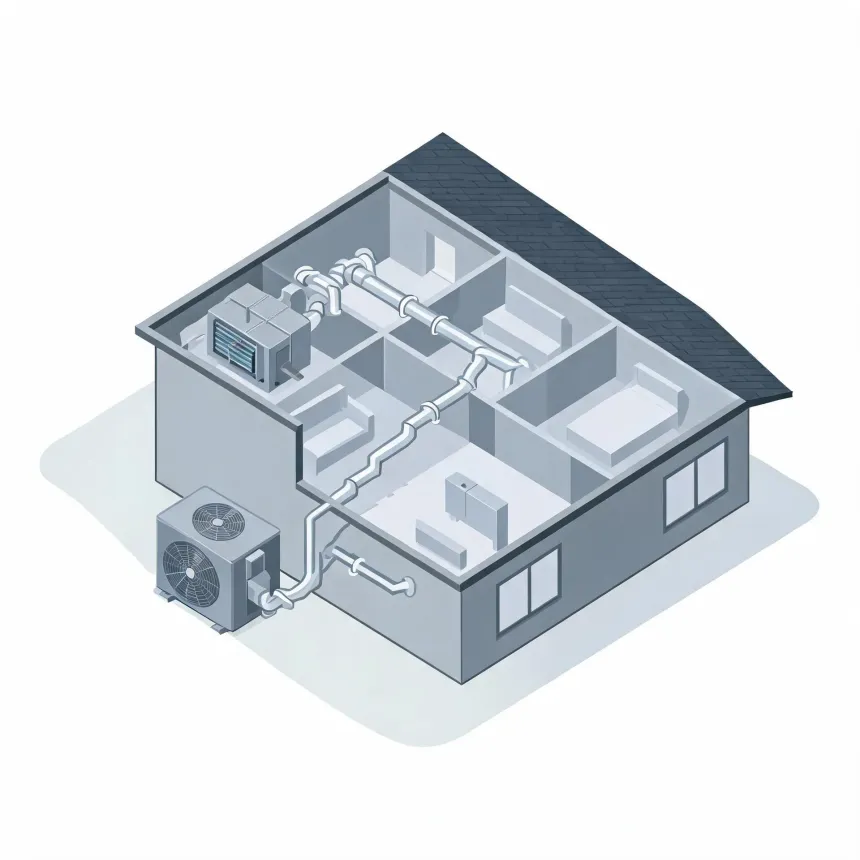
Isometric grey illustration of a cutaway single-story house showing interior rooms, ceiling ductwork connected to an indoor air handler, and an outdoor condenser unit linked by lines outside the wall.
Your air conditioner works hardest from July through July.

NOAA nClimDiv, 1991–2020 normals

Half the homes in Itasca County were built in 1979 or later.

A system that age usually has real years left in it, which is a point in favor of repair.

July is the only month this system has to work

Cooling runs July through July
Summer afternoons average 76°F
108 damaging wind events from 2015 to 2024

If your house falls on the newer side of that line, repair is the right first call for a unit that's acting up but still running. A condenser from a house built in the last few decades hasn't hit the age where parts wear out everywhere at once. One bad capacitor or a dirty coil doesn't mean the whole system is done. Have it looked at before you assume replacement is the only option. If your system came with the house, check the install date on the unit's nameplate or ask the contractor to pull it when they're out.

If your AC has been through a storm, don't wait for it to fail

If hail or wind has come through recently, get the unit checked even if it's still cooling fine. Bent fins and a nicked coil don't always stop a system right away, but they put it under more strain each time it runs.

Find a contractor
A gray cylindrical air conditioning condenser unit mounted on a concrete pad next to a light-colored vinyl-sided house exterior.

The same few parts do the work, year after year

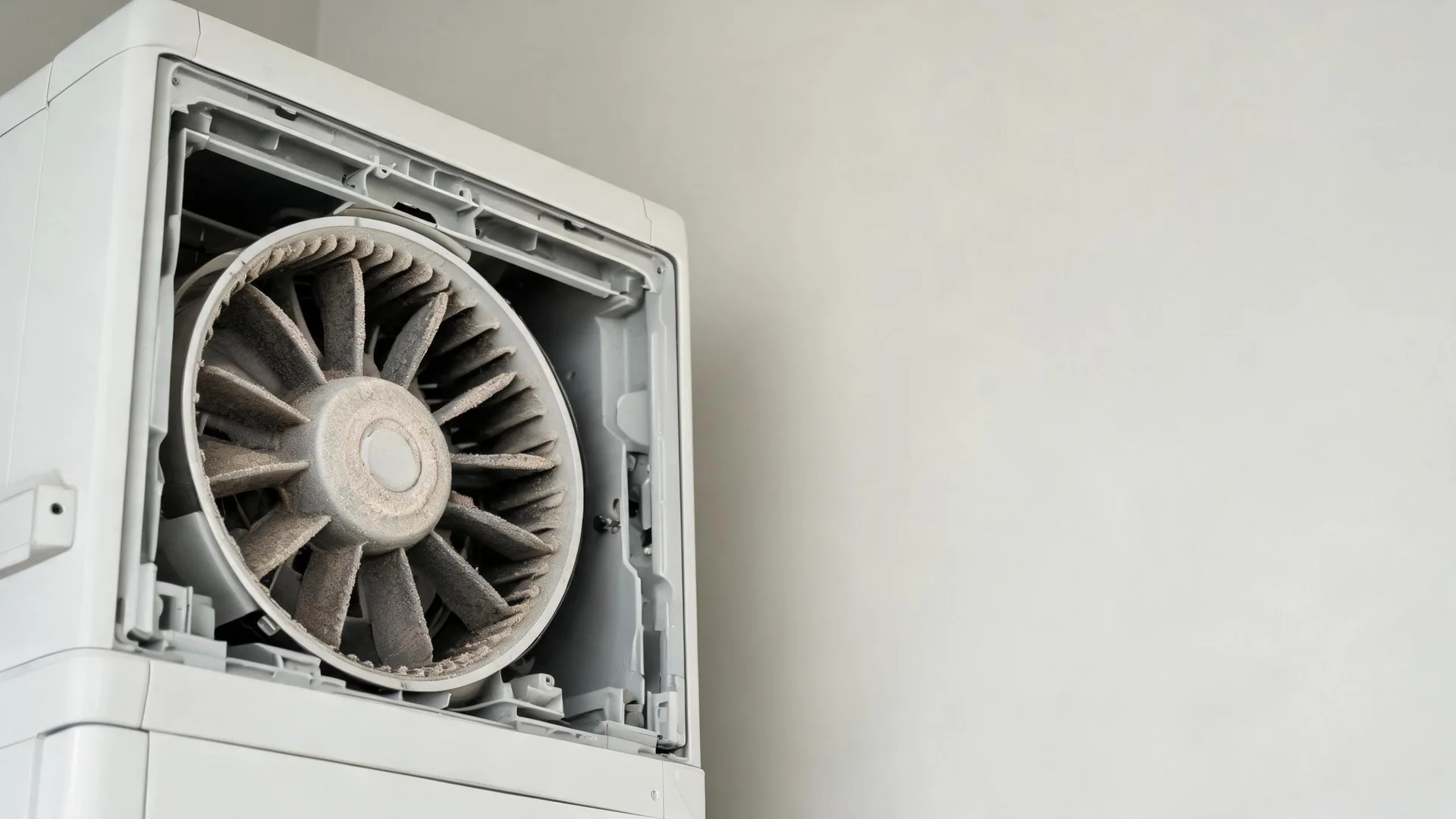
A capacitor is usually the first thing to go. It gives the compressor and fan motor the kick they need to start, and it weakens a little every time the system cycles on and off. Once it's too weak, the unit hums and doesn't start, or the fan spins slow. A dirty condenser coil causes trouble a different way. Dust and grime settle on the fins over time, and the coil can't shed heat the way it should, so the compressor works harder and runs hotter than it was built to. Refrigerant leaks tend to show up at joints and valves, where seasons of the system cycling on and off eventually work a fitting loose. None of this means a unit is near the end. It means a few parts have been doing the same job over and over, and those are the parts worth having a contractor check first.

What the airflow tells you

Warm air out of the vents with the system running usually points to the refrigerant charge or a compressor that's struggling. Weak airflow with normal temperature often means a clogged filter or a blower wheel caked with dust. Ice on the lines is a sign the coil isn't getting warm air to absorb, which can trace back to a dirty filter, a failing blower, or low refrigerant. Each pattern narrows down where to look before a panel ever comes off.

What the sounds and cycles tell you

A unit that short cycles, shutting off a few minutes after it starts, is usually tripping a safety switch because something inside is running hotter or under more strain than it should. Clicking on startup without the fan or compressor engaging points to a failed capacitor or a relay. Grinding or squealing points to a motor bearing giving out. A system that runs constantly without the house cooling down is losing the fight somewhere, whether that's the coil, the charge, or the compressor itself.

Aerial view of a gray outdoor air conditioning condenser unit mounted on a concrete pad next to a house with vinyl siding.

A new air conditioner would save little on running costs in Itasca County, so the repair decision comes down to the unit's condition.

  • An older air conditioner$70 a year
  • A new one at the federal minimum, 13.4 SEER2$70 a year

Estimates for a typical Itasca County home, compared with an older unit built to the previous federal minimum, from EIA household energy data, Minnesota fuel prices and NOAA climate normals. Your home will differ.

Repair makes sense when a part like a capacitor or contactor has failed.

Replacement makes sense when the compressor has failed or the system uses R-22 refrigerant, which is no longer made.

A diagnostic visit starts outside at the condenser, checking that the fan spins freely and the coil fins aren't blocked or crushed. The tech will check the refrigerant pressures and the temperature split between the air going into the system and the air coming out, since that gap says a lot about whether the system is actually moving heat the way it should. Electrical readings come next: the capacitor gets tested under load, not just looked at, because a capacitor can look fine and still be too weak to do its job. Inside, the tech checks the blower wheel and the filter, since restricted airflow on that side can mimic a refrigerant problem and send someone chasing the wrong fix. Any unusual sound gets traced to its source before the panels go back on. By the end, the goal is a specific answer: which part is failing and why, not just that something is wrong.