






A snow-covered small-town street at dusk, lined with illuminated two-story houses and a grain elevator on the horizon.

AC Repair in Fergus Falls, MN

Tell us about the job

Takes about a minute. No obligation.

RepairCentral ACOtter Tail County, MN
Step 1 of 2

What ZIP code is the job in?

Cooling only runs two months here, July through August, so June is when a weak part finally gets tested. A capacitor or contactor that limped through last summer and sat unused since can fail the first hot day the system has to work hard. If your AC is struggling or short cycling now, that is usually what is going on, not anything about how the house is built. A contractor can check the capacitor, the contactor, and the refrigerant charge and tell you which one gave out. Fixing the actual part now means it is not quitting again in August.

2 months
July through August, your air conditioner is on duty
78°F
the average summer afternoon it cools against
125 hail events
in ten years, and hail bends the fins on outdoor coils
157 wind events
in ten years, and wind drives debris into outdoor units
Isometric cutaway illustration of a single-story house with a dark shingled roof, showing interior rooms with ductwork and an indoor air handler connected to an outdoor condenser unit beside the building.
Your air conditioner works hardest from July through August.

NOAA nClimDiv, 1991–2020 normals

Fergus Falls summers top out around 78 degrees, two months a year.

A system here doesn't wear out from strain like that. A part failed, and the job is finding which one.

Half the homes in Otter Tail County date to 1979 or later, so a lot of this gear isn't old

Half the homes here were built by 1979
Cooling runs July through August
Summer afternoons average 78°F
Fergus Falls AC repair386 severe weather events hit Otter Tail County between 2015 and 2024, but that's not why your AC quit

There's nothing about Fergus Falls that puts extra load on an AC system. The electric rate here runs 15.45 cents per kilowatt-hour, in line with the rest of Minnesota, so a system running inefficiently costs the same here as anywhere else in the state. That means a high bill this summer points to the equipment, not the location. A dirty coil, a low charge, or a failing capacitor all make the system run longer than it should to hit the same temperature. A contractor can check which one it is.

Repair makes sense on a system this age

If your AC came with the house, repair is worth it before replacement. Have a contractor fix the actual part that failed and get back to cooling.

Find a contractor
A gray residential air conditioner condenser unit mounted on a concrete pad in an open grass field.

What actually gives out

Most AC failures start with the same handful of parts. The capacitor gives the compressor and fan motor the jolt they need to start, and it weakens a little every time it cycles on. Eventually it can't deliver that jolt anymore, and the system hums or clicks but doesn't start. The contactor switches power to the compressor, and its contacts pit and burn with each cycle until they stop making contact at all. Refrigerant doesn't get used up, so a low charge almost always means a slow leak somewhere in the coil or line set, and it will keep getting worse, not better. A dirty condenser coil outside makes the whole system work harder to dump heat, and that extra strain is what finishes off a weak capacitor or motor before its time. None of these parts fail because a system is old. They fail because they've opened and closed thousands of times, and a part that sat unused for months can give out on the first day it has to work hard.

The sound changes before it quits

A system about to fail doesn't usually go straight from fine to dead. The fan rattles or hums without spinning. The compressor clicks and tries to start, then shuts back off. A grinding or squealing sound means a motor bearing is going. Any new noise is the system telling you a part is struggling, and it's worth having someone look before that part fails outright.

Warm air doesn't always mean the same thing

Air blowing but not cold can be a low refrigerant charge, a failing compressor, or a dirty coil that can't shed heat. Short cycling, where the system shuts off before the house cools, points somewhere else entirely, usually a weak capacitor or a thermostat losing its connection to the system. The fix depends on which one it is, so the right move is getting it diagnosed, not guessing from the symptom alone.

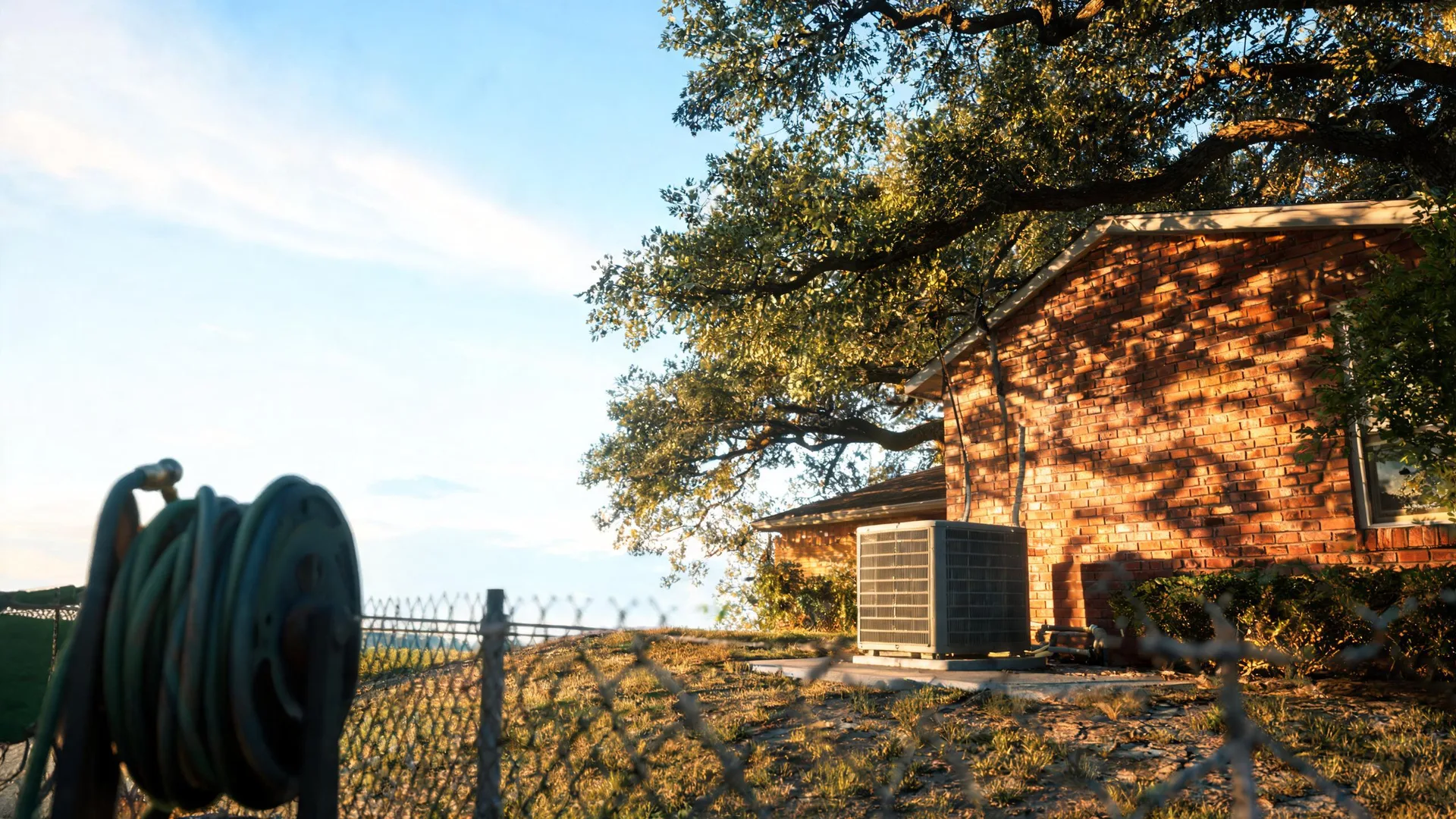
An outdoor air conditioning condenser unit mounted on a concrete pad next to a blue-sided residential house at sunset.

A new air conditioner would save little on running costs in Otter Tail County, so the repair decision comes down to the unit's condition.

  • A new one at the federal minimum, 13.4 SEER2$110 a year
  • An older air conditioner$120 a year

Estimates for a typical Otter Tail County home, compared with an older unit built to the previous federal minimum, from EIA household energy data, Minnesota fuel prices and NOAA climate normals. Your home will differ.

Repair makes sense when a part like a capacitor or contactor has failed.

Replacement makes sense when the compressor has failed or the system uses R-22 refrigerant, which is no longer made.

A contractor starts at the thermostat. They check that it's actually calling for cooling and that the signal is reaching the unit before touching anything outside. From there it's the electrical side. The capacitor gets tested under load, since one can read fine sitting still and still fail to start the compressor. The contacts on the contactor get checked for pitting and burn marks. The refrigerant charge gets measured against what the system is supposed to hold, and the coils get looked at for the grime that keeps them from shedding heat. Each check rules something out. Whatever's left standing is what gets fixed.