






A row of illuminated two-story brick houses with front porches and mature trees photographed at twilight.

AC Repair in Elk River, MN

Tell us about the job

Takes about a minute. No obligation.

RepairCentral ACSherburne County, MN
Step 1 of 2

What ZIP code is the job in?

Your air conditioner only has to work June through August here. That's the whole cooling season. Afternoon highs average 79°F across those three months, which is mild compared to most of the country. The air stays manageable too, with dew points around 58°F all summer, so the system isn't straining against heavy moisture every time it kicks on. Less heat and less humidity add up to less wear on the compressor over the years. So when an AC here starts having problems, it's rarely because the unit got run into the ground. Something specific usually wore out or needs attention, and that's the kind of problem worth fixing.

3 months
June through August, your air conditioner is on duty
79°F
the average summer afternoon it cools against
53 hail events
in ten years, and hail bends the fins on outdoor coils
27 wind events
in ten years, and wind drives debris into outdoor units
Isometric cutaway illustration of a house interior showing ducted air handling equipment and duct runs through rooms, connected by piping to an outdoor condenser unit on a pad outside the wall.
Your air conditioner works hardest from June through August.

NOAA nClimDiv, 1991–2020 normals

Warm air blowing from the vents usually means the refrigerant charge is low, not that the compressor is failing.

A tech can confirm that with a set of gauges before you spend money on bigger repairs.

Half the homes here were built in 1996 or later, so the AC behind that wall is probably younger than you think

Half the homes here were built by 1996
Climate zone 6A
Power here costs 15.29 cents per kilowatt-hour
June is when a weak part gets found outCooling runs June through August here, so a weak part sits all through a hard winter before the first hot day puts a load on it again.

A diagnostic visit starts before the panel comes off. The tech asks what the system is doing, when it started, and whether anything changed around that time. Then they check the thermostat is calling for cooling and actually reaching the equipment. Outside, they check that the fan spins freely and the coil isn't caked with debris, since a blocked coil throws off every reading after it. They'll hook up gauges to read the refrigerant pressures, run an amp draw on the compressor, and check the capacitor holds its charge under load. Inside, they'll pull the filter and look at the evaporator coil for frost or buildup, since airflow problems masquerade as refrigerant problems if you don't rule them out first. Only once all of that lines up does a tech tell you what's actually wrong and what it takes to fix it.

Find the part that failed, and keep the rest of the system

If the system behind that wall came with the house, there's a good chance it's not old enough to be the problem on its own. Get a tech out to find the part that's actually failing and fix that.

Find a contractor
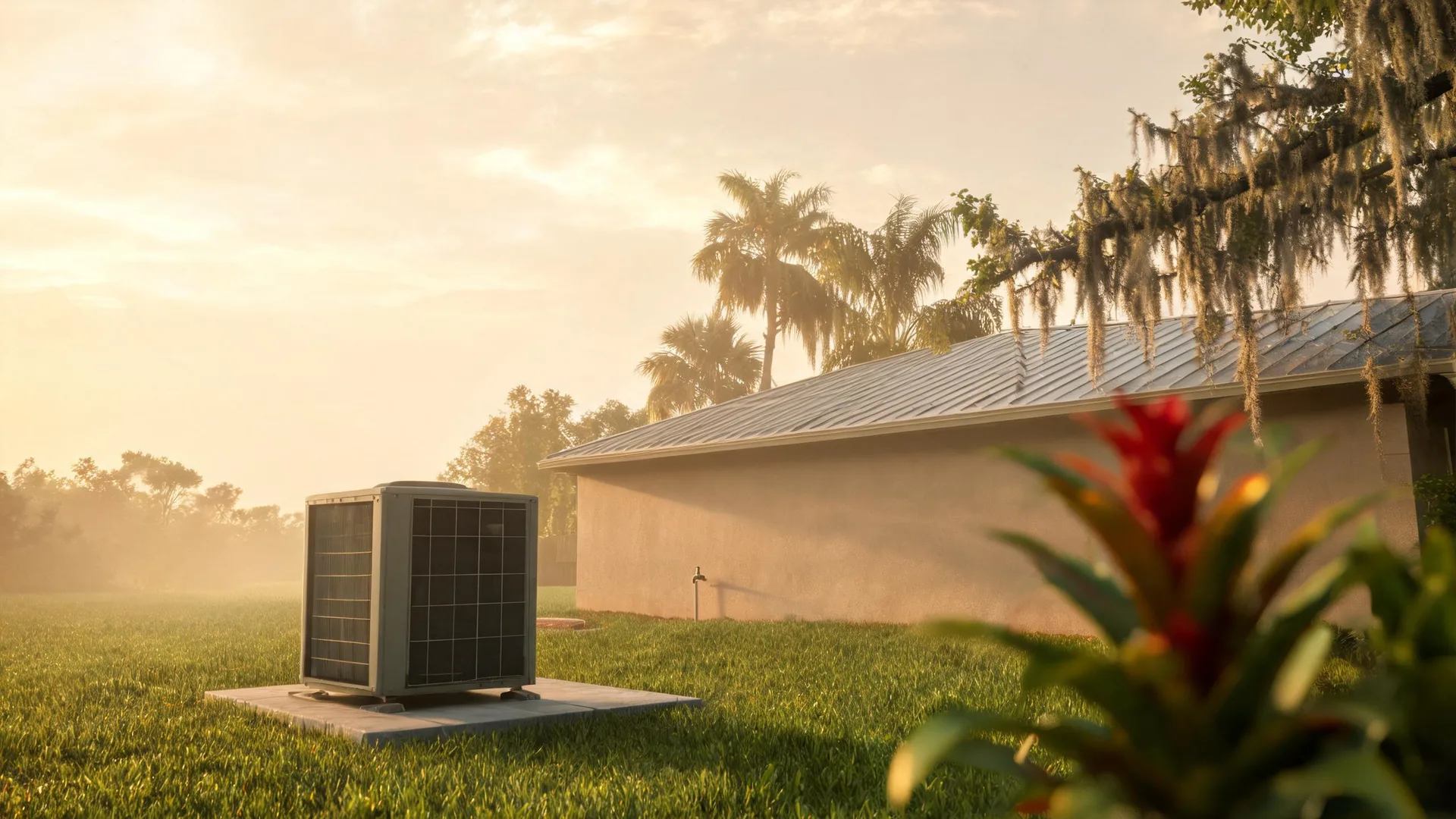
A gray residential air conditioner condenser unit mounted on a concrete pad in an open grass field.

Small problems don't stay small if the system keeps running

A refrigerant leak is the clearest case. Run the system low on charge and the compressor works harder to move what little refrigerant is left. It runs hotter doing it. Keep that up and you risk damaging the compressor itself, which is the most expensive part in the system. The fix early on is finding the leak and adding refrigerant. Wait, and the fix is a new compressor, or a new system. A failing capacitor follows the same pattern. It helps the compressor and fan motor start up under load. A weak one makes the motor strain every time it kicks on, and a motor that strains repeatedly wears out sooner than it should. A dirty coil or clogged filter works differently but ends the same way. Airflow drops, the coil can't shed heat properly, and ice starts building up on it. Run the system with a frozen coil and you can push liquid refrigerant back into the compressor, which is not built to handle liquid. None of these start as emergencies. They start as a sound, a warm patch of air, a system that runs longer than it used to. Shutting it off and getting it looked at stops a part replacement from turning into something bigger.

Capacitors and contactors wear out on a schedule

The run capacitor holds a charge that helps the compressor and fan motor start and keep turning. It weakens over years of heat cycles, and once it drops below what the motor needs, you get a compressor that hums but won't start or a fan that stalls. The contactor that feeds power to the compressor pits and burns a little every time it closes, until one day it doesn't make contact at all. Both are wear parts. Neither failing means anything else is wrong with the system.

Airflow problems show up as other problems

A coil can only shed heat into moving air. Block that air with a dirty filter or a matted outdoor coil and the coil gets too cold, then ice forms on it, then airflow drops further. By the time someone notices warm air at the vents, the actual cause might be a filter nobody changed months ago. Checking airflow first is how a tech avoids chasing a refrigerant problem that isn't really there.

An outdoor air conditioning condenser unit on a concrete pad next to the gray vinyl siding of a residential home.

A new air conditioner would save little on running costs in Sherburne County, so the repair decision comes down to the unit's condition.

  • A new one at the federal minimum, 13.4 SEER2$140 a year
  • An older air conditioner$150 a year

Estimates for a typical Sherburne County home, compared with an older unit built to the previous federal minimum, from EIA household energy data, Minnesota fuel prices and NOAA climate normals. Your home will differ.

Repair makes sense when a part like a capacitor or contactor has failed.

Replacement makes sense when the compressor has failed or the system uses R-22 refrigerant, which is no longer made.

Age is a bad way to judge an air conditioner. A system that's been maintained can outlast a newer one that hasn't. What matters more is whether the problem is a wear part or the equipment itself. A capacitor, a contactor, a fan motor: these fail on their own schedule, and swapping one tells you nothing bad about the compressor or the coil. The compressor is a different question. It's the most expensive part to replace, and if a tech finds metal in the oil or a winding that's shorted, that's the system telling you it's done, not a part telling you it's done. Ask what failed and whether that part failing says anything about the rest of the system before you decide what to do about it.