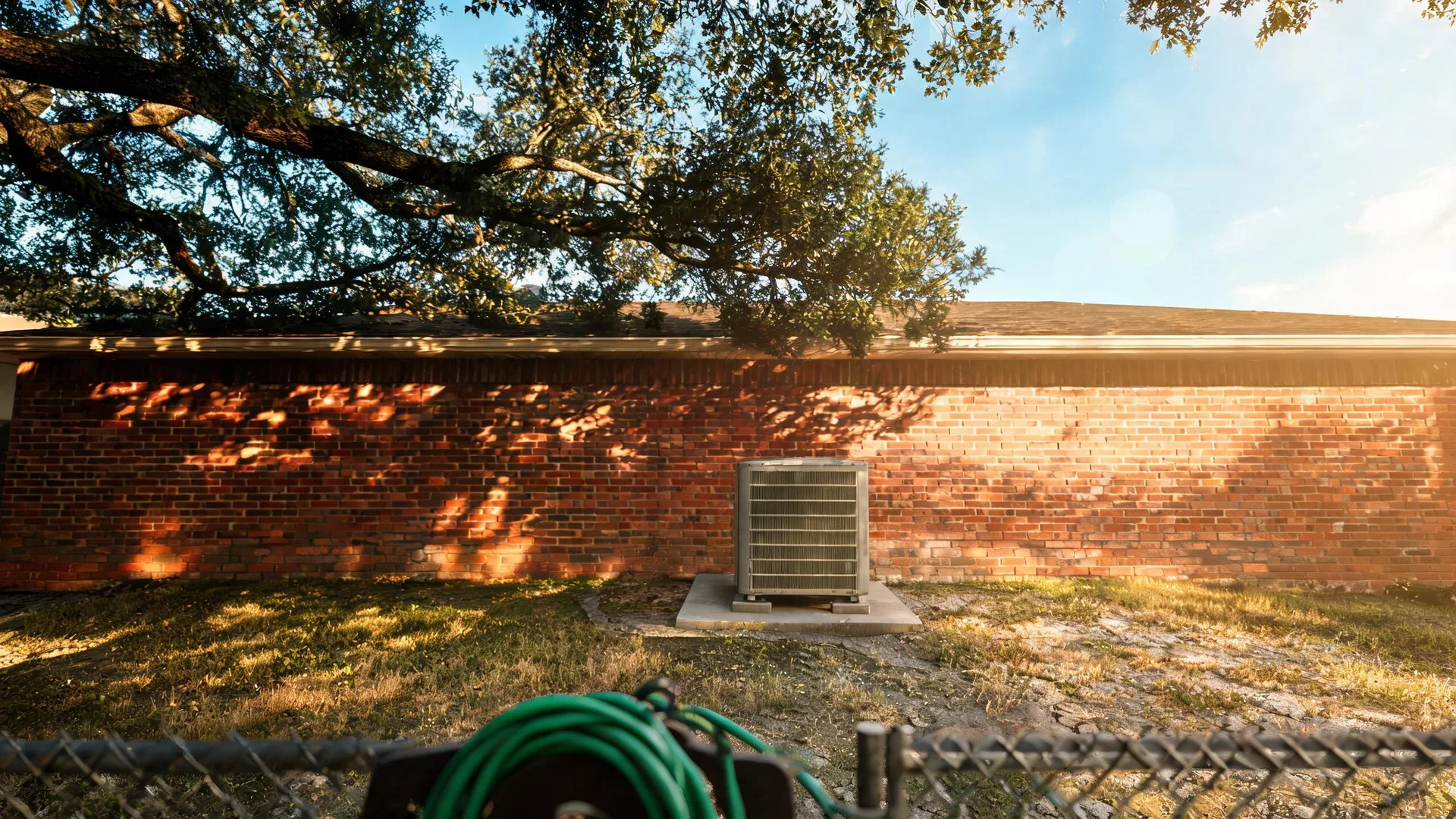
Two months of work
Air conditioners here run July through August. That's a short stretch, but June is when the first real heat hits, and that's when a weak part finally gets tested.
Takes about a minute. No obligation.
Air conditioners here run July through August. That's a short stretch, but June is when the first real heat hits, and that's when a weak part finally gets tested.
A capacitor or contactor that limped through storage can fail the first week the system runs hard. If your AC is acting up early in the season, that's not bad luck. That's just when problems show themselves.

NOAA nClimDiv, 1991–2020 normals
Two months of real heat a year isn't enough to wear out a compressor.
When an AC this age is already struggling, something broke. The mild summers here didn't.




If your house was built in 1981 or later, there's a good chance your AC is too, and that age alone doesn't call for a replacement. Get a technician out to find the part that's actually failing. A failed capacitor, a stuck contactor, a coil that's gone dirty enough to make the compressor work too hard, these are the usual culprits, and each one can be tested directly. That's a far cheaper visit than replacing a unit that only needed one part.
Problems tend to show up in the first weeks of the season, when the load hits a part that was already weak.
Find a contractor
A system that keeps running with a problem doesn't just stay broken. It gets worse. A capacitor that's down on strength forces the compressor to pull harder every time it starts. That extra draw heats the compressor windings a little more each cycle. A coil that's dirty makes the whole system work harder to move the same heat, and the compressor runs longer to get there. A refrigerant leak that's small today is a bigger leak next week, and a compressor run low on charge for too long can seize for good. None of these fix themselves by waiting. The part that's struggling is doing more work than it should, every hour the system runs, until either it fails outright or it takes something more expensive down with it. Shutting the system off when something sounds wrong, smells wrong, or isn't cooling right costs you comfort for a day. Running it anyway can cost you the compressor.
A capacitor loses its charge a little at a time. A contactor's contacts pit and burn with every cycle. A coil collects dust and pollen until airflow across it drops. None of these happen all at once. They build until the day the system can't push through it anymore, and that day looks sudden even though the part was failing for a while.
A failed capacitor gets replaced. A stuck contactor gets replaced. A dirty coil gets cleaned. A low charge gets found and corrected, not just topped off. The job is tracing the symptom back to the one part causing it, not swapping parts until something works.
Estimates for a typical Becker County home, compared with an older unit built to the previous federal minimum, from EIA household energy data, Minnesota fuel prices and NOAA climate normals. Your home will differ.
Repair makes sense when a part like a capacitor or contactor has failed.
Replacement makes sense when the compressor has failed or the system uses R-22 refrigerant, which is no longer made.
A diagnostic visit starts with what the system is actually doing. The technician wants to see it run, listen to it cycle, and find out whether the compressor is starting, whether the fan is turning, whether air coming off the coil is actually cold. From there it's a process of checking the parts that cause most failures: the capacitor's strength, the contactor's contacts, the refrigerant charge, the condition of the coil. Each of those has a test with a clear answer, not a guess. A capacitor either holds its rating or it doesn't. A charge is either correct for the system or it's low, and if it's low there's a leak somewhere that needs finding, not just topping off. The point of the visit is to land on the one part actually causing the problem, so the fix is the right one instead of the first one tried.