






Three lit brick homes on a tree-lined residential street photographed at dusk.

AC Repair in Cambridge, MN

Tell us about the job

Takes about a minute. No obligation.

RepairCentral ACIsanti County, MN
Step 1 of 2

What ZIP code is the job in?

Half the homes in Isanti County were built in 1988 or later. That puts a lot of the air conditioners in this area well inside their working life, not past it. If your house is one of the newer ones, the unit struggling right now probably has a straightforward problem, not a worn-out system. A capacitor, a contactor, a low charge, that kind of thing. Worth having someone look at it before anyone talks about replacing it.

3 months
June through August, your air conditioner is on duty
79°F
the average summer afternoon it cools against
20 hail events
in ten years, and hail bends the fins on outdoor coils
18 wind events
in ten years, and wind drives debris into outdoor units
Isometric line illustration of a cutaway single-story house showing interior rooms, ceiling ductwork and an air handler, connected to an outdoor condenser unit on a pad beside the building.
Your air conditioner works hardest from June through August.

NOAA nClimDiv, 1991–2020 normals

Most AC failures come down to a handful of parts: the capacitor, the contactor, the fan motor.

A tech who knows that checks the usual suspects first instead of guessing at the whole system.

Three months of mild heat is not much to ask of a compressor

Cooling runs June through August
Summer afternoons average 79°F
20 hail events from 2015 to 2024

June is when trouble usually shows up here. The system has sat idle since at least May, and the first real load of the year finds whatever part was already weak. A capacitor that was marginal last August still looked fine all winter with the system off. It fails the first hot week in June instead. That week is also when every other AC in the county is working hard for the first time, so getting someone out gets harder the longer you wait. With the whole summer still ahead in June, it's worth fixing rather than living with it.

A machine with an easy job is usually worth fixing

Three months of real heat a year is not a hard life for a compressor. Most of what's wrong with your AC right now is one part, not the whole system, and a unit that only has to work June through August usually has more life left in it than the summer's trouble suggests. Worth getting it looked at while you've still got the season ahead of you.

Find a contractor
A man in a cap, dusty work shirt and tan trousers walks up front steps toward a dark green panelled door, carrying a canvas tool bag with hand tools, beside a potted shrub.
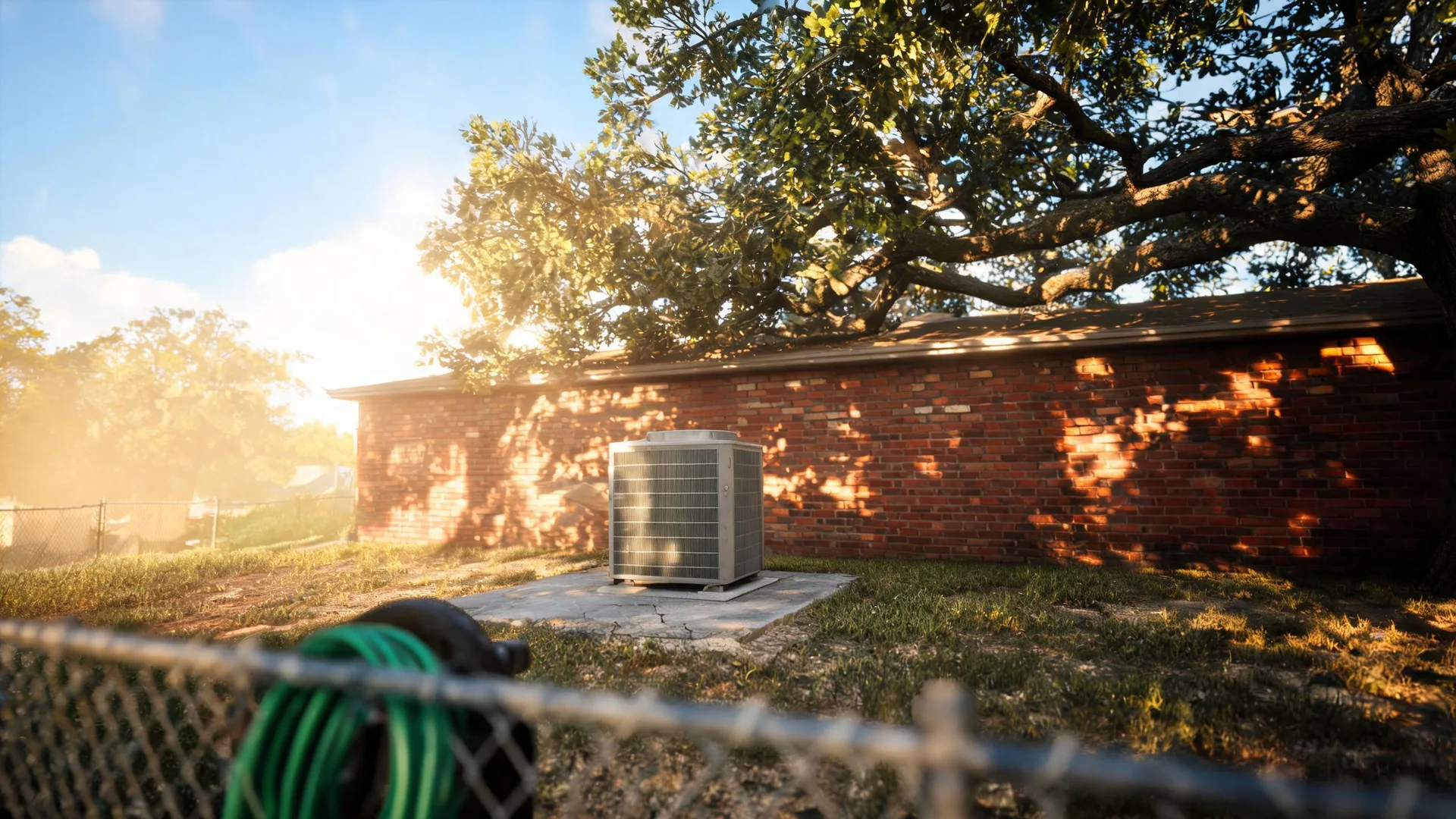
A gray residential air conditioner condenser unit mounted on a concrete pad in an open grass field.

Check the install date before you assume

If your system is original to the house, the model number and install date are usually on a sticker inside the access panel. That tells you more than a guess ever will. A unit that has only ever worked three mild summers a year ages slower than the same unit somewhere hot, so a system that looks old on paper may still have real life in it. Worth checking before anyone talks about replacing it instead of fixing what's actually wrong.

Low refrigerant gets worse on its own

A system low on refrigerant still runs, so it's tempting to let it keep going. But the compressor is built to pump refrigerant, not to cool itself with it. Run it low for long enough and the compressor can overheat and fail outright, turning a leak repair into a compressor replacement.

A struggling system is already working harder

A failing capacitor makes the compressor and fan motor draw more current to do the same job. A dirty coil makes the whole system run longer to reach the same temperature. Neither of those failures stays quiet. The longer it runs in that state, the more heat and strain it puts on parts that were fine a week ago.

An overhead view of a residential air conditioning condenser unit mounted on a concrete pad next to a house with vinyl siding.

A new air conditioner would save little on running costs in Isanti County, so the repair decision comes down to the unit's condition.

  • A new one at the federal minimum, 13.4 SEER2$130 a year
  • An older air conditioner$140 a year

Estimates for a typical Isanti County home, compared with an older unit built to the previous federal minimum, from EIA household energy data, Minnesota fuel prices and NOAA climate normals. Your home will differ.

Repair makes sense when a part like a capacitor or contactor has failed.

Replacement makes sense when the compressor has failed or the system uses R-22 refrigerant, which is no longer made.

A diagnostic visit starts outside at the condenser, the unit sitting by the house. A tech checks that the fan spins freely and the coil is clear of grass and leaves, since airflow problems there show up as poor cooling everywhere else. Next come the electrical readings: capacitor, contactor, the current draw on the compressor and fan motor. Those numbers say more than how the unit sounds or looks. Refrigerant pressure gets checked too, with gauges, not guesswork, since both high and low pressure point to different problems. Inside, the tech looks at the evaporator coil and the airflow coming off the blower, because a problem there can mimic a refrigerant issue without being one. By the time all of that is done, there's usually a clear answer: one part that's failing, not a system that's failing.